
Logo

American Heart Association

  25
  0


Final ID: Mo4065

Electronic Service Delivery Model in Cardiovascular Genetics Counseling

Abstract Body (Do not enter title and authors here): Introduction:
Evaluation for genetic testing is recommended for individuals with inherited cardiovascular diseases, but the limited supply of specialists trained in cardiovascular genetics results in delays of care. Therefore, we sought to design and evaluate the feasibility and effectiveness of an electronic genomic educational tool to prime patients as a novel method of care delivery.

Methods:
We recruited patients aged ≥18 years who were scheduled for genetic consultation at a single ambulatory cardiology practice in an integrated health system. Our multi-disciplinary study team composed of genetic counselors, general cardiologists, and advanced heart failure cardiologists iteratively developed an electronic genomic educational tool using animated video software to deliver general knowledge on genomics and types of genetic testing results prior to the in-clinic consultation. Genetic literacy was assessed in all participants before and after viewing the genomic educational tool with questions adapted from a previously validated genomic knowledge survey (GKS) tool. Empowerment with the process of genetic testing after viewing the electronic tool was assessed with the 4-item validated SURE survey tool. Patients answering “yes” to all four questions on the SURE survey tool were identified as feeling “empowered” with genetic testing.

Results:
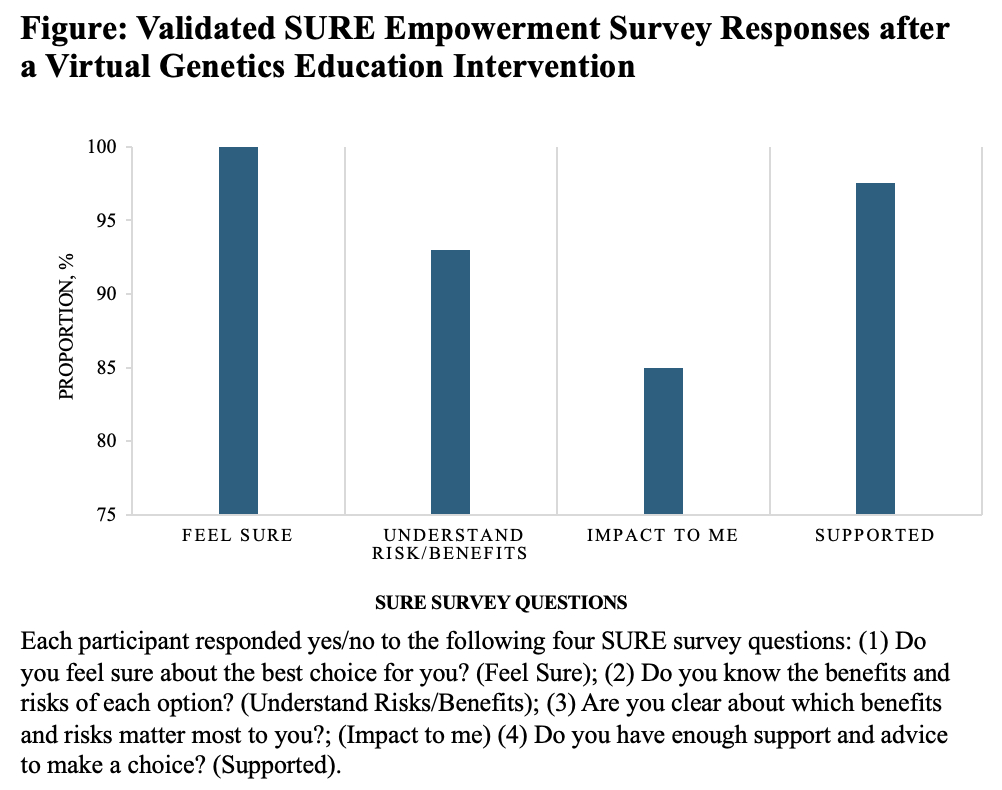
A total of 47 patients were recruited to the study with 41(87%) completing all survey items. Participants were balanced by sex (47% female). Mean (standard deviation) age was 49 (15) years. Cardiomyopathy was the most common indication (50%) for referral for cardiovascular genetics consultation. The mean pre-intervention GKS score was 5.24 (SD 0.89), which increased significantly to 5.63 (SD 0.54, p=0.003) after viewing the electronic tool. The SURE empowerment survey demonstrated that the majority of the patients (N=35 [85%]) responded “yes” or positively to all four survey items around decisions regarding genetic testing (FIGURE).

Conclusions
In this single-center pilot study, an electronic genomic educational resource with animated software increased genetic knowledge and demonstrated high patient sense of empowerment with decisions surrounding genetic testing. This novel method of virtual content delivery could help to reduce the burden placed on the limited genetics workforce needed to provide high-quality pre-test education and guide genetic testing decisions.
  • Uebelhor, Jonathan  ( Dominican University , Oak Park , Illinois , United States )
  • Mcnally, Elizabeth  ( NORTHWESTERN UNIVERSITY , Chicago , Illinois , United States )
  • Wilsbacher, Lisa  ( NORTHWESTERN UNIVERSITY , Evanston , Illinois , United States )
  • Fullenkamp, Dominic  ( Northwestern University , Chicago , Illinois , United States )
  • Vandyke, Rebecca  ( Northwestern University , Chicago , Illinois , United States )
  • Wilcox, Jane  ( NORTHWESTERN UNIVERSITY , Chicago , Illinois , United States )
  • Dellefave-castillo, Lisa  ( Northwestern University , Chicago , Illinois , United States )
  • Author Disclosures:
    Jonathan Uebelhor: DO NOT have relevant financial relationships | Elizabeth McNally: DO have relevant financial relationships ; Consultant:Tenaya Therapeutics:Past (completed) ; Other (please indicate in the box next to the company name):Novartis:Active (exists now) ; Consultant:PepGene:Active (exists now) | Lisa Wilsbacher: DO NOT have relevant financial relationships | Dominic Fullenkamp: DO NOT have relevant financial relationships | Rebecca VanDyke: No Answer | Jane Wilcox: No Answer | Lisa Dellefave-Castillo: DO NOT have relevant financial relationships
Meeting Info:

Scientific Sessions 2025

2025

New Orleans, Louisiana

Session Info:

Early Detection of Cardiovascular Disease 2

Monday, 11/10/2025 , 01:00PM - 02:00PM

Abstract Poster Board Session

More abstracts on this topic:
A Hypertrophic Cardiomyopathy-Based Model Estimate of the Prevalence of Danon Disease in the United States

Maron Martin, Massera Daniele, Manganaro Susan, Bailey Miranda, Rehbein Fletcher, Taylor Matthew

Assessing Knowledge, Attitudes, and Practices Regarding the American Heart Association’s Framework for Cardiovascular Health in Pediatrics

Ortiz Robin, Chan Debra, Nita Abigail, Heffron Sean, Nagpal Nikita, Duh-leong Carol

More abstracts from these authors:
Combining Monogenic and Polygenic Analysis Improves Sudden Cardiac Death Risk Prediction

Monroe Tanner, Pesce Lorenzo, Kearns Samuel, Dellefave-castillo Lisa, Webster Gregory, Puckelwartz Megan, Mcnally Elizabeth

Cellular crosstalk: what cells to add to cardiomyopathy models?

Fullenkamp Dominic, Eckhardt Lee, Epelman Slava, Tallquist Michelle

You have to be authorized to contact abstract author. Please, Login
Not Available