Cardiovascular Outcomes in Patients with Obstructive Sleep Apnea: A 15-Year Nationwide Population-Based Study
Abstract Body (Do not enter title and authors here): Background Obstructive sleep apnea (OSA) is increasingly recognized as a risk factor for cardiovascular diseases. However, long-term population-based data evaluating its association with a spectrum of cardiovascular outcomes, particularly conduction system disorders, remain limited.
Objective We investigated the 15-year cardiovascular outcomes in patients with OSA using a large-scale nationwide cohort.
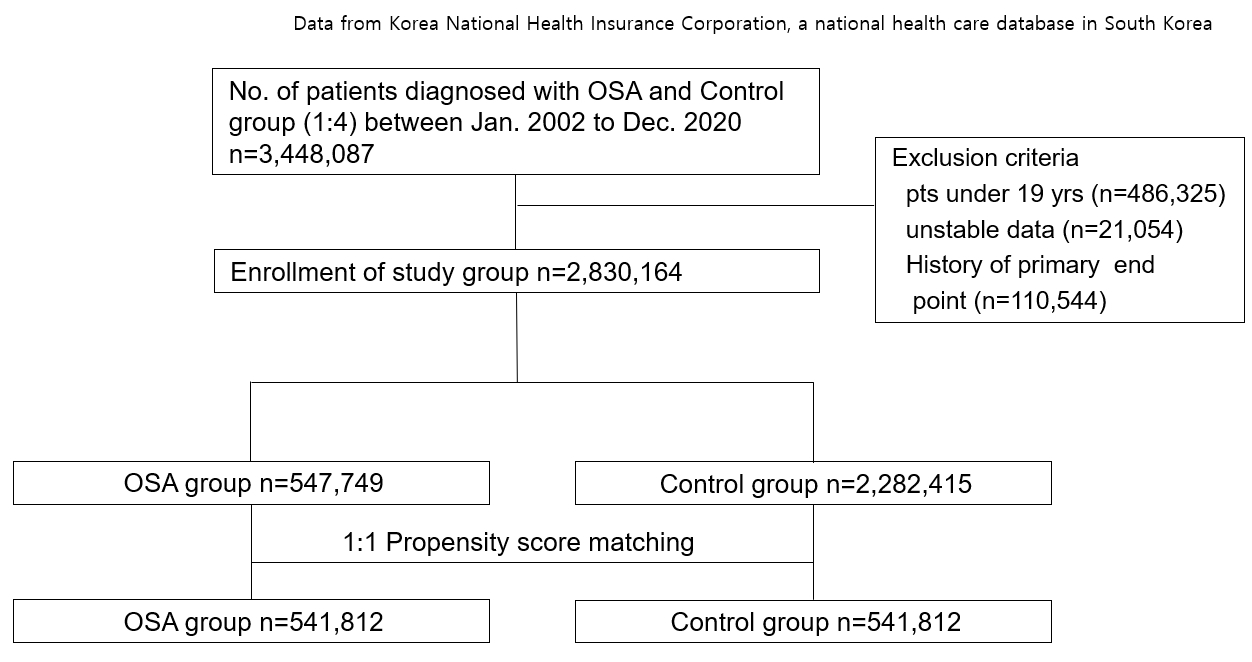
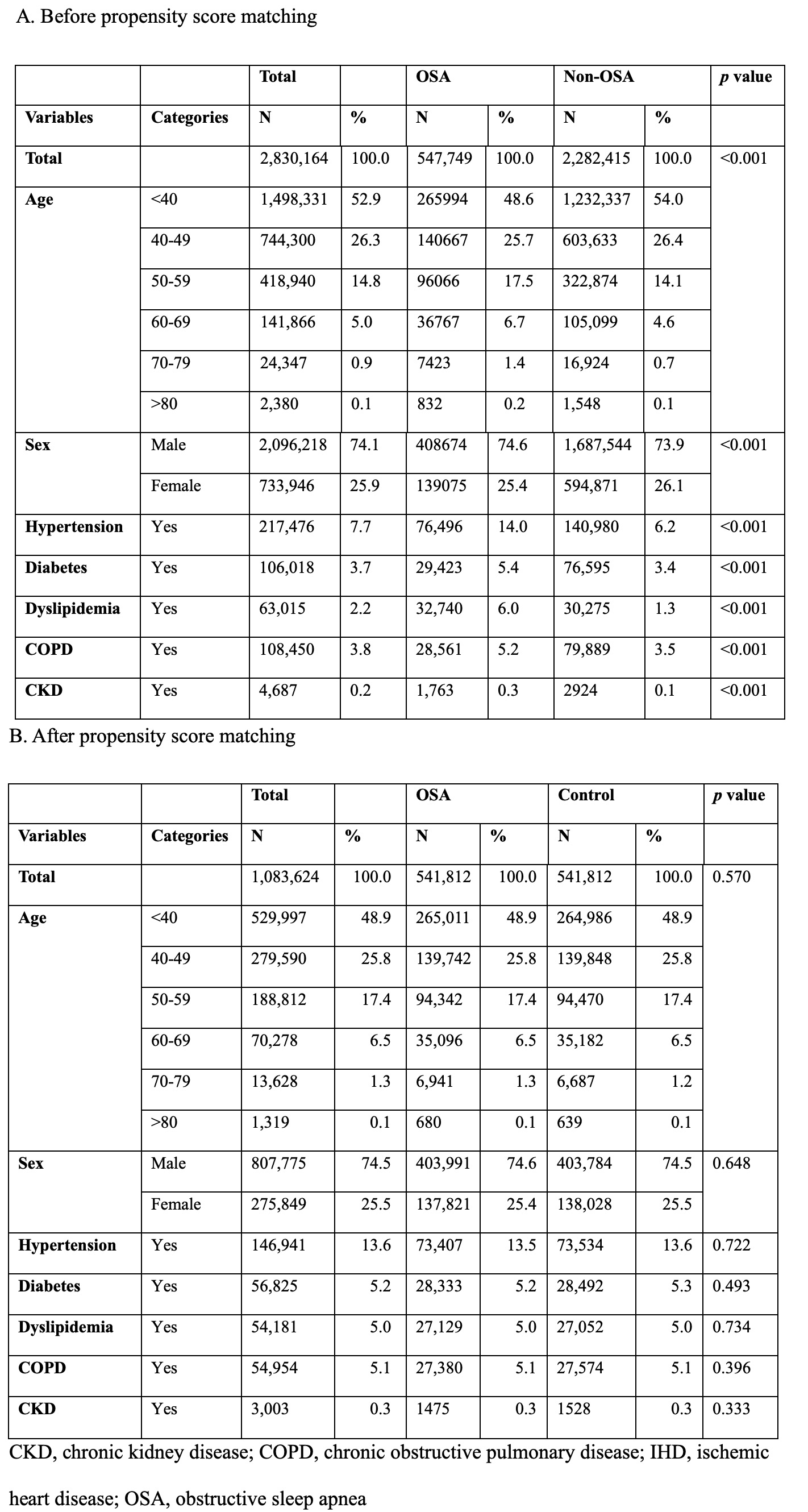
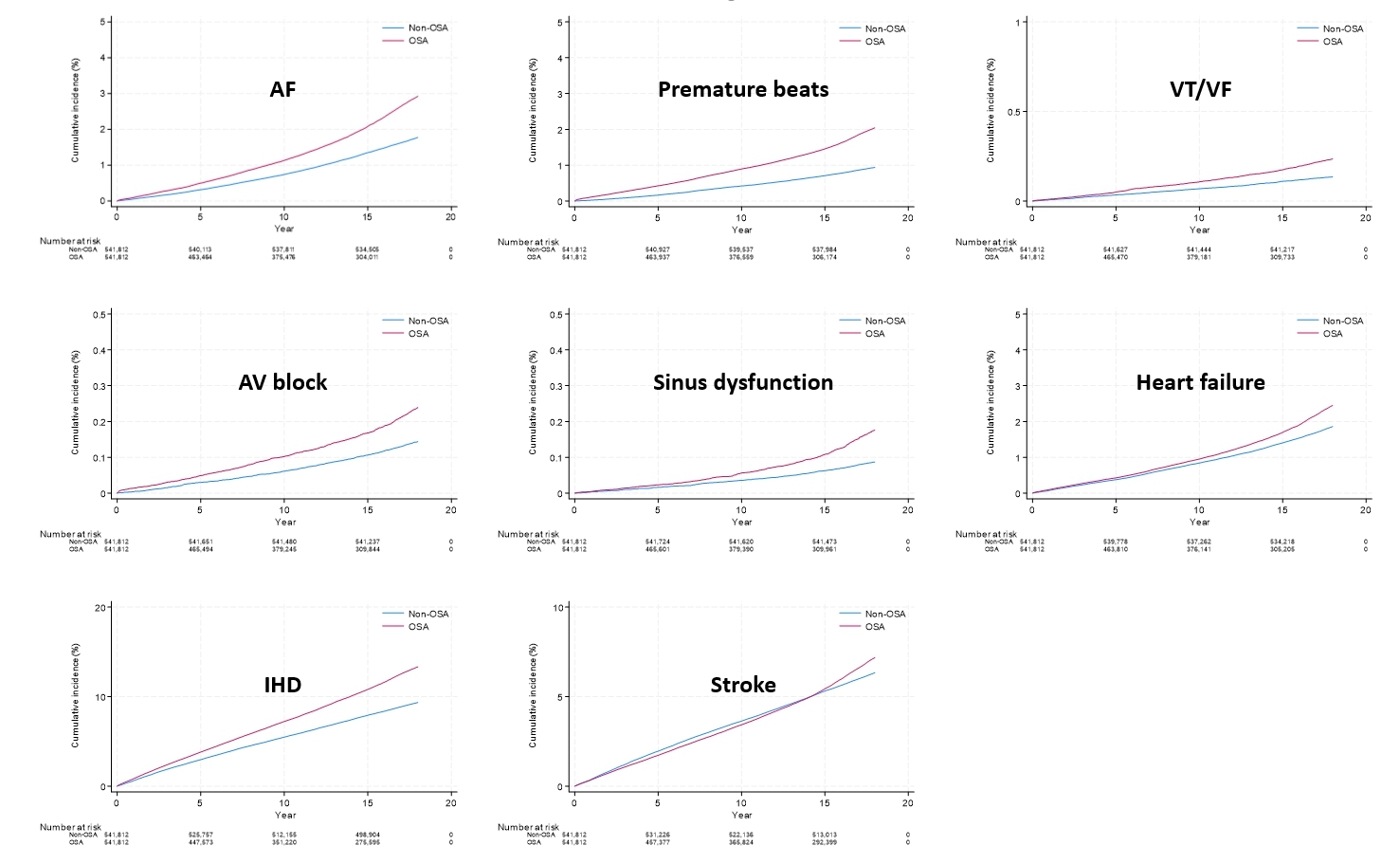
Methods We conducted a retrospective cohort study using the Korean National Health Insurance Service database, including 547,749 patients diagnosed with OSA and 2,282,415 matched controls between 2002 and 2020. Following exclusion criteria and 1:1 propensity score matching, 541,812 individuals were included in each group. The primary outcomes were incidence of atrial fibrillation (AF), premature beats, ventricular arrhythmias, atrioventricular block, sinus node dysfunction, heart failure, ischemic heart disease (IHD), and stroke. Cumulative incidence was assessed using Kaplan–Meier survival curves. Hazard ratios (HR) were estimated using Cox proportional hazards models adjusted for relevant covariates.
Results Over a 15-year follow-up period, the OSA group exhibited significantly higher incidence rates of all cardiovascular outcomes than the control group. In the matched cohort, adjusted HR were elevated for AF (1.82 [1.77–1.87]), premature beats (2.25 [2.17–2.34]), ventricular arrhythmias (1.81 [1.64–1.99]), AV block (1.81 [1.64–1.99]), sinus node dysfunction (2.22 [1.96–2.50]), heart failure (1.43 [1.39–1.48]), IHD (1.54 [1.52–1.56]), and stroke (1.20 [1.18–1.22]) (all p < 0.0001). The incidence of conduction disorders, AV block, and sinus node dysfunction nearly doubled in the OSA group.
Conclusion OSA was independently associated with an increased long-term risk of various cardiovascular outcomes, including arrhythmias, ischemic events, and conduction system disorders. This supports the importance of early identification and longitudinal management of cardiovascular risk in this population.
Kim, Sung-won
(
Jeonbuk National University Hospital
, Jeonju-si , Korea (the Republic of) )
Jung, Lae-young
(
Jeonbuk National University Hospital
, Jeonju-si , Korea (the Republic of) )
Author Disclosures:
Sung-Won Kim:DO NOT have relevant financial relationships
| Lae-Young Jung:No Answer