Arrhythmias as Early Predictors of CKD: Real-World Evidence from a National Cardio-Kidney-Metabolic Cohort
Abstract Body (Do not enter title and authors here): Background While CKD is a known risk factor for arrhythmias, the reverse association, arrhythmias preceding CKD, is also recognized. Emerging evidence highlights a bidirectional relationship between the two conditions. This study focuses on the scenario in which arrhythmias precede CKD, aiming to clarify this pathway and its implications for early intervention. Identifying early clinical signals in the cardio-kidney-metabolic (CKM) continuum could support proactive care strategies.
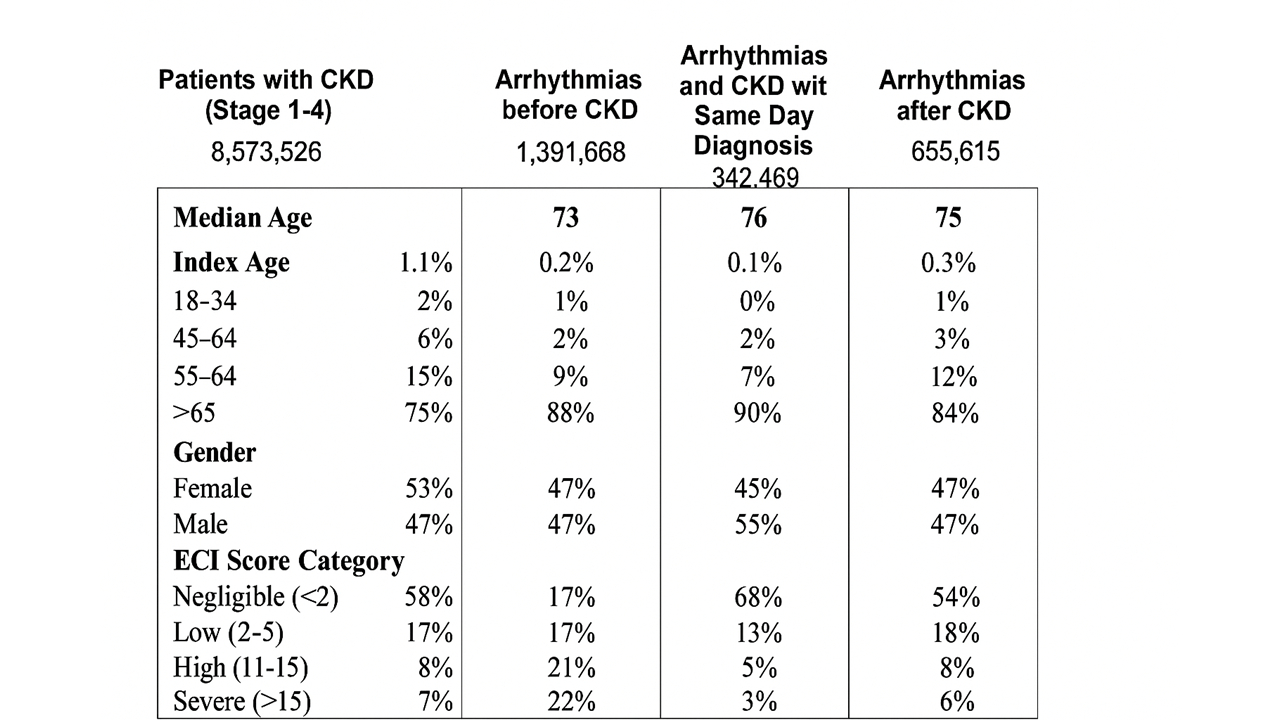
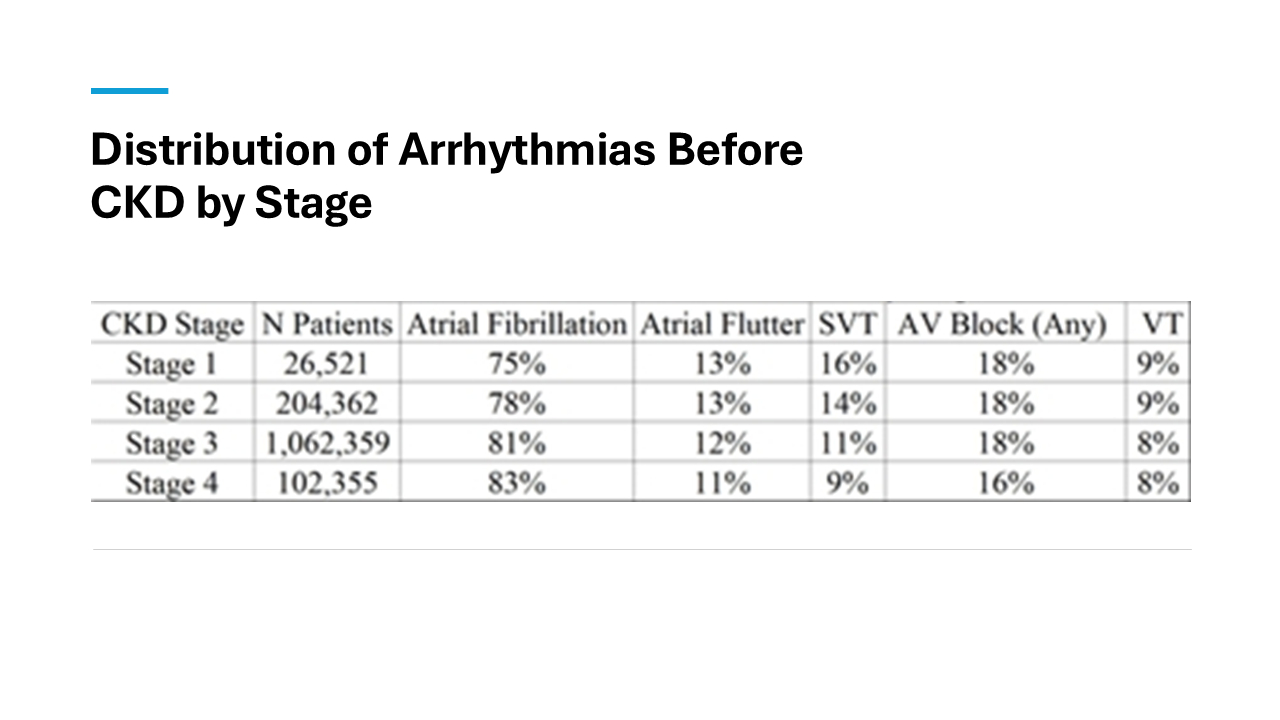
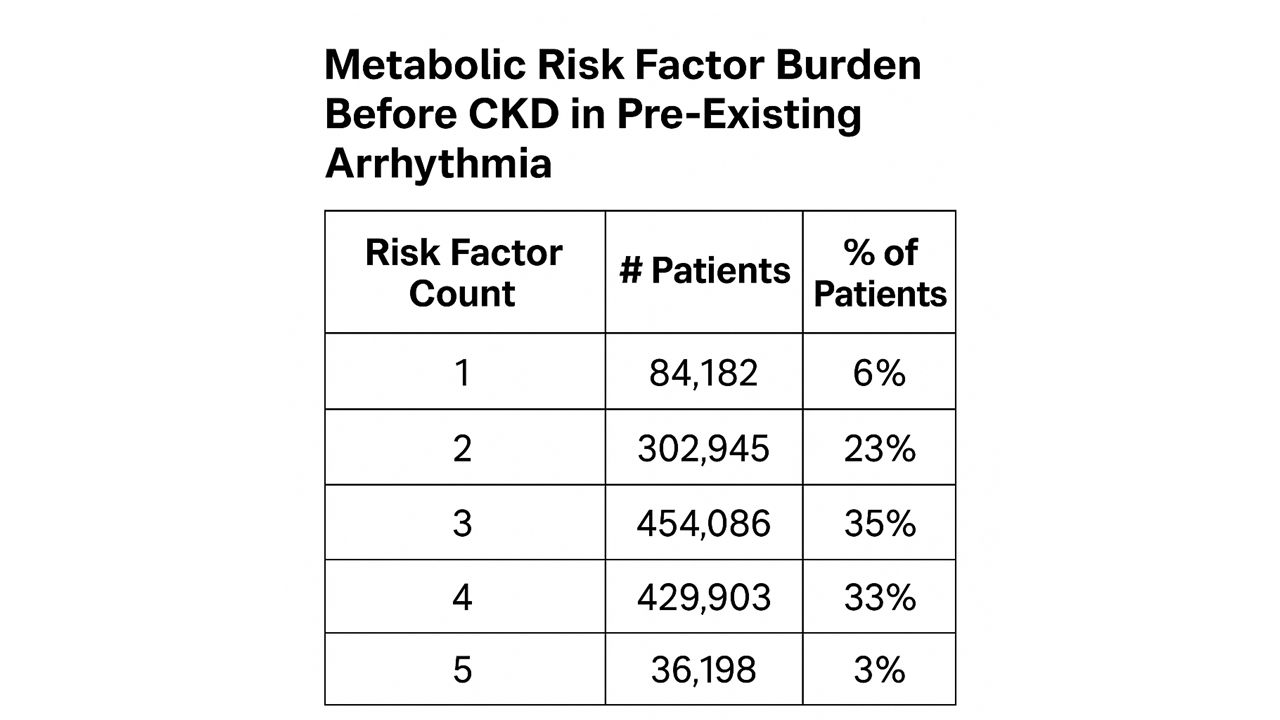
Methods We conducted a retrospective study using EVERSANA Open Claims data from 2018 to 2024. Adults with at least one claim for chronic kidney disease (CKD) stages 1–4 and a documented arrhythmia—atrial fibrillation (AF), supraventricular tachycardia, atrioventricular block, or ventricular tachycardia—were included. All patients had a minimum of 12 months of baseline data prior to their initial CKD diagnosis. Patients were categorized based on the timing of arrhythmia relative to the CKD index date: before, on the same day, or after. Cardiovascular (CV) risk factors—including major adverse cardiovascular events (MACE), hypertension, and other non-MACE cardiovascular diseases—as well as metabolic risk factors including diabetes, hypertension, dyslipidemia, liver dysfunction, and obesity were assessed within six months of arrhythmia diagnosis. Results Among 8.5 million CKD patients, 53% were female and 75% were ≥65 years (mean: 69). Arrhythmias occurred before CKD in 58%, same day in 14%, and after 28%. AF was the most common arrhythmia (75–83%). Overall, 56% had cardiovascular risk factors within 6 months before or after AOI. In patients with AF before CKD, 68% had hypertension, 45% had MACE, and 2% had non-MACE CVD. Metabolic comorbidities were highly prevalent: 94% had ≥1, 71% had ≥3comorbidities, and 31% had diabetes, hypertension, dyslipidemia, and obesity. Conclusion Arrhythmias (mainly AF) were present in over half of CKD patients prior to diagnosis, often with substantial cardiometabolic burden. These findings suggest arrhythmias may signal early progression toward CKD. Ambulatory monitoring could help identify high-risk individuals earlier and guide preventive care.
Russo, Pierantonio
(
EVERSANA LLC
, Cherry Hill , New Jersey , United States )
Nathan, Ramaa
(
EVERSANA LLC
, Cherry Hill , New Jersey , United States )
Poh, Jason
(
EVERSANA LLC
, Cherry Hill , New Jersey , United States )
Singh, Harjeet
(
EVERSANA LLC
, Cherry Hill , New Jersey , United States )
Boyle, Ken
(
irhythm
, San Francisco , California , United States )
Wright, Brent
(
iRhythm Tech
, Washougal , Washington , United States )
Hendrickson, Erik
(
iRhythm Tech
, Washougal , Washington , United States )
Author Disclosures:
Pierantonio Russo:DO NOT have relevant financial relationships
| Ramaa Nathan:DO NOT have relevant financial relationships
| Jason Poh:No AnswerKen Boyle:No Answer
| Brent Wright:DO have relevant financial relationships
;
Employee:iRhythm Technologies:Active (exists now)
; Individual Stocks/Stock Options:iRhythm Technologies:Active (exists now)
| Erik Hendrickson:DO have relevant financial relationships
;
Employee:iRhythm Technologies:Active (exists now)
; Individual Stocks/Stock Options:iRhythm Technologies:Active (exists now)