
Logo

American Heart Association

  18
  0


Final ID: MP1393

Rapidly Progressive Cardiogenic Shock in a 19-Year-Old Woman

Abstract Body (Do not enter title and authors here): BACKGROUND
Cardiogenic shock is caused by a wide range of pathogenic processes that negatively impact myocardial function and is associated with very elevated mortality rates.
CASE DESCRIPTION:
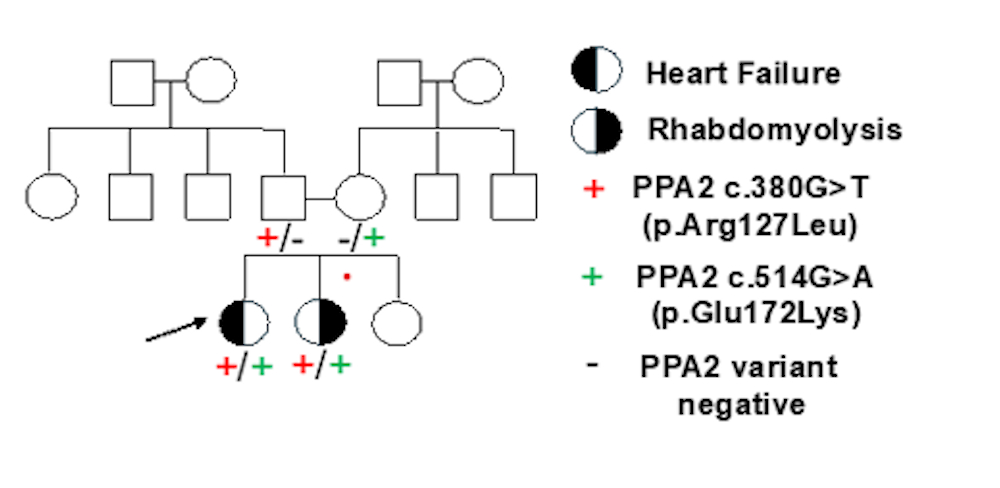
A 19-year-old woman with no significant cardiac history presented with progressive dyspnea and pleuritic chest pain and was found to be in cardiogenic shock with severely reduced left ventricular function. A native heart biopsy was negative for myocarditis, but there was evidence of cardiomyocyte vacuolization and ultrastructural examination revealed a loss of mitochondrial cristae without evidence of glycogen or lipid accumulation. (Figure 1) The patient received cardiopulmonary mechanical circulatory support with venoarterial extracorporeal membrane oxygenation (ECMO), followed by cardiac transplant. Genetic testing of the patient and her parents revealed that the patient inherited biallelic pathogenic DNA variants in the pyrophosphatase 2 (PPA2) gene. (Figure 2)
DISCUSSION:
For young patients experiencing acute cardiogenic shock, it is critical to rapidly investigate multiple potential causes to determine if there are avenues for targeted treatment. This should include diagnostics imaging and endomyocardial biopsy with electron microscopy to evaluate cardiomyocyte ultrastructure. Although, not performed rapidly, genetic testing provides critical complimentary diagnostic information. When medical management of cardiogenic shock is insufficient, a cardiogenic shock team approach should be employed to determine appropriate temporary mechanical circulatory support and candidacy for heart transplantation or durable VAD. In this particular case, the diagnosis of cardiogenic shock due to biallelic PPA2 variants was confirmed through these diagnostic tests. The PPA2 gene encodes a mitochondrial protein that regulates cellular phosphate metabolism. Biallelic loss of function DNA variants in PPA2 are associated with progressive cardiac failure or cardiac arrest in infants and adolescents, typically after a febrile illness or alcohol consumption. The patient has shown significant improvement and has been doing well for nearly four years after the heart transplant.
CONCLUSION:
Tissue analysis and genetic testing are important components of the diagnostic evaluation of patients that present with fulminant heart failure. Cardiac transplant is an effective method to treat cardiogenic shock in patients with biallelic PPA2 DNA variants.
  • Bosah, Arinze  ( University of Pittsburgh Medical Center , Pittsburgh , Pennsylvania , United States )
  • Minervini, Marta  ( University of Pittsburgh Medical Center , Pittsburgh , Pennsylvania , United States )
  • Demetris, Anthony  ( University of Pittsburgh Medical Center , Pittsburgh , Pennsylvania , United States )
  • Keebler, Mary  ( University of Pittsburgh Medical Center , Pittsburgh , Pennsylvania , United States )
  • Becker, Jason  ( University of Pittsburgh Medical Center , Pittsburgh , Pennsylvania , United States )
  • Author Disclosures:
    Arinze Bosah: DO NOT have relevant financial relationships | Marta Minervini: No Answer | Anthony Demetris: No Answer | MARY KEEBLER: DO NOT have relevant financial relationships | Jason Becker: No Answer
Meeting Info:

Scientific Sessions 2025

2025

New Orleans, Louisiana

Session Info:

Clinical Case: Heart Failure and Cardiomyopathy

Sunday, 11/09/2025 , 11:50AM - 01:05PM

Moderated Digital Poster Session

More abstracts from these authors:
p21 Regulates Hypertrophic Cardiomyopathy Remodeling By Inhibition of Cardiomyocyte Endoreplication

Pal Soumojit, Glennon Michael, Nixon Benjamin R., Chetkof Ethan J, Shridhar Puneeth, Kathiresan Chintha M., Clavere Nicolas, Banerjee Dipanjan, Becker Jason

Cardiomyocyte Selective Overexpression of Protein Kinase G 1 Improves Left Ventricular Systolic And Diastolic Function in Murine Models of Cardiomyopathy

Pal Soumojit, Kim Jenny, Molakaseema Sejal, Letcher Katie, Wang Bing, Becker Jason

You have to be authorized to contact abstract author. Please, Login
Not Available