
Logo

American Heart Association

  21
  0


Final ID: HCM11

Longterm outcomes of percutaneous endocardial septal radiofrequency ablation for patients with hypertrophic obstructive cardiomyopathy

Abstract Body (Do not enter title and authors here): Background: Percutaneous endocardial septal radiofrequency ablation (PESA) holds promise as a minimally invasive interventional treatment for drug-refractory hypertrophic obstructive cardiomyopathy (HOCM). However, there remains a scarcity of data from relatively large sample sizes and long-term follow-up studies. This study aims to explore the long-term efficacy and safety of PESA.
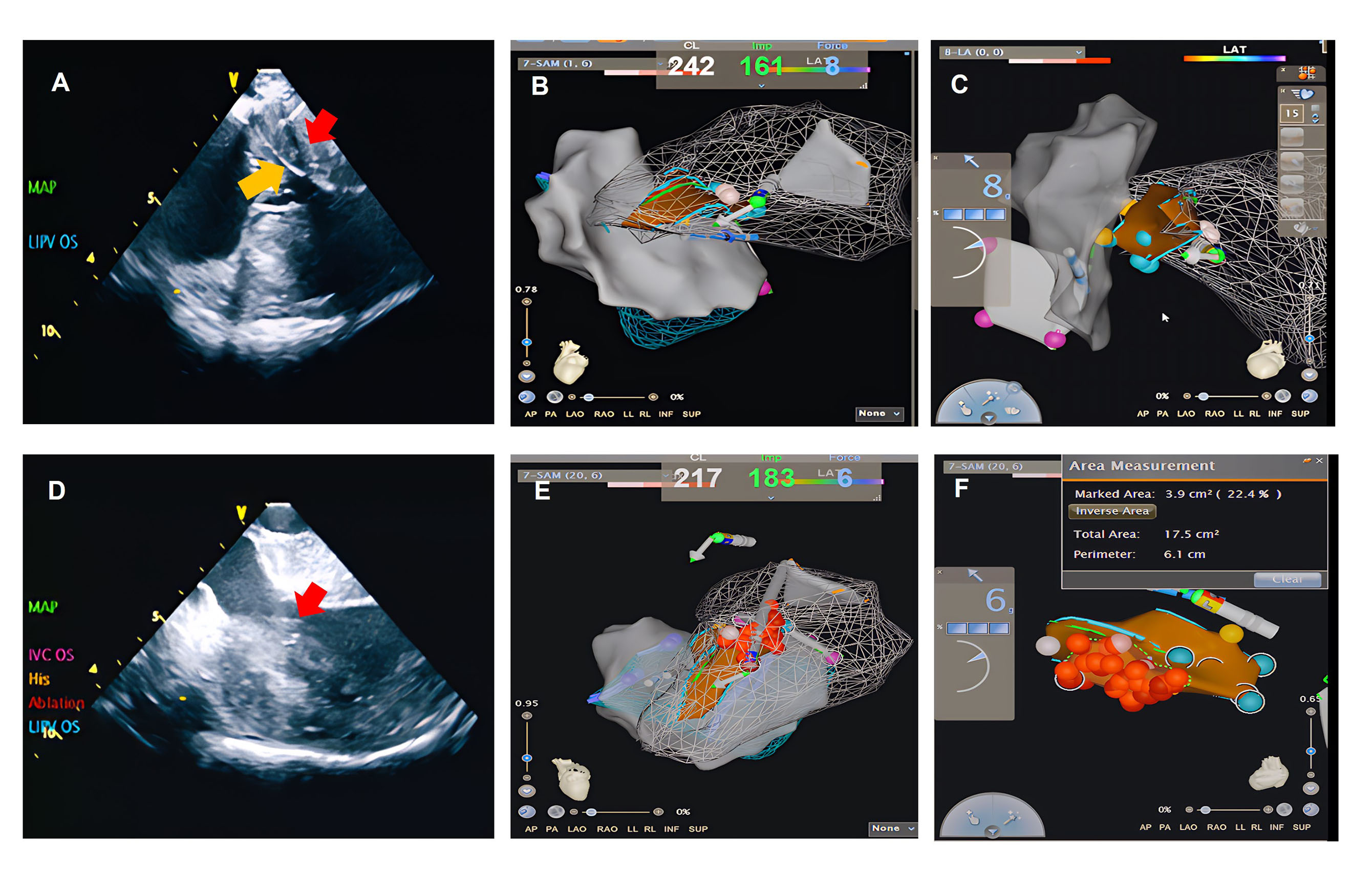
Methods: From March 2017 to November 2024, PESA was performed on 38 patients with hypertrophic obstructive cardiomyopathy at our center. The procedure was guided by a combination of a three-dimensional electrophysiological mapping system and intracardiac echocardiography (ICE). The primary outcome was the reduction in left ventricular outflow tract gradient (LVOTG) at 3 months or more post-PESA. Secondary outcomes included periprocedural major adverse clinical events and the need for surgical myectomy.
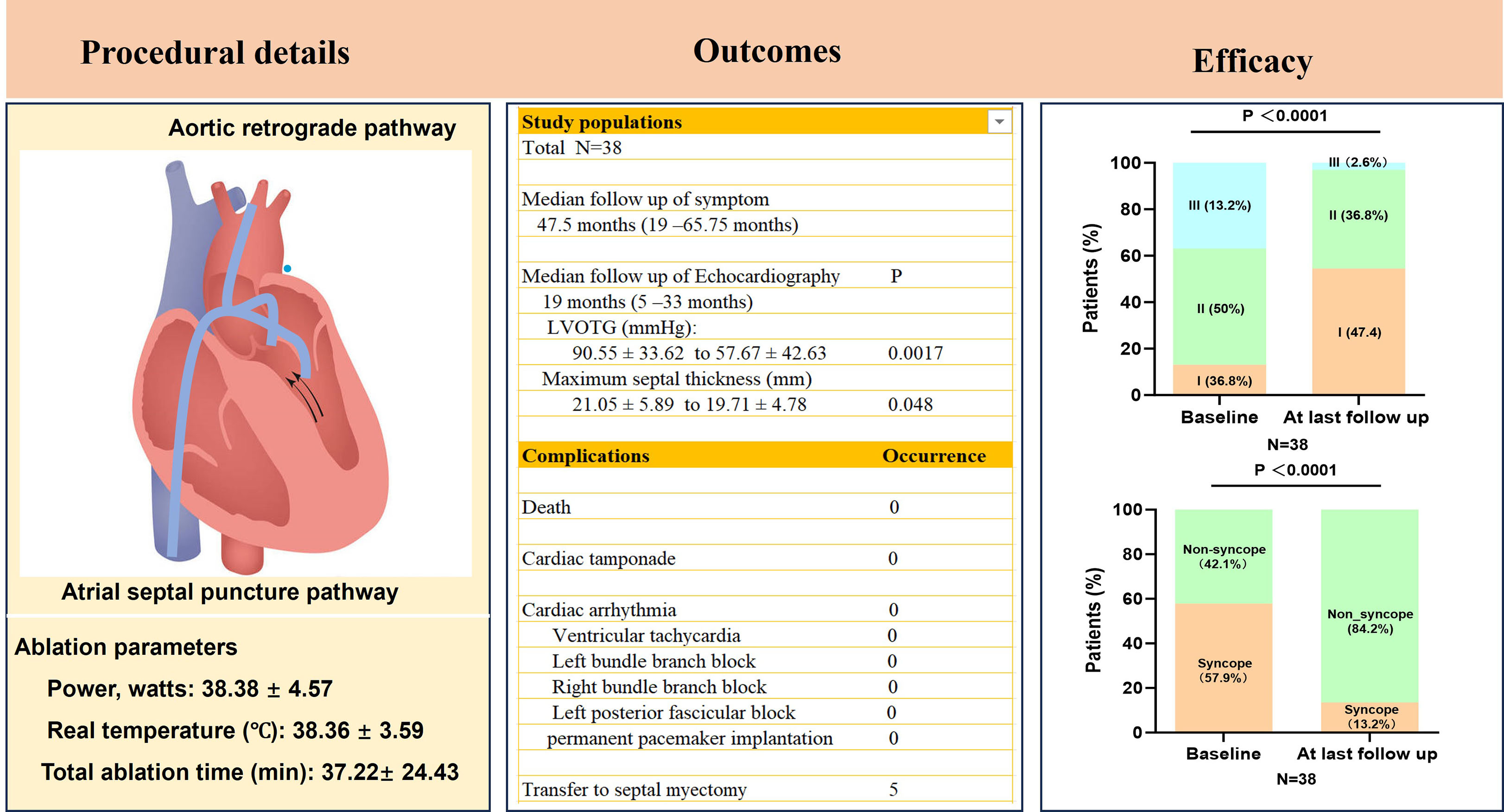
Results: Patients were followed for a median of 47.5 months (IQR, 19–65.75 months), with transthoracic echocardiography performed at a median of 19 months (IQR, 5–33 months) post-procedure. At the last follow-up, the maximum septal thickness decreased from 21.05 ± 5.89 mm to 19.71 ± 4.78 mm (P = 0.048), and the resting left ventricular outflow gradient decreased from 89.86 ± 34.66 mmHg to 59.37 ± 43.17 mmHg (P < 0.001). The percentage of patients with New York Heart Association (NYHA) functional class III decreased from 13.2% to 2.6%, while those with NYHA functional class I increased from 36.8% to 47.4% (P < 0.001). The number of patients experiencing syncope or presyncope decreased from 22 (57.9%) before PESA to 5 (13.2%) post-PESA (P < 0.001). Among the 38 patients, there were no deaths, no cardiac tamponade, no lethal tachycardia or bradycardia arrhythmias, and no permanent pacemaker implantations. Five patients underwent surgical myectomy approximately two years post-PESA due to severe symptoms during follow-up.
Conclusions: PESA effectively reduces LVOT obstruction and improves symptoms without adverse events or complications during long-term follow-up. It may serve as an effective and safe treatment option for HOCM.
  • Tian, Aiju  ( Fuwai Hospital, National Center for Cardiovascular Diseases, Chinese Academy of Medical Sciences and Peking Union Medical College , Beijing , China )
  • Li, Jiaju  ( Fuwai Hospital, National Center for Cardiovascular Diseases, Chinese Academy of Medical Sciences and Peking Union Medical College , Beijing , China )
  • Yao, Yan  ( Fuwai Hospital, National Center for Cardiovascular Diseases, Chinese Academy of Medical Sciences and Peking Union Medical College , Beijing , China )
  • Jia, Yuhe  ( Fuwai Hospital, National Center for Cardiovascular Diseases, Chinese Academy of Medical Sciences and Peking Union Medical College , Beijing , China )
  • Author Disclosures:
    Aiju Tian: DO NOT have relevant financial relationships | Jiaju Li: DO NOT have relevant financial relationships | yan yao: No Answer | Yuhe Jia: No Answer
Meeting Info:

Scientific Sessions 2025

2025

New Orleans, Louisiana

Session Info:

Hypertrophic Cardiomyopathy Medical Society Posters

Friday, 11/07/2025 , 06:30PM - 07:30PM

Abstract Poster Board Session

You have to be authorized to contact abstract author. Please, Login
Not Available