The Jack Sarver Prize in Clinical Science: Aspirin Prophylaxis for Preeclampsia Prevention in Nigeria: A Mixed Methods Study
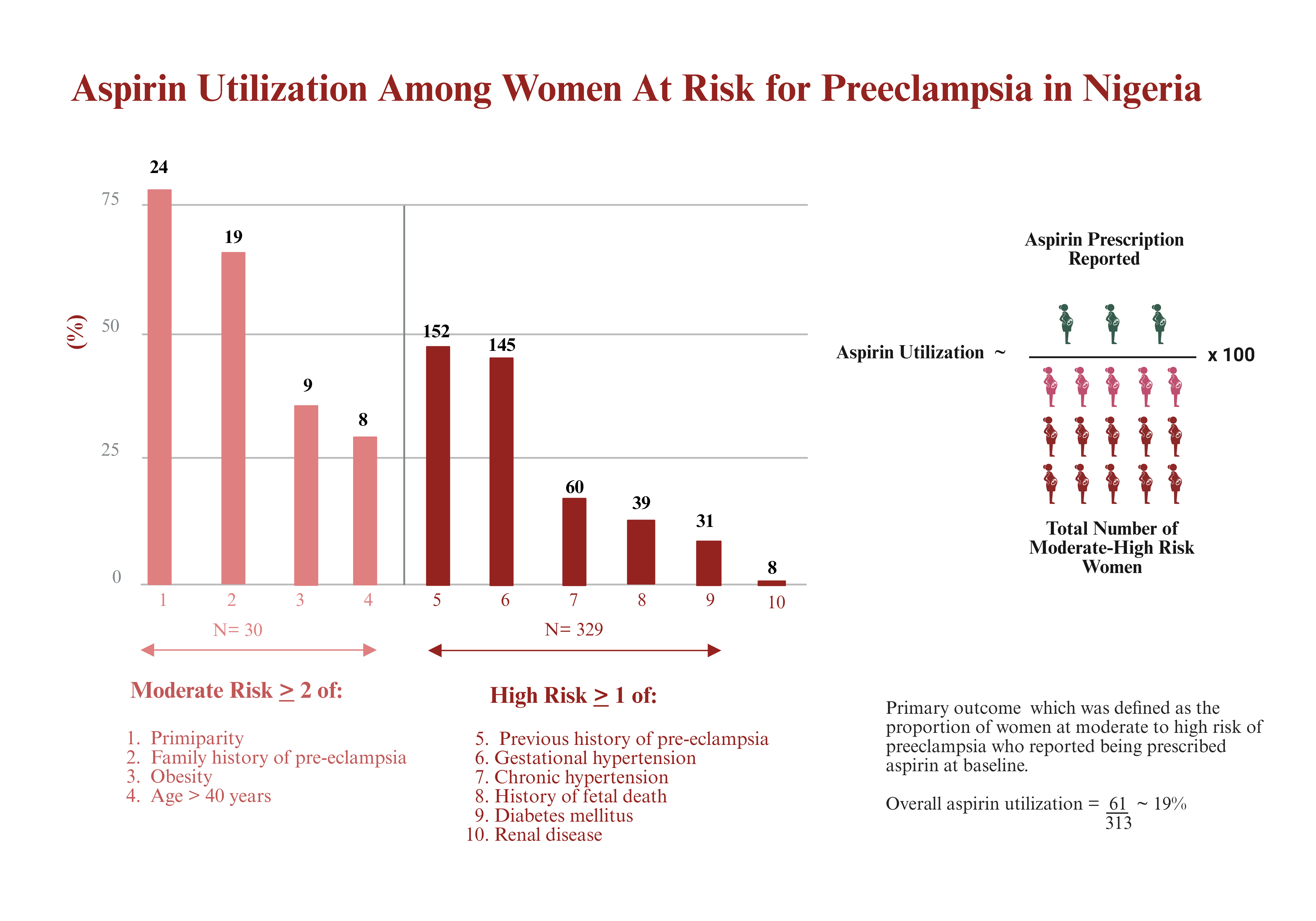
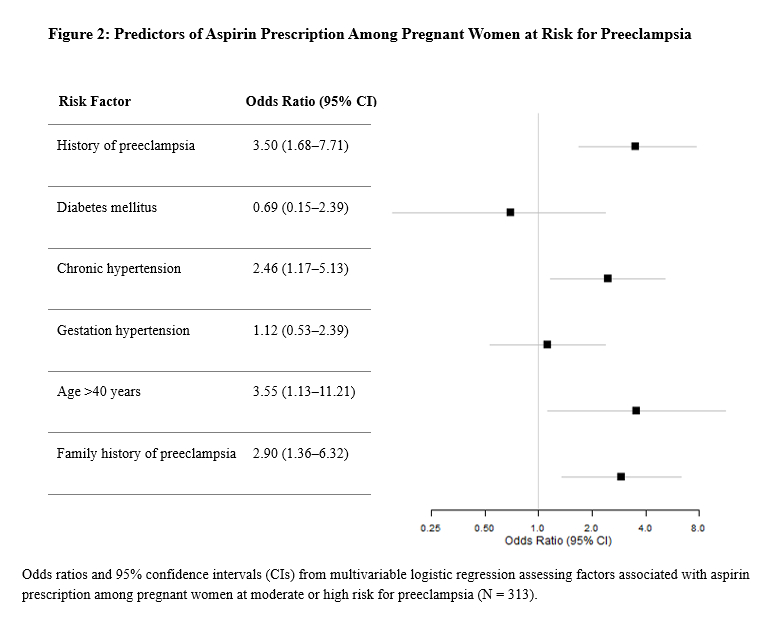
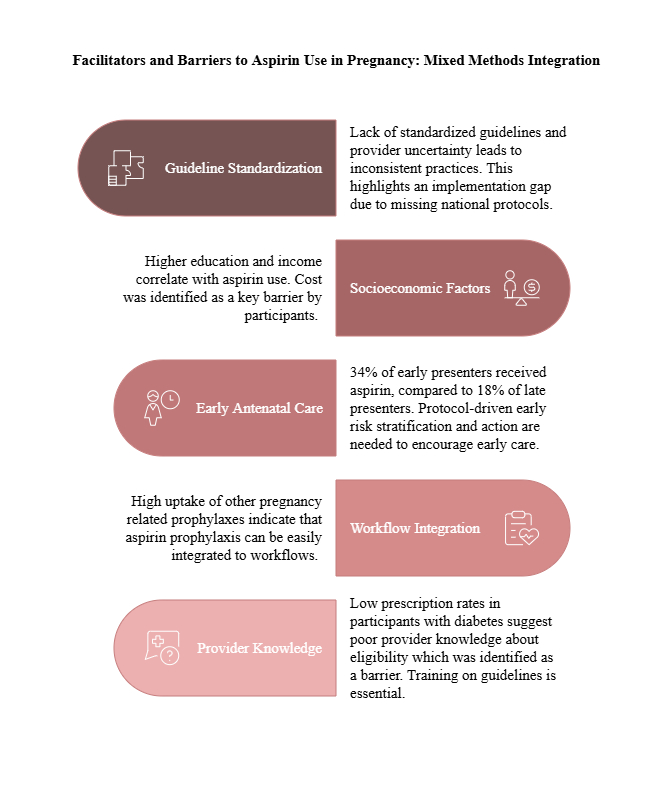
Abstract Body (Do not enter title and authors here): Background More women die in Nigeria around the time of childbirth than in any other country in the world and preeclampsia is a leading cause of these deaths. Despite evidence-based guidelines, the uptake of aspirin prophylaxis in high-burden settings like Nigeria remains unclear. This study assessed aspirin use among at-risk pregnant women and explored multi-level barriers and facilitators to implementation. Methods We conducted an explanatory sequential mixed-methods study across four tertiary hospitals in Nigeria from October 2023 to March 2024. The quantitative phase surveyed 1,200 pregnant women stratified by preeclampsia risk (low, moderate, high) per WHO criteria, with self-reported aspirin use. The qualitative phase included 18 in-depth interviews and 8 focus group discussions, which were analyzed using the updated Consolidated Framework for Implementation Research. Results Of 1,159 participants with complete risk profiles, 30 (3%) were classified as moderate risk and 329 (28%) as high risk for preeclampsia. Among 313 participants with available aspirin data, 14% of moderate-risk and 20% of high-risk women reported receiving an aspirin prescription. Early antenatal presentation (before 16 weeks) was associated with higher aspirin use (34% vs. 19%, p = 0.008). Participants with a personal history of preeclampsia, chronic hypertension, age >40 years, or a family history of preeclampsia were more likely to receive aspirin than those with diabetes. Lower educational attainment and income levels were associated with reduced odds of aspirin use. Preeclampsia and eclampsia occurred in 21% and 3%, respectively, of the moderate- to high-risk group, compared to 5% and 2% among low-risk participants. Qualitative data revealed barriers including poor dissemination of guidelines, limited provider and patient awareness, delayed antenatal care, and cost. Key facilitators included strong provider motivation and integration with existing antenatal workflows. Conclusion Aspirin use for preeclampsia prevention remains low among at-risk pregnant women in Nigerian tertiary hospitals. Targeted implementation strategies—focused on provider training, improved guideline dissemination, patient education, and policy measures to enhance access—are urgently needed. Scaling this evidence-based, low-cost intervention could significantly reduce maternal morbidity and mortality in Nigeria and other high-burden settings.
Mahmoud, Zainab
(
Washington University in St. Louis
, Wildwood , Missouri , United States )
Crook, Laura
(
Washington University in St. Louis
, Saint Louis , Missouri , United States )
Onyia, Chibundo
(
University of Abuja
, Gwagwalada, Abuja , Nigeria )
Lindley, Kathryn
(
Vanderbilt University
, Nashville , Tennessee , United States )
Ojji, Dike
(
University of Abuja
, Gwagwalada, Abuja , Nigeria )
Huffman, Mark
(
Washington University in St. Louis
, Saint Louis , Missouri , United States )
Author Disclosures:
Zainab Mahmoud:DO NOT have relevant financial relationships
| Elena Deych:No Answer
| Dennis Isah:No Answer
| Joshua Zaman:No Answer
| Mahmoud Rabiah Ahmad:No Answer
| Hadiza Saidu:No Answer
| Victor Davila:DO NOT have relevant financial relationships
| Sule Gaya:No Answer
| Safiya Zahradeen:No Answer
| Kamilu Karaye:DO NOT have relevant financial relationships
| Kathryn Lindley:DO NOT have relevant financial relationships
| Laura Crook:DO NOT have relevant financial relationships
| Dike Ojji:DO NOT have relevant financial relationships
| Mark Huffman:DO have relevant financial relationships
;
Consultant:The George Institute for Global Health:Active (exists now)
; Consultant:PwC Switzerland:Past (completed)
| Chibundo Onyia:No Answer
| Nura Idris:No Answer
| Kabiru Ibrahim:DO NOT have relevant financial relationships
| Chukwuebuka Okoye:DO NOT have relevant financial relationships
| Adaego Orji:No Answer
| Cecilia Nartey:No Answer
| Elizabeth Emmanuel:No Answer