The Role of Home Visiting Programs in Addressing Postpartum Cardiovascular Care Gaps: Evidence from a Large U.S. Community-Based Sample
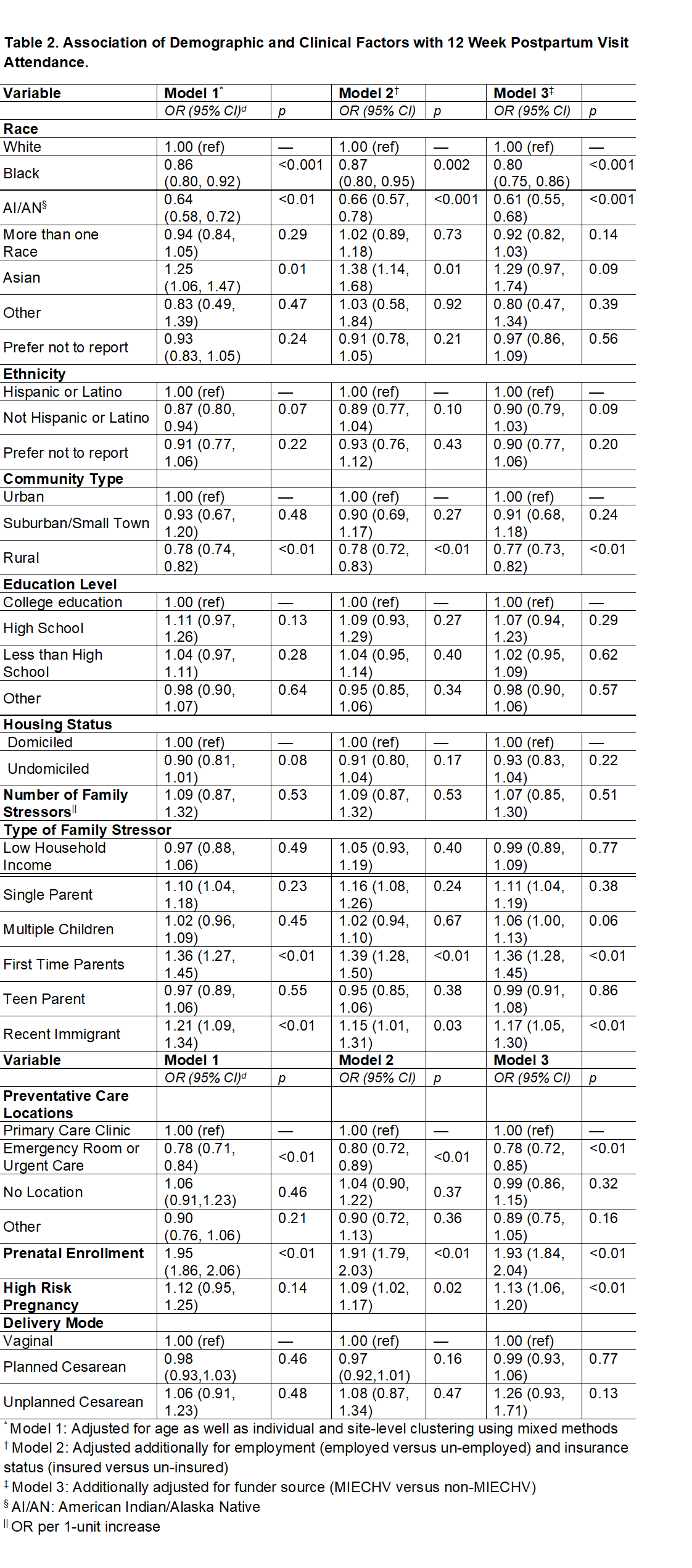
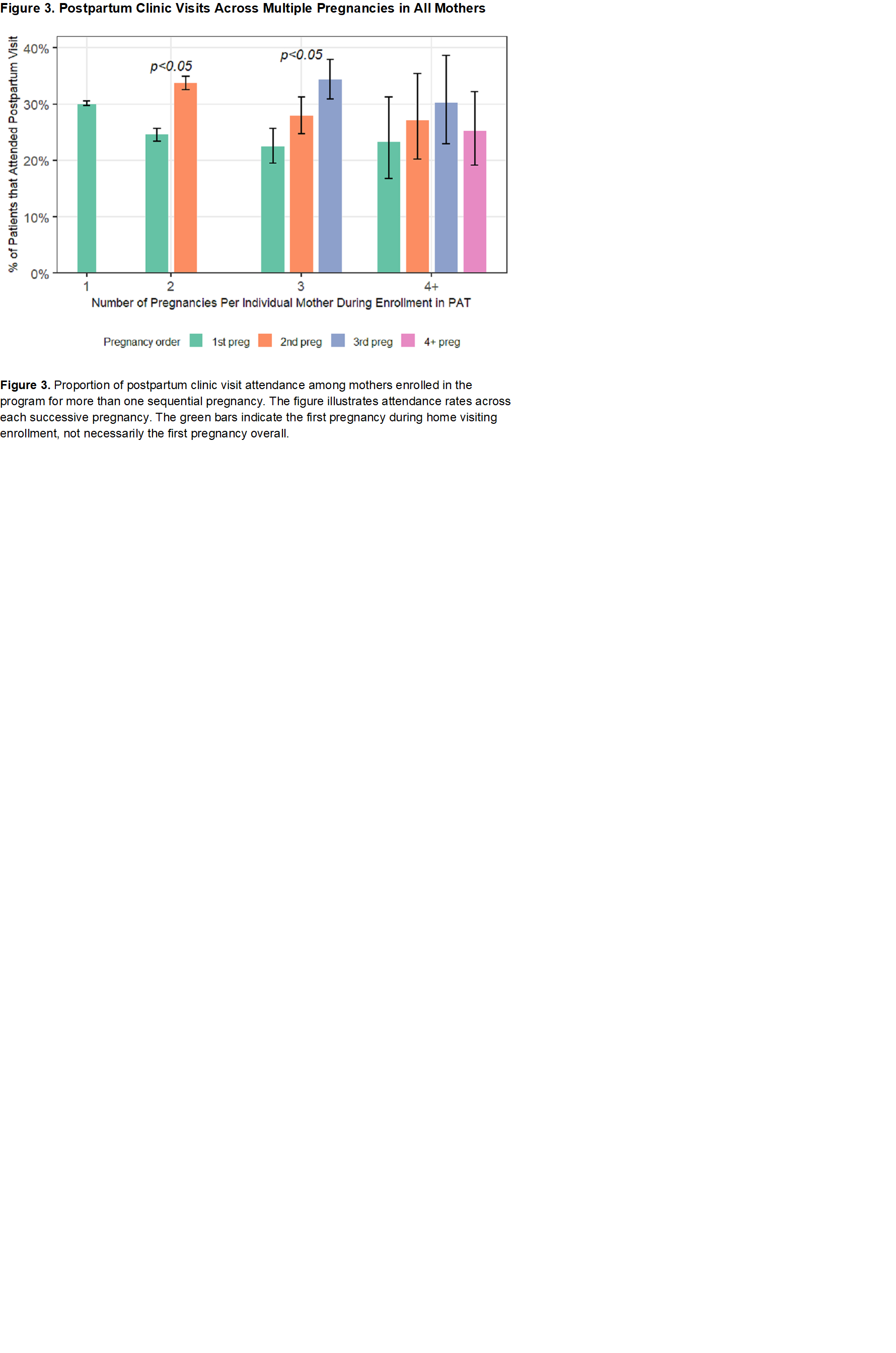
Abstract Body: Background Maternal mortality in the United States has doubled over the last two decades, largely from cardiovascular disease, with over half of deaths occurring postpartum. Despite national calls to action, postpartum visit attendance remains low, even among high-risk pregnancies. Most prior studies rely on small, single-center datasets, and the role of community-based programs, such as home visiting, in supporting clinical engagement remains poorly understood. This study describes postpartum clinic visit attendance in a large national sample of home visiting participants, identifies sociodemographic and clinical determinants, and examines how enrollment timing and duration relate to follow-up. Methods This retrospective cross-sectional study analyzed mothers enrolled in Parents as Teachers, a national home visiting program, between July 2016 and September 2024. The primary outcome was attendance at a postpartum clinic visit within 12 weeks of delivery. Participants were included if they had a live birth and follow-up through 12 weeks postpartum. Variables studied included age, race/ethnicity, community type, employment, housing, education, family stressors, prenatal enrollment in home visiting, high-risk pregnancy status, delivery mode, and location of care prior to pregnancy. Multivariable logistic regression was adjusted for age, employment, insurance, and funding source, with clustering by site and participant. Results Among 46,899 pregnancies, median maternal age was 27 years (IQR 18–36). Overall, 30.1% (95% CI 29.6–30.5) attended a postpartum visit and 33.2% (95% CI 32.3–34.1) among high-risk pregnancies. Attendance was lower among Black (adjusted OR 0.80 [95% CI 0.75–0.86]) and American Indian/Alaska Native (0.61 [0.55–0.68]) participants and rural participants (0.77 [0.73–0.82]), and higher among first-time parents (1.36 [1.28–1.45]), recent immigrants (1.17 [1.05–1.30]), women with an established care source (1.41 [1.31–1.52]), and those enrolled prenatally in PAT (1.93 [1.84–2.04]). Among women with multiple pregnancies, postpartum attendance increased with each subsequent pregnancy. Conclusions Postpartum clinic attendance was low, even among high-risk pregnancies. Early and sustained home visiting was associated with stronger linkage to postpartum care, underscoring the potential of community-based programs as feasible, broad-reaching strategies to address persistent postpartum care gaps, particularly for those at high postpartum cardiovascular risk.
Vijay, Aishwarya
(
Washington University in St. Louis
, St. Louis , Missouri , United States )
Kemner, Allison
(
Parents as Teachers National
, St. Louis , Missouri , United States )
Hoerchler, Karen
(
Parents as Teachers National
, St. Louis , Missouri , United States )
Edwards, Abigail
(
Parents as Teachers National
, St. Louis , Missouri , United States )
Kelly, Jeannie
(
Washington University in St. Louis
, St. Louis , Missouri , United States )
Tabak, Rachel
(
Washington University in St. Louis
, Saint Louis , Missouri , United States )
Huffman, Mark
(
Washington University in St. Louis
, Saint Louis , Missouri , United States )
Mahmoud, Zainab
(
Washington University in St. Louis
, Wildwood , Missouri , United States )