Comparing Traditional and Newer Definitions of Obesity in Relation to Incident Cardiovascular Disease and Cancer Risk: A Prospective Cohort Study
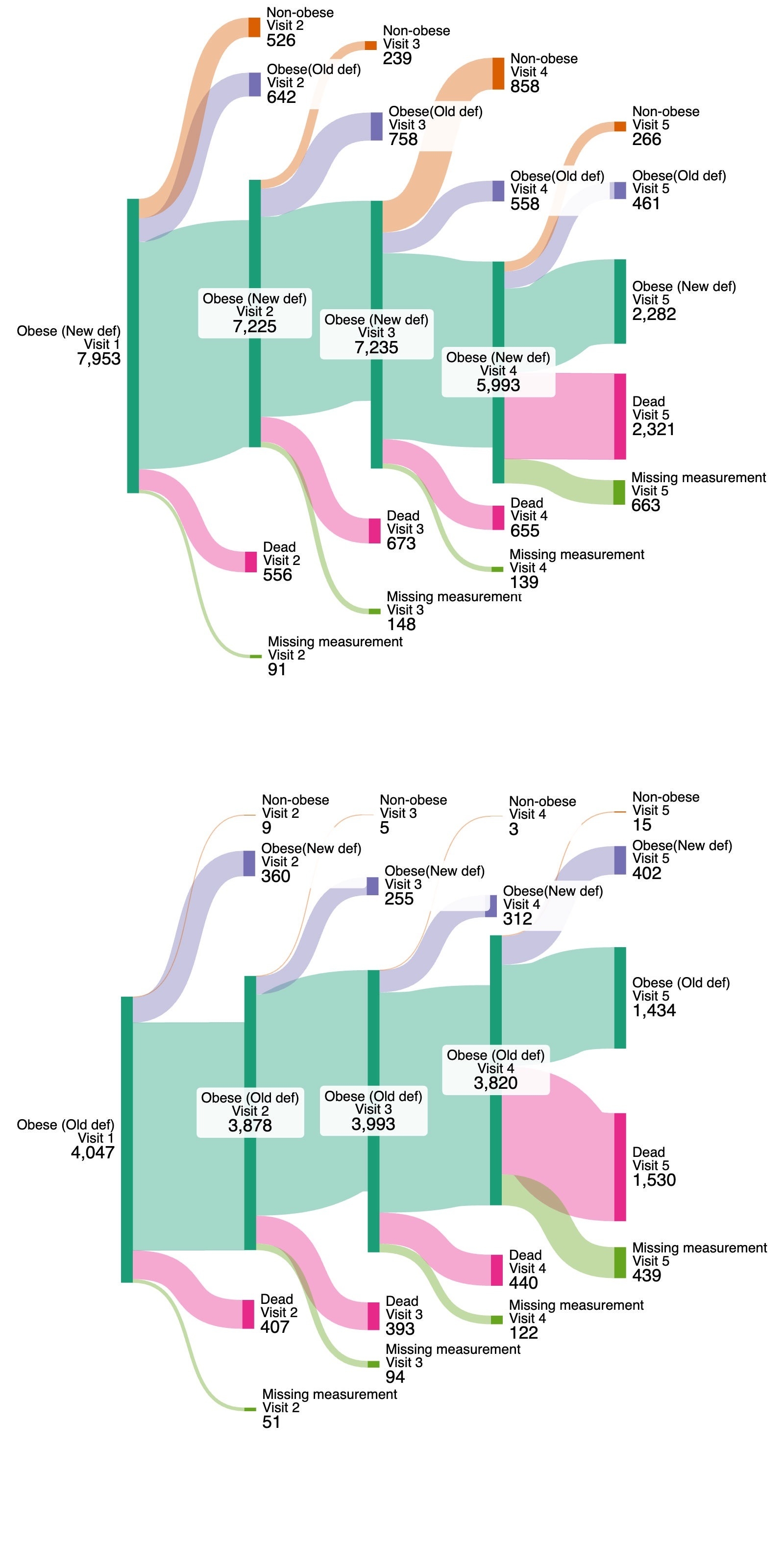
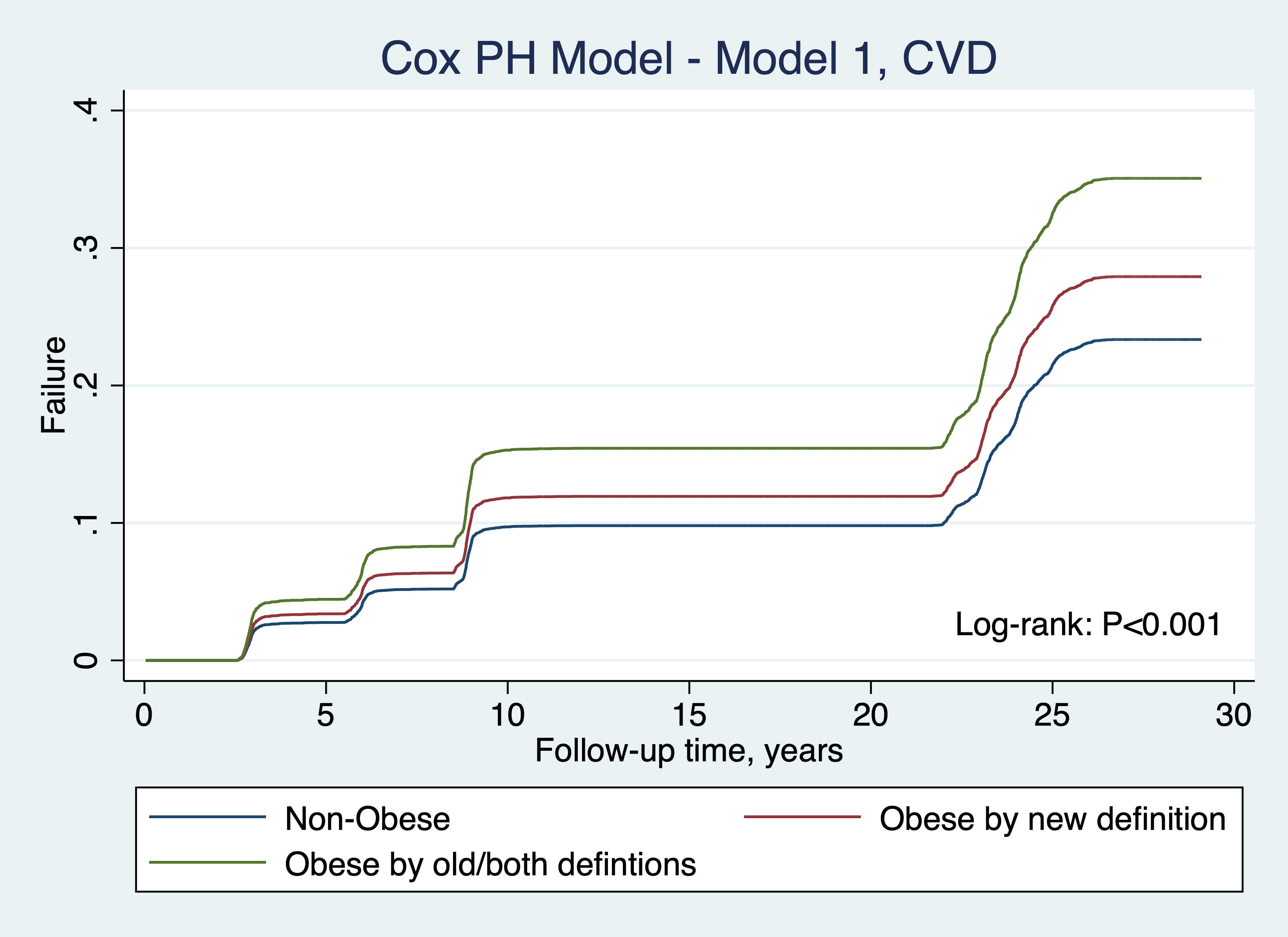
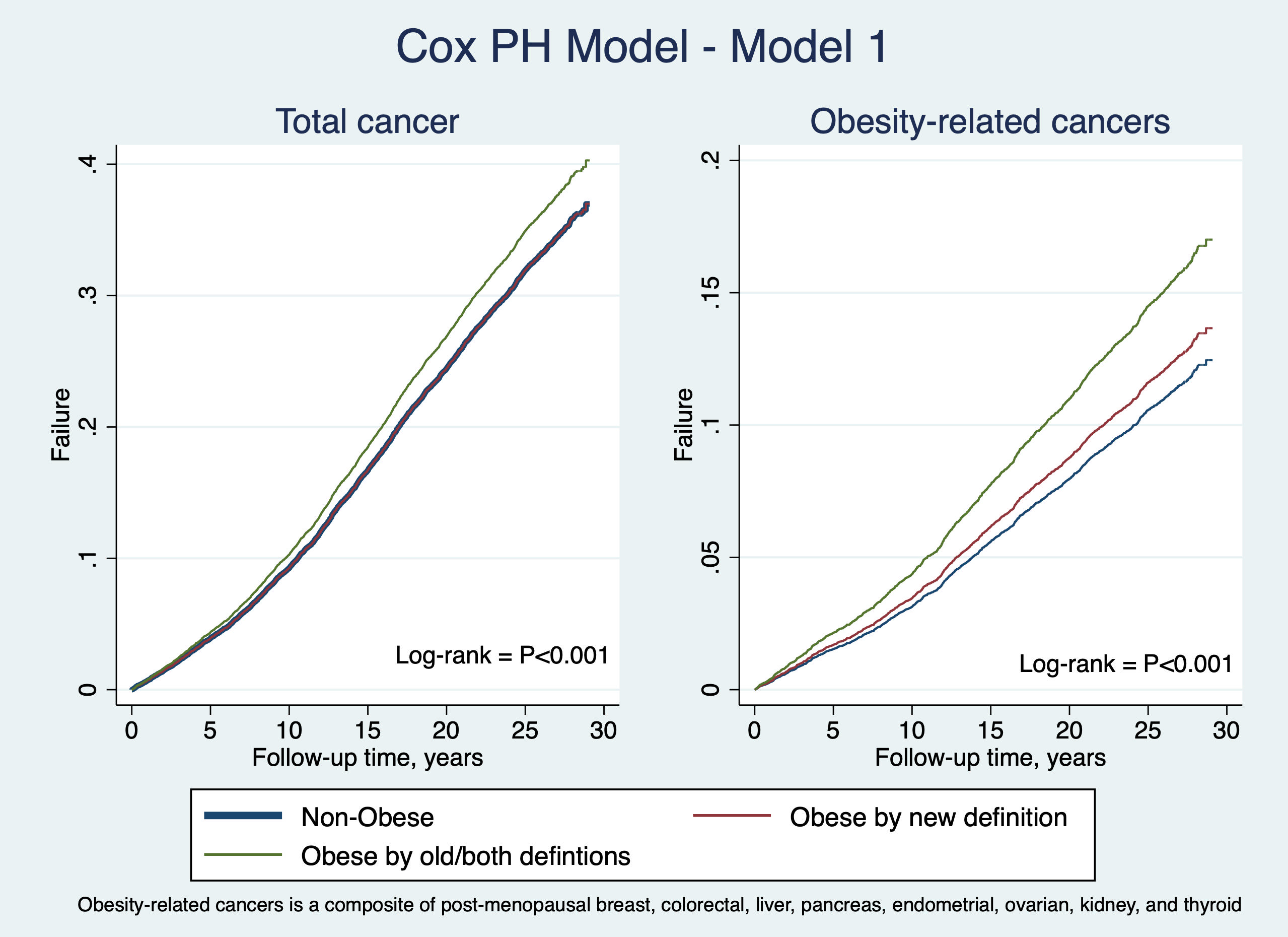
Abstract Body (Do not enter title and authors here): Background: Traditional body mass index (BMI)-based obesity definition (BMI ≥30 kg/m2), while indicative of health risks, shows variable validity across populations and may overlook risks from central adiposity. We compared this traditional definition with a newer, sensitive definition incorporating central adiposity (waist circumference [WC], waist-hip ratio [WHR], waist-height ratio [WHTR]) along with BMI (BMI ≥25 kg/m2 plus ≥1 central adiposity measure, or two such measures), for incident cardiovascular disease (CVD) and cancer. Methods: We analyzed 14,834 Atherosclerosis Risk in Communities (ARIC) study participants (median age 54 years; 54% female; 26% Black), with median follow-up of 25 years (1987-2012). Central adiposity thresholds included: WC ≥102 cm Male/ ≥88 cm Female; WHR >0.90 Male/ >0.85 Female; WHTR >0.5. Cox models, adjusted for demographics, socioeconomic, and clinical factors, estimated the adjusted hazard ratios (aHR). A subgroup analysis by age, sex, and race, and time-dependent sensitivity analyses were conducted. Results: The newer definition classified 54% as obese (median BMI 26 kg/m2), versus the traditional definition 27% (Median BMI 33 kg/m2); 19% were non-obese by both. The "obese by new definition only" group (mostly BMI 25-29.9 kg/m2 and central adiposity) showed some reversion to non-obese status (7%). Compared to non-obese, both newer (aHR 1.14, 95%CI 1.02-1.26) and traditional (aHR 1.36, 95%CI 1.20-1.53) definitions were associated with higher CVD risk. For total cancer, only the traditional definition showed significantly higher risk (aHR 1.12, 95%CI 1.02-1.24); the newer definition did not (aHR 1.01, 95% CI 0.93-1.10). For obesity-related cancers, only traditional definition conferred higher risk (aHR 1.36, 95%CI 1.16-1.59), while the newer definition did not (aHR 1.09, 95% CI 0.95-1.26). Time-dependent analysis yielded similar results. Conclusion: Both obesity definitions identified increased CVD risk, with significant trend across groups. Only traditional definition consistently showed increased risk for total and obesity-related cancers. The newer, more sensitive, definition identified a large cohort with intermediate CVD risk, not previously captured by BMI alone, highlighting a distinct risk profile, suggesting potential for targeted interventions. This warrants careful consideration before broadly labeling this group as "obese" and the potential for diagnostic inflation and overtreatment. Funding: NHLBI, NCI, NPCR, AHA
Elsayed, Omar
(
MCG at Augusta University
, Augusta , Georgia , United States )
Nahle, Tarek
(
MCG at Augusta University
, Augusta , Georgia , United States )
Shah, Viraj
(
MCG at Augusta University
, Augusta , Georgia , United States )
Wang, Xiaoling
(
Augusta University
, Augusta , Georgia , United States )
Weintraub, Neal
(
MCG at Augusta University
, Augusta , Georgia , United States )
Harris, Ryan
(
Augusta University
, Augusta , Georgia , United States )
Coughlin, Steven
(
AUGUSTA university
, Augusta , Georgia , United States )
Joshu, Corinne
(
Johns Hopkins Bloomberg School of P
, Baltimore , Maryland , United States )
Platz, Elizabeth
(
Johns Hopkins Bloomberg School of P
, Baltimore , Maryland , United States )
Guha, Avirup
(
MCG at Augusta University
, Augusta , Georgia , United States )
Author Disclosures:
Omar Elsayed:DO NOT have relevant financial relationships
| Avirup Guha:DO NOT have relevant financial relationships
| Tarek Nahle:DO NOT have relevant financial relationships
| Viraj Shah:DO NOT have relevant financial relationships
| Xiaoling Wang:DO NOT have relevant financial relationships
| Neal Weintraub:DO NOT have relevant financial relationships
| Ryan Harris:DO NOT have relevant financial relationships
| Steven Coughlin:DO NOT have relevant financial relationships
| Corinne Joshu:DO NOT have relevant financial relationships
| Elizabeth Platz:DO NOT have relevant financial relationships
Elsayed Omar, Joshu Corinne, Platz Elizabeth, Guha Avirup, Shah Viraj, Wang Xiaoling, Weintraub Neal, Harris Ryan, Martini Rachel, Davis Melissa, Boerwinkle Eric, Coughlin Steven
4357964_File000000.jpg
4357964_File000001.jpg
4357964_File000002.jpg
You have to be authorized to contact abstract author. Please, Login