
Genetically-Estimated Ancestry is Associated with Risk of Pre-eclampsia: A Multi-Ethnic Case-Control Study
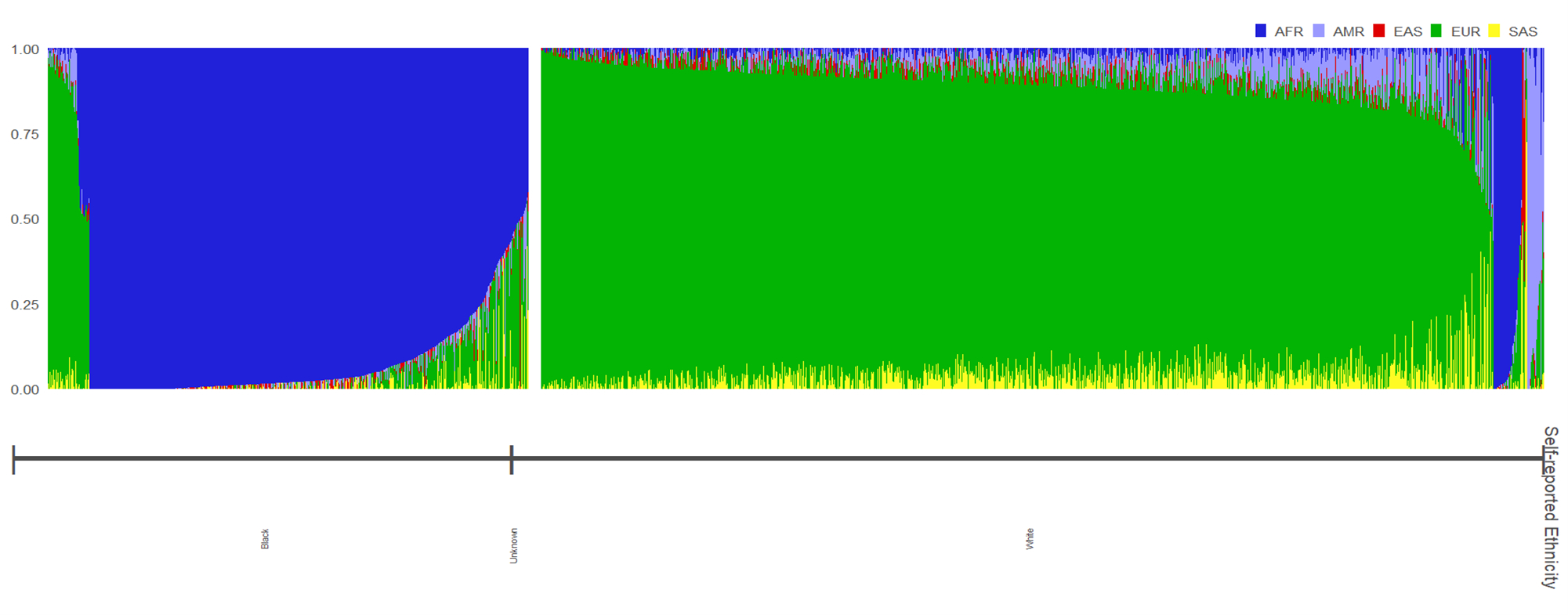
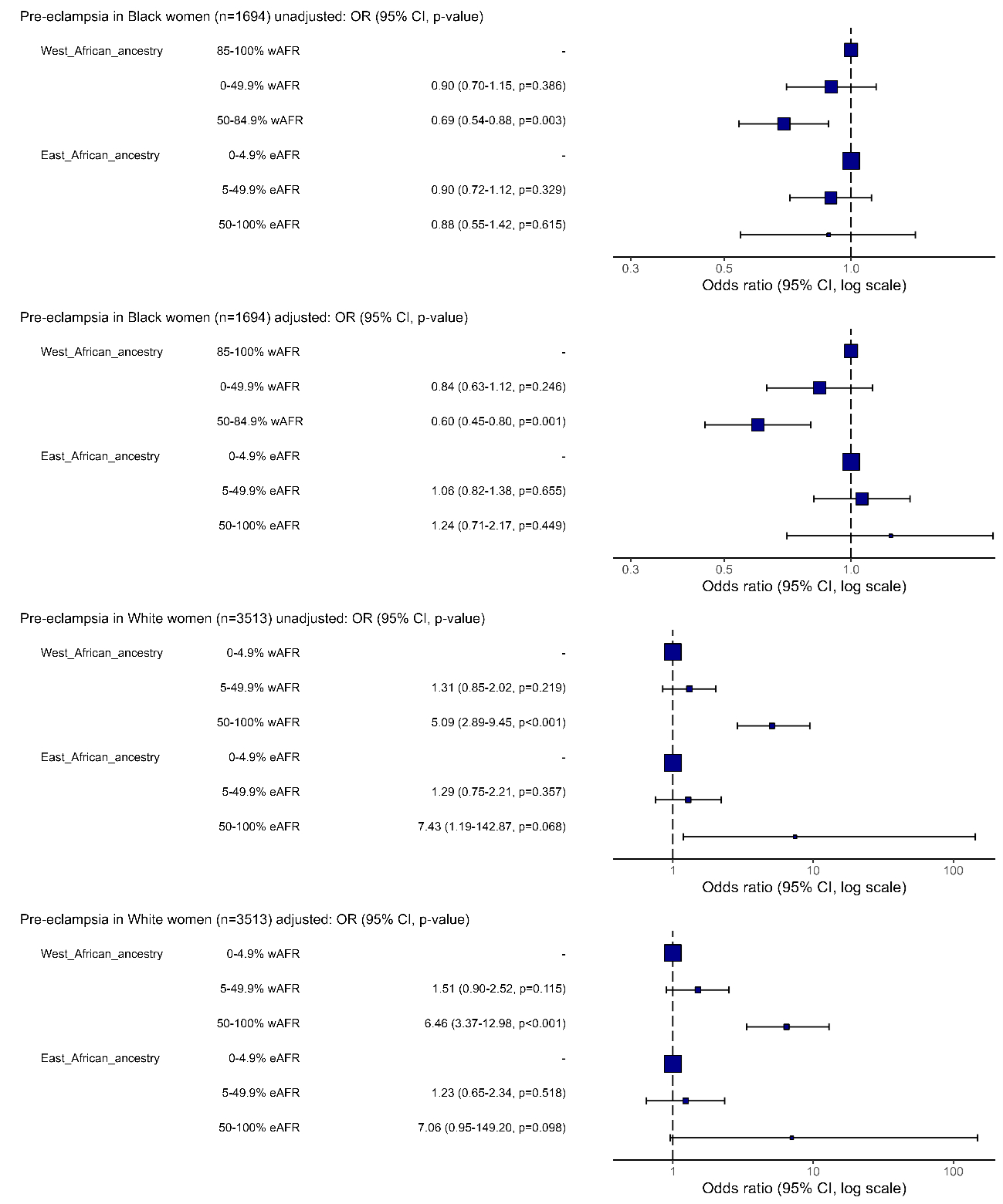
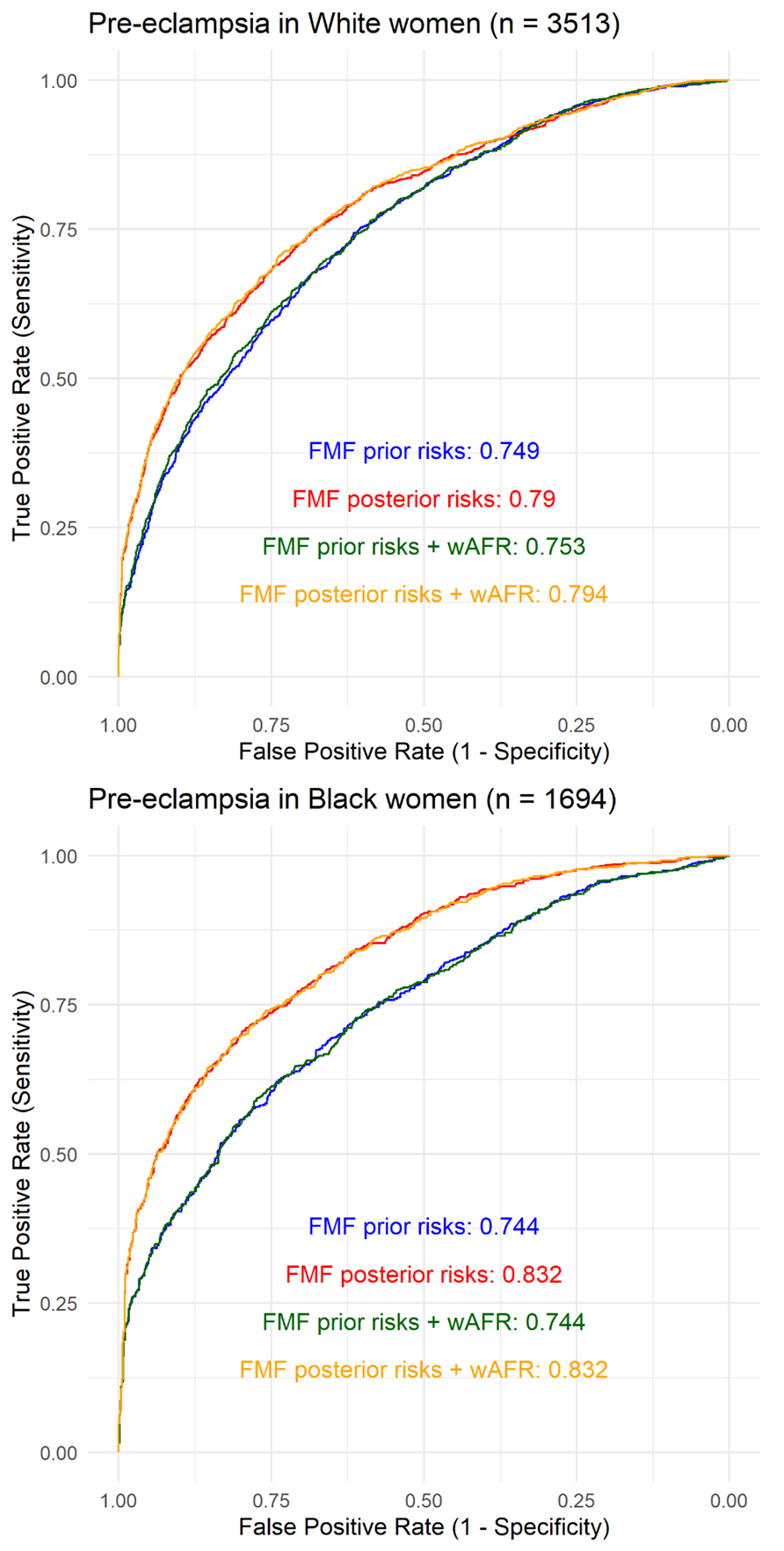
Abstract Body (Do not enter title and authors here): Background: Maternal self-reported ethnicity (SRE) is associated with pre-eclampsia risk and is included in some prediction models. Aim: This study examined whether genetic ancestry estimates are associated with pre-eclampsia and if incorporating genetic ancestry improves the Fetal Medicine Foundation (FMF) pre-eclampsia risk model. Methods: Pre-eclampsia cases and matched controls from the Harris-Birthright Cohort (n=5,207) were genotyped (Infinium Global Screening Array). Genetic ancestries were estimated through comparison to a multi-ethnic reference panel. African genetic ancestries were incorporated into logistic regression models alongside established clinical risk factors. Area under ROC curves (AUROC) of FMF risk models with/without genetic ancestries were compared. Results: 5,207 women were included: 3,513 of self-reported White (1,382 cases, 2,131 controls) and 1,694 of self-reported Black ethnicity (745 cases, 949 controls). Ethnic categories were defined according to Harris Birthright cohort groupings. Ethnicity-ancestry discrepancy was present in 11.3% of self-reporting Black and 5.3% of self-reporting White individuals (<50% African and <50% European genetic ancestry respectively). Higher percentage West African genetic ancestry was independently associated with increased odds of pre-eclampsia. Among self-reporting White women, those with 50–100% West African ancestry had a higher risk compared to those with <5% (adjusted odds ratio (aOR) 6.46, 95% CI 3.37-12.98, p-value < 0.0001). Conversely, in self-reporting Black women, lower West African ancestry (50-84.9%) was associated with reduced risk compared to 85–100% (aOR 0.60, 95% CI 0.45-0.80, p-value <0.001). Incorporating genetic ancestry into the FMF prediction model did not improve performance in White (AUROC +0.0037, 95% CI -0.0005-0.0080) or Black women (AUROC -0.0005, 95% CI -0.0026-0.0017). Conclusions: Self-reported maternal ethnicity is an imperfect proxy for genetically-estimated ancestry in multi-ethnic populations. West African genetic ancestry is associated with pre-eclampsia risk independent of established clinical factors, underscoring the potential biological relevance of ancestry-based stratification. However, genetic ancestry did not improve gold-standard multi-modal pre-eclampsia prediction model performance. Large genomic studies are required to determine the genetic architecture of pre-eclampsia and whether genomics can improve advanced clinical prediction algorithms.
Conti-ramsden, Frances
( King's College London
, London
, United Kingdom
)
De Marvao, Antonio
( King's College London
, London
, United Kingdom
)
Nicolaides, Kypros
( King's College London
, London
, United Kingdom
)
Syngelaki, Argyro
( King's College London
, London
, United Kingdom
)
Dixon, Peter
( Imperial College London
, London
, United Kingdom
)
Williamson, Catherine
( Imperial College London
, London
, United Kingdom
)
Escobar M, Maria
( King's College London
, London
, United Kingdom
)
Wright, Alan
( King's College London
, London
, United Kingdom
)
Chappell, Lucy
( King's College London
, London
, United Kingdom
)
Hysi, Pirro
( King's College London
, London
, United Kingdom
)
Author Disclosures:
Frances Conti-Ramsden:DO have relevant financial relationships
;
Research Funding (PI or named investigator):Medical Research Council:Past (completed)
; Advisor:Nexus Connected:Active (exists now)
; Consultant:Option 5 Health:Active (exists now)
; Executive Role:Megi Health Limited:Active (exists now)
| Antonio de Marvao:No Answer
| Kypros Nicolaides:No Answer
| Argyro Syngelaki:No Answer
| Peter Dixon:No Answer
| Catherine Williamson:No Answer
| Maria Escobar M:No Answer
| Alan Wright:No Answer
| Lucy Chappell:No Answer
| Pirro Hysi:No Answer