
Logo

American Heart Association

  14
  0


Final ID: MP2148

Global Age-Stratified Burden of Cardiovascular Disease Attributable to High Systolic Blood Pressure: A Call for Targeted Attention to Young Populations

Abstract Body (Do not enter title and authors here): Background: The burden of cardiovascular diseases (CVD) is increasingly shifting towards younger populations. High systolic blood pressure (HBP) has emerged as the most prevalent and modifiable risk factor for CVD. This study aimed to assess the global burden of CVD attributable to high systolic blood pressure (HBP-CVD) among younger populations and to compare it with that of older populations.
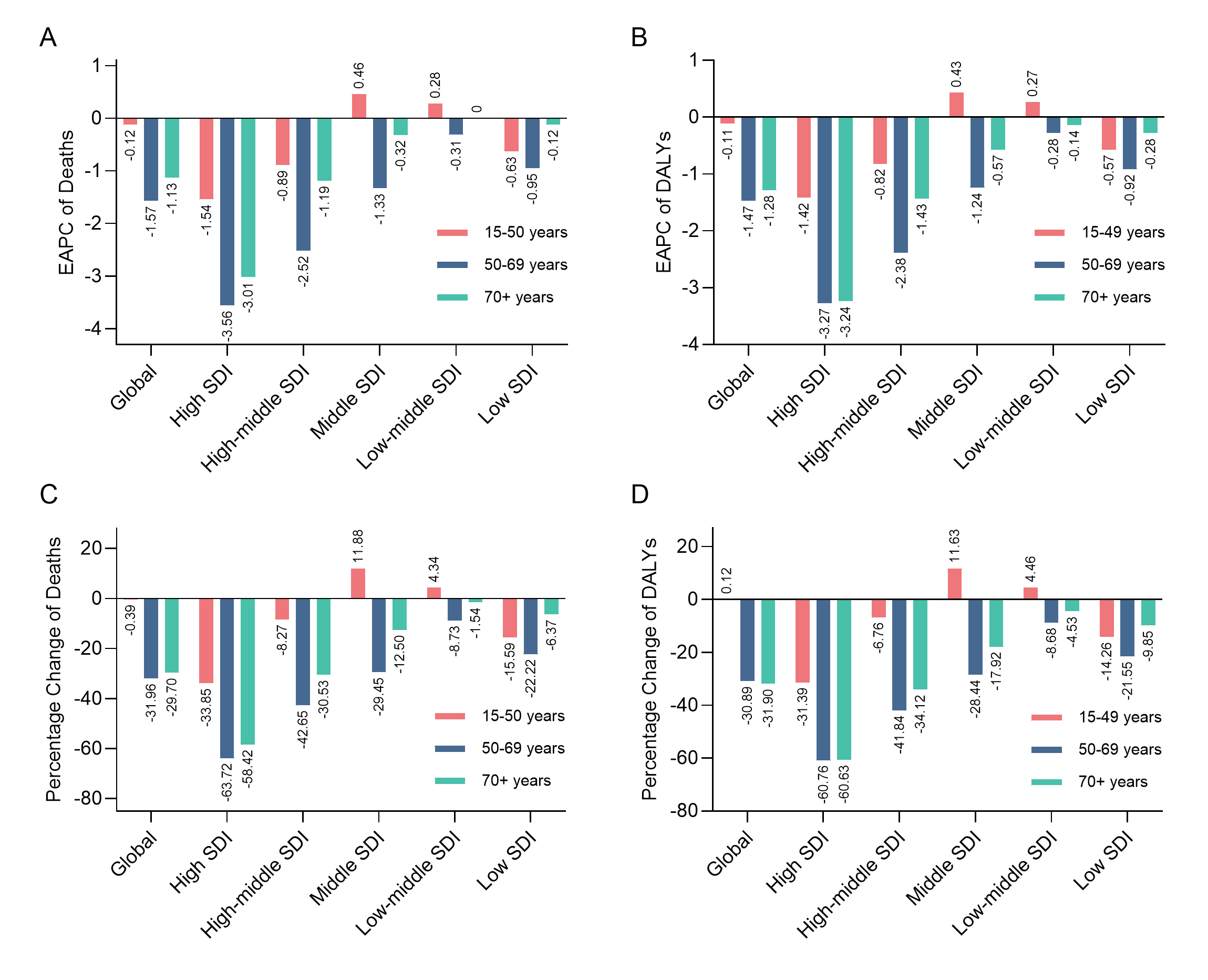
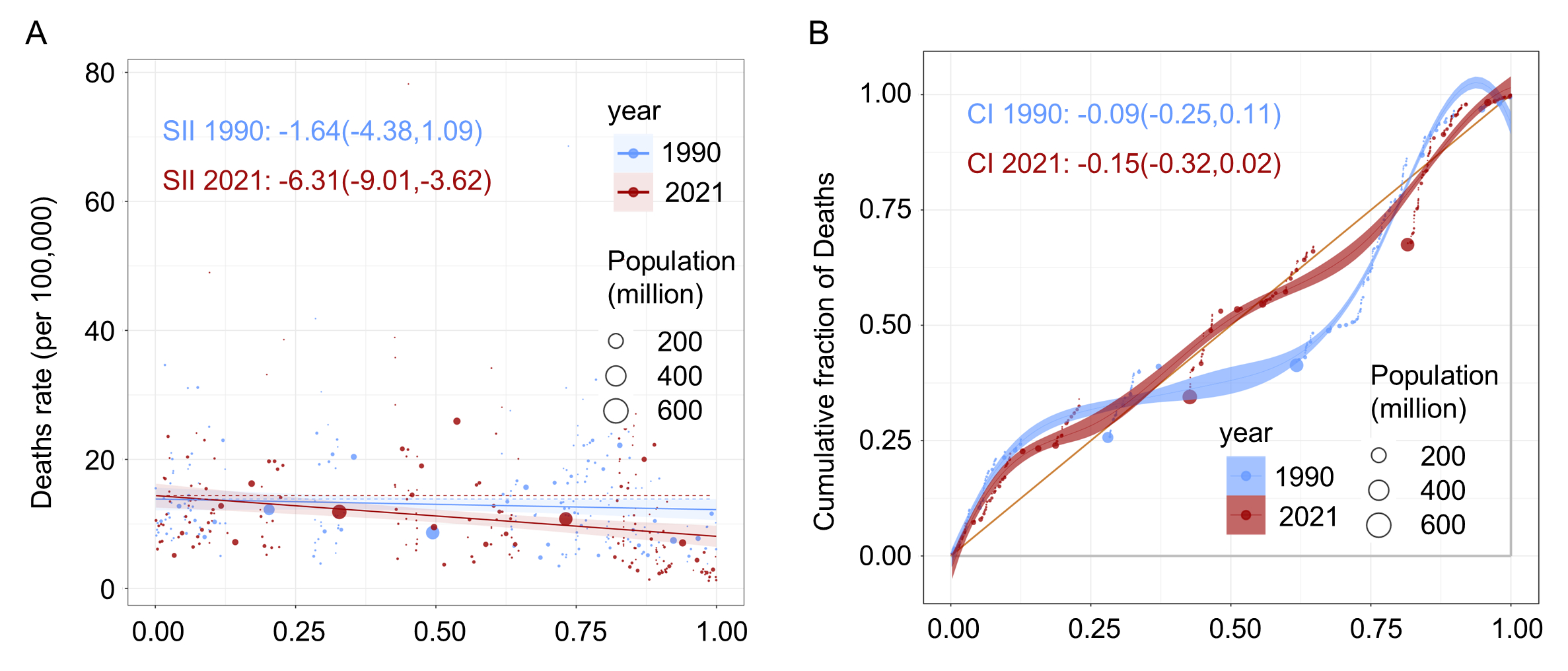
Methods: Data were obtained from the Global Burden of Disease (GBD) 2021 study. The burden of HBP-CVD was compared across three age groups (15–49, 50–69, and ≥70 years) using the Age-Period-Cohort (APC) model, estimated annual percentage change (EAPC), and percentage change from 1990 to 2021. Temporal trends were further illustrated using average annual percent change (AAPC) plots. The association between disease burden and the Socio-demographic Index (SDI), as well as health inequality trends, was also evaluated.
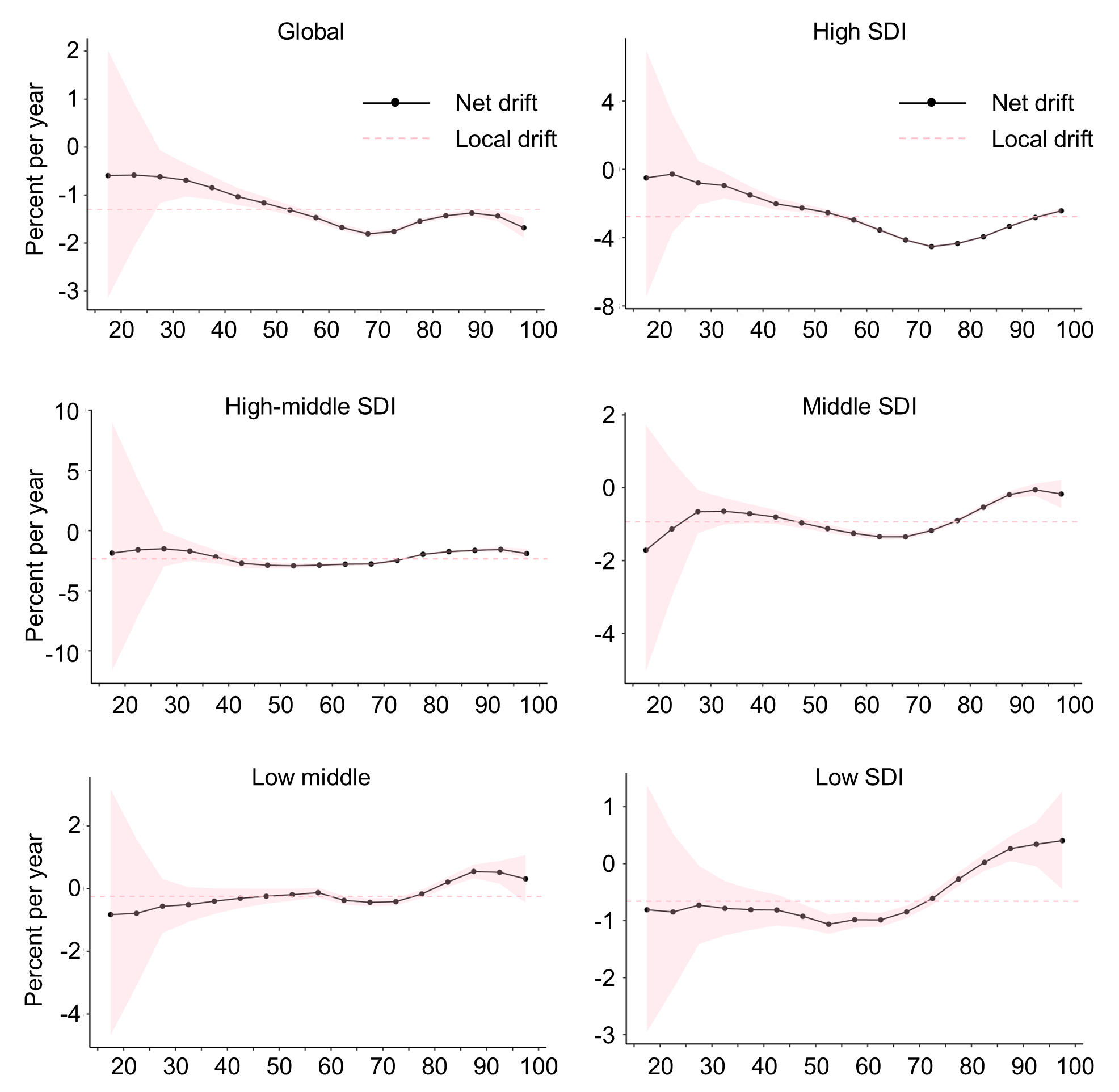
Results: The APC model revealed substantial variations in the relative rate of disease burden change across age groups, stratified by SDI regions and sex. Globally, for both sexes, the local drift at age 50 was approximately equivalent to the net drift, while the lowest local drift occurred around age 70. Accordingly, age 50 and 70 were selected as cut-off points for age group categorization. Consistent findings from the APC model, EAPC, and percentage change demonstrated that control of HBP-CVD was least effective in the 15–49 age group, compared with older age groups. Moreover, for the 15–49 age group, the disease burden showed a negative correlation with SDI, and health inequality has progressively worsened from 1990 to 2021.
Conclusion: The control of HBP-CVD remains suboptimal among individuals aged 15–49 years compared with older populations, underscoring the need for strengthened prevention and control strategies targeting younger populations.
  • Li, Fan Qi  ( Department of Cardiology, The Secon , Changsha City , China )
  • Yan, Rui  ( Shanxi Cardiovascular Hospital , Taiyuan , China )
  • Li, Na  ( Shanxi Cardiovascular Hospital , Taiyuan , China )
  • Zhang, Anxin  ( Shanxi Cardiovascular Hospital , Taiyuan , China )
  • Shao, Xin  ( Shanxi Cardiovascular Hospital , Taiyuan , China )
  • Wang, Haixiong  ( Shanxi Cardiovascular Hospital , Taiyuan , China )
  • Liu, Qiming  ( Department of Cardiology, The Secon , Changsha City , China )
  • Author Disclosures:
    Fan Qi Li: No Answer | Rui Yan: No Answer | Na Li: No Answer | Anxin Zhang: No Answer | Xin Shao: No Answer | Haixiong Wang: DO NOT have relevant financial relationships | Qiming Liu: No Answer
Meeting Info:

Scientific Sessions 2025

2025

New Orleans, Louisiana

Session Info:

The Impact of Social Factors on Hypertension Outcomes

Monday, 11/10/2025 , 10:45AM - 11:35AM

Moderated Digital Poster Session

You have to be authorized to contact abstract author. Please, Login
Not Available