The Angiogenic Potential of Dipeptidyl Peptidase 4 Inhibition in a Large Animal Model of Coronary Artery Disease in the Setting of Metabolic Syndrome
Abstract Body (Do not enter title and authors here): Introduction: Metabolic syndrome has been shown to double the risk of cardiovascular-related mortality. As cardiometabolic disease advances, so too does the pathological changes in vascular networks, particularly within the heart. Therefore, it deems efficacious not only to treat the underlying systemic metabolic pathways, but also aim to improve vascular function. Thus, we sought to determine the cardiovascular effects of dipeptidyl peptidase 4 (DPP-4) inhibition with linagliptin in a clinically relevant model of coronary artery disease in the setting of metabolic syndrome.
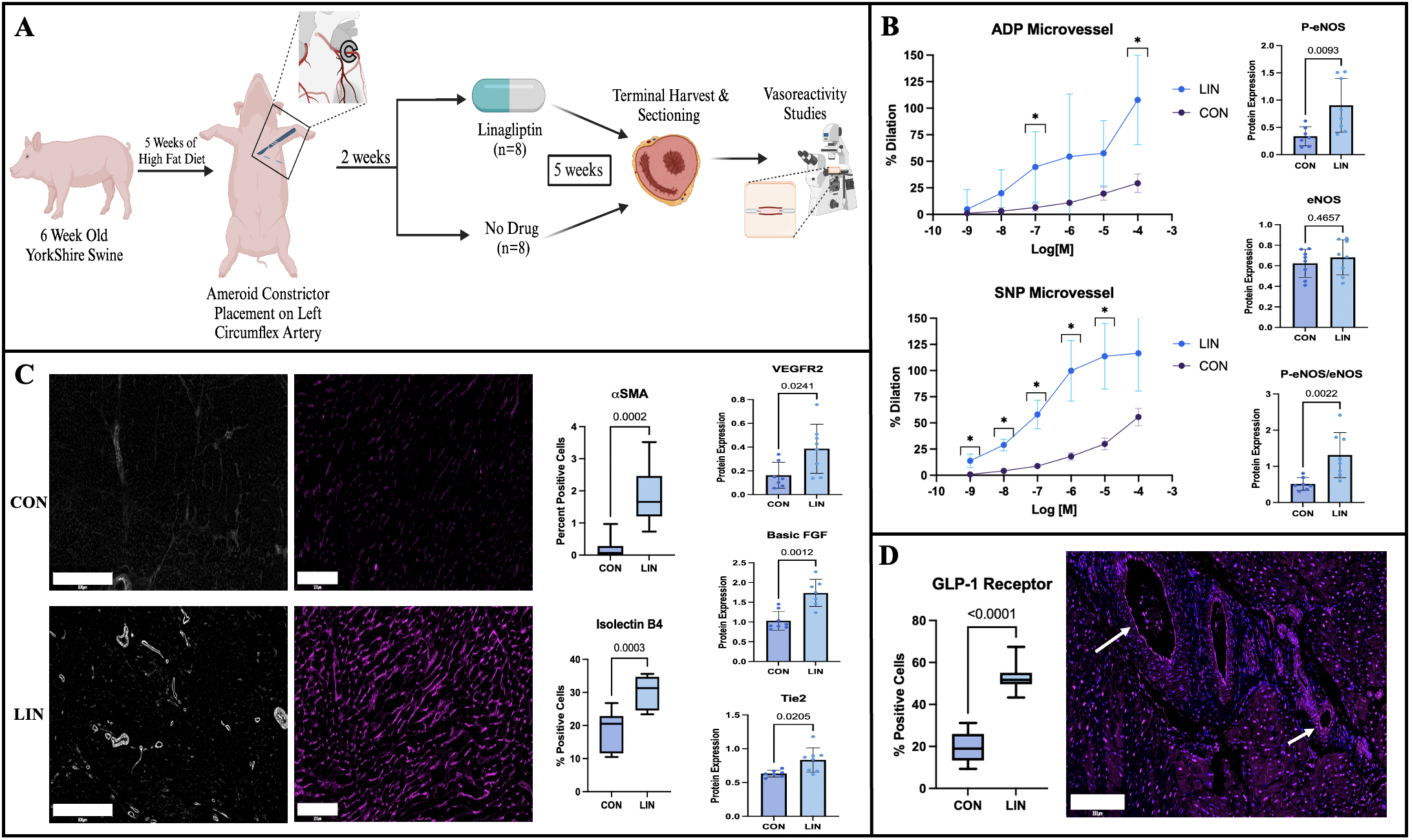
Methods: To induce metabolic syndrome, Yorkshire swine were fed a high-fat diet for 5 weeks and then underwent ameroid constrictor placement to the left circumflex coronary artery, which will gradually narrow the artery mimicking coronary artery disease. Swine were then randomized to recieve either no drug (n=8) or daily linagliptin (n=8). After 5 weeks, swine underwent terminal harvest for hemodynamic characterization and left ventricular sectioning for molecular analysis. To assess microvascular reactivity, coronary arterioles were dissected and mounted to visualize their in-vitro response to vasorelaxation agents.
Results: Linagliptin treatment did not improve overall cardiac function, including ejection fraction and cardiac output (p=0.51, p=0.37; respectively). Linagliptin treatment was associated with increased arteriolar and capillary densities within the ischemic myocardium (p=0.0002, p=0.0003; respectively), with concurrent upregulation of several angiogenic markers on immunoblotting. Correspondingly, linagliptin-treated swine had enhanced ischemic coronary microvascular vasorelaxation responses to both endothelial-dependent adenosine diphosphate (ADP) and endothelial-independent sodium nitroprusside (SNP) (p=0.004, p=0.024; respectively). This was in conjunction with upregulation of proteins involved in nitric oxide production in the linagliptin-treated swine, including phosphorylated endothelial nitric oxide synthase (eNOS) and the ratio of phosphorylated eNOS to total eNOS (p=0.009, p=0.002; respectively). Lastly, linagliptin treatment was associated with notable upregulation of the GLP-1 receptor globally, with endothelial distribution, on immunofluorescence (p<0.0001).
Conclusions: Linagliptin represents a promising therapeutic shown to improve collateralization, enhance arteriolar reactivity, and quell endothelial dysfunction in a translational model of metabolic syndrome.
Muir, Kelsey
(
Warren Alpert School of Medicine at Brown University
, Providence , Rhode Island , United States )
Harris, Dwight
(
Warren Alpert School of Medicine at Brown University
, Providence , Rhode Island , United States )
Stone, Christopher
(
Warren Alpert School of Medicine at Brown University
, Providence , Rhode Island , United States )
Kanuparthy, Meghamsh
(
Warren Alpert School of Medicine at Brown University
, Providence , Rhode Island , United States )
Hamze, Jad
(
Brown University
, Memphis , Tennessee , United States )
Feng, Jun
(
Rhode Island Hospital
, Providence , Rhode Island , United States )
Sellke, Frank
(
Warren Alpert School of Medicine at Brown University
, Providence , Rhode Island , United States )
Author Disclosures:
Kelsey Muir:DO NOT have relevant financial relationships
| Dwight Harris:No Answer
| Christopher Stone:DO NOT have relevant financial relationships
| Meghamsh Kanuparthy:DO NOT have relevant financial relationships
| Jad Hamze:No Answer
| Jun Feng:DO NOT have relevant financial relationships
| Frank Sellke:DO have relevant financial relationships
;
Ownership Interest:xm therapeutics:Active (exists now)