
Diagnostic ability of mid-coronary artery wall echogenicity in the initial diagnosis of Kawasaki Disease
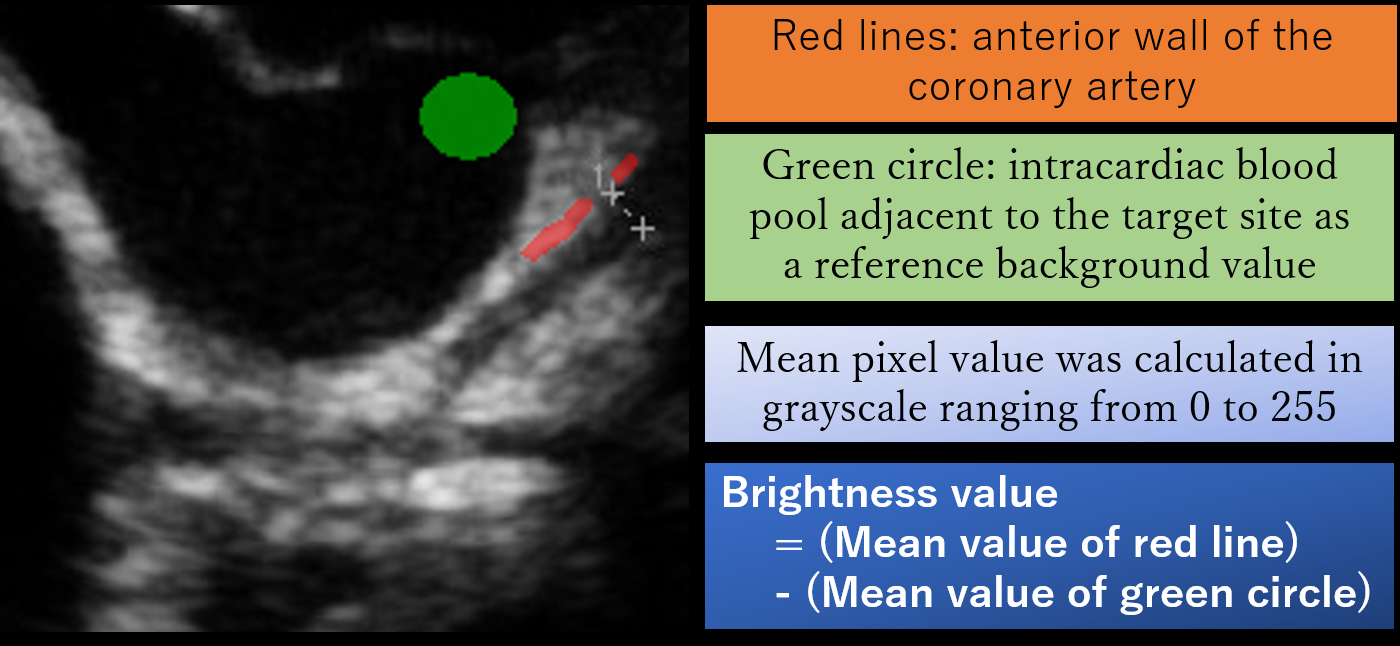
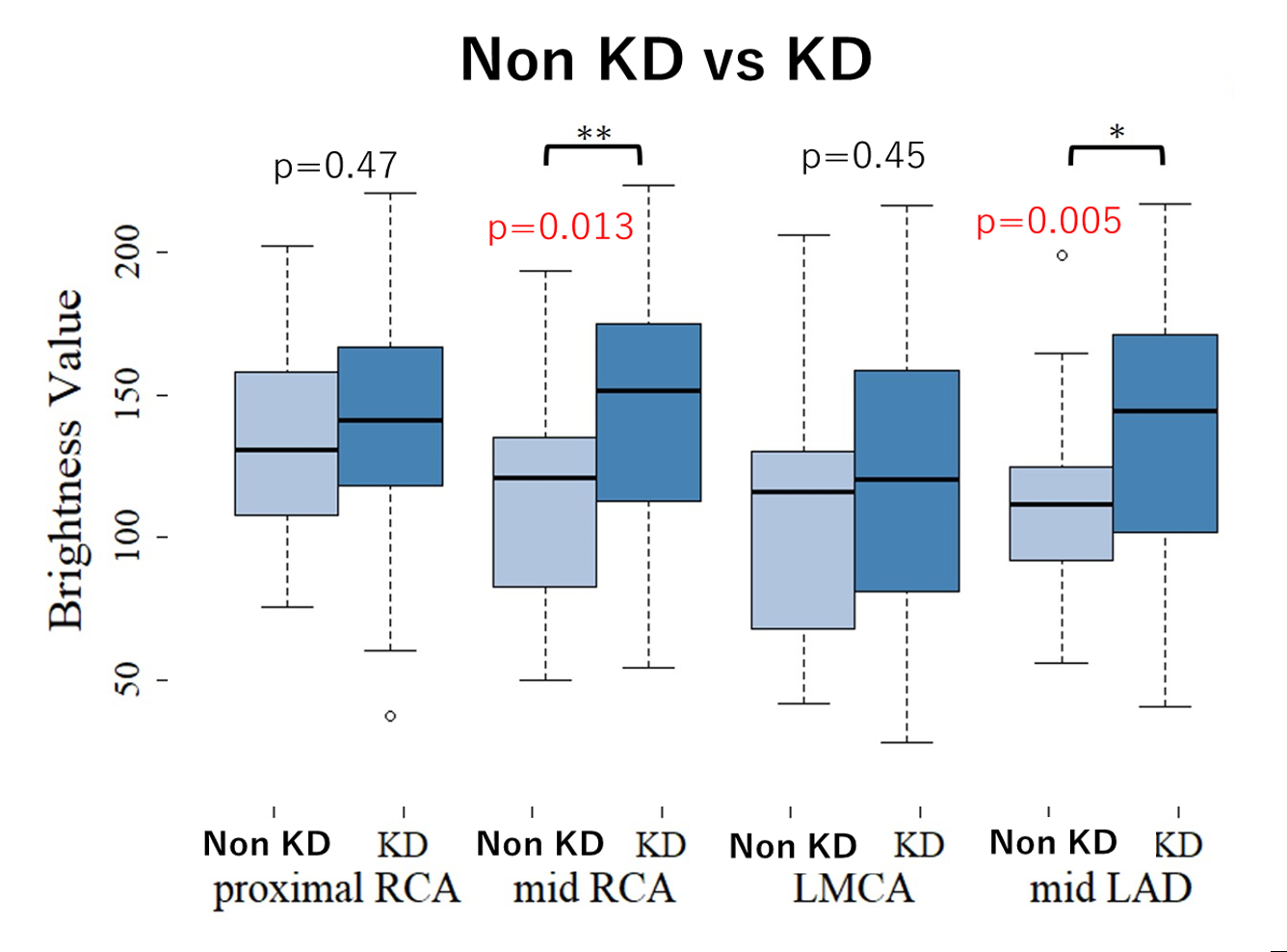
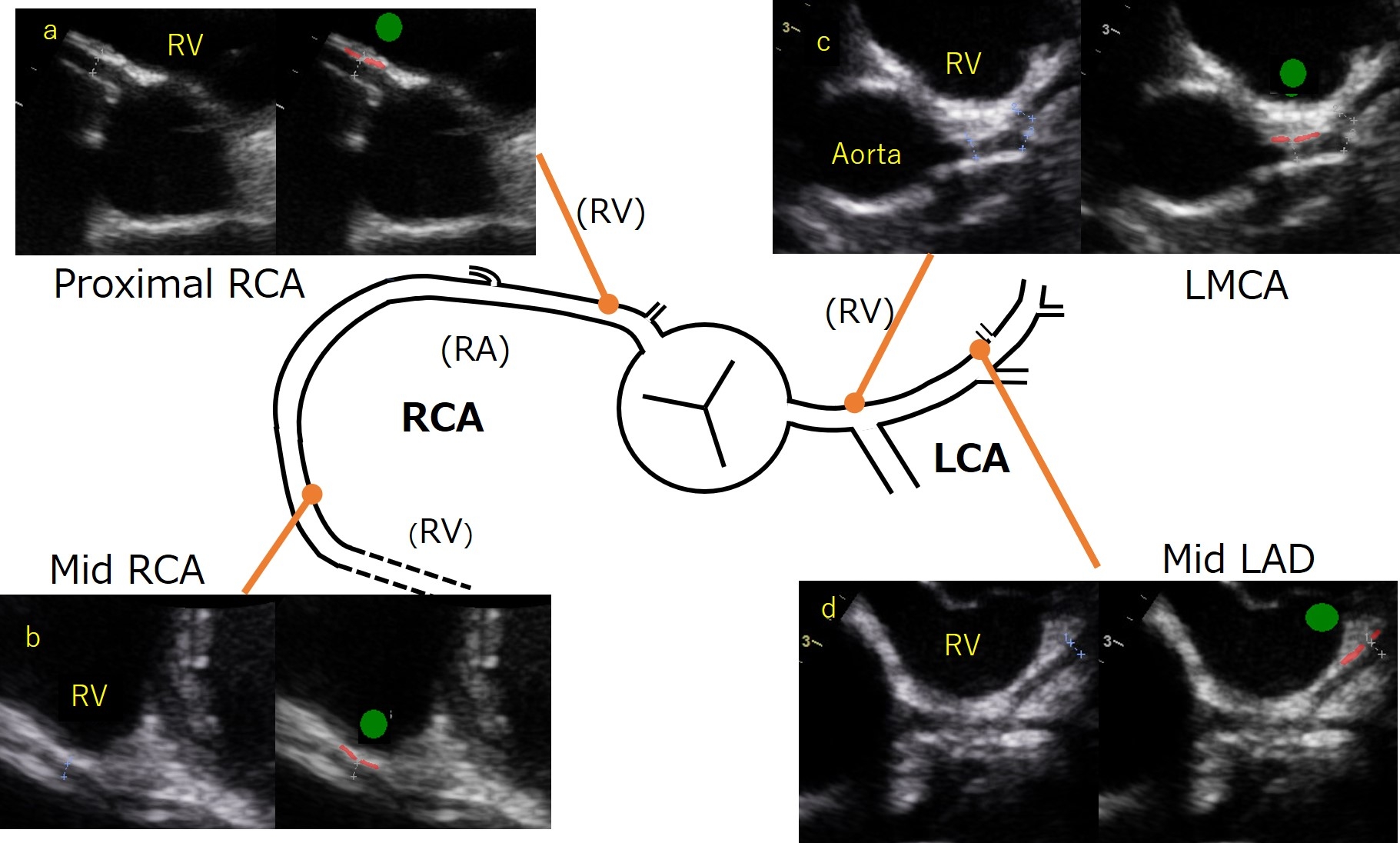
Abstract Body (Do not enter title and authors here): Background: Periarterial echogenicity in the proximal coronary arteries is known to increase in the acute phase of Kawasaki disease (KD). However, some studies have questioned its clinical value given its relatively low specificity. In this study, we quantitatively assessed the brightness in the proximal and mid portion of both coronaries to find its additional diagnostic value in patients with clinically suspected KD. Methods: We retrospectively analyzed 109 consecutive children (median age 21 months [IQR 11.0–47.8]) who underwent transthoracic echocardiography for suspected KD between April 2021 and March 2023. Two-dimensional echocardiographic images of the proximal and mid segments of both coronary arteries were digitally stored and analyzed offline (Image 1). Mean pixel intensity of the arterial walls was measured in grayscale (0–255). The intracardiac blood pool adjacent to the target site was measured as a reference background value, and the difference was recorded as the brightness value (Image 2). Results and Discussions: Among the 109 patients, 87 (80%) were diagnosed with KD (including 18 with incomplete KD), while 22 were diagnosed with other febrile illnesses (non-KD group) such as virus infections or bacterial infections. There were no significant differences in age, or body size, the duration of fever at the time of the echocardiographic examination and CRP concentrations between the two groups. While the KD group exhibited higher brightness than the febrile group, there were no significant differences in the mean pixel values (proximal right coronary artery; 148 vs. 161, p=0.34; left main coronary artery;129 vs. 116, p=0.34, respectively) (Image 3). Whereas, the KD group exhibited significantly higher brightness in the mid-segment (mid right coronary artery; 139 vs. 121, p=0.0049, mid left anterior descending artery; 136 vs. 111, p=0.011, respectively). Our results might reflect the pathophysiological characteristics of coronary vasculitis in KD that simultaneously and diffusely involve the coronary territories from the proximal to distal branches. Conclusions: Echogenicity of the mid-segment of the coronary arteries would have a diagnostic impact in the initial diagnosis of KD. Therefore, examining not only the proximal segment, but also up to the mid-segment, of the coronary arteries may be useful for differentiating KD.
Kodama, Yoshihiko
( University of Miyazaki
, Miyazaki
, Japan
)
Moritake, Hiroshi
( University of Miyazaki
, Miyazaki
, Japan
)
Watanabe, Nozomi
( University of Miyazaki
, Miyazaki
, Japan
)
Author Disclosures:
Naoto Yamashita:DO NOT have relevant financial relationships
| Yoshihiko Kodama:DO NOT have relevant financial relationships
| Hiroshi Moritake:No Answer
| Nozomi Watanabe:DO have relevant financial relationships
;
Research Funding (PI or named investigator):Pfizer Inc.:Active (exists now)