Seasonal Disparities in Cardiovascular Mortality: Analyzing Winter Excess Across Demographics and Regions (2018–2023)
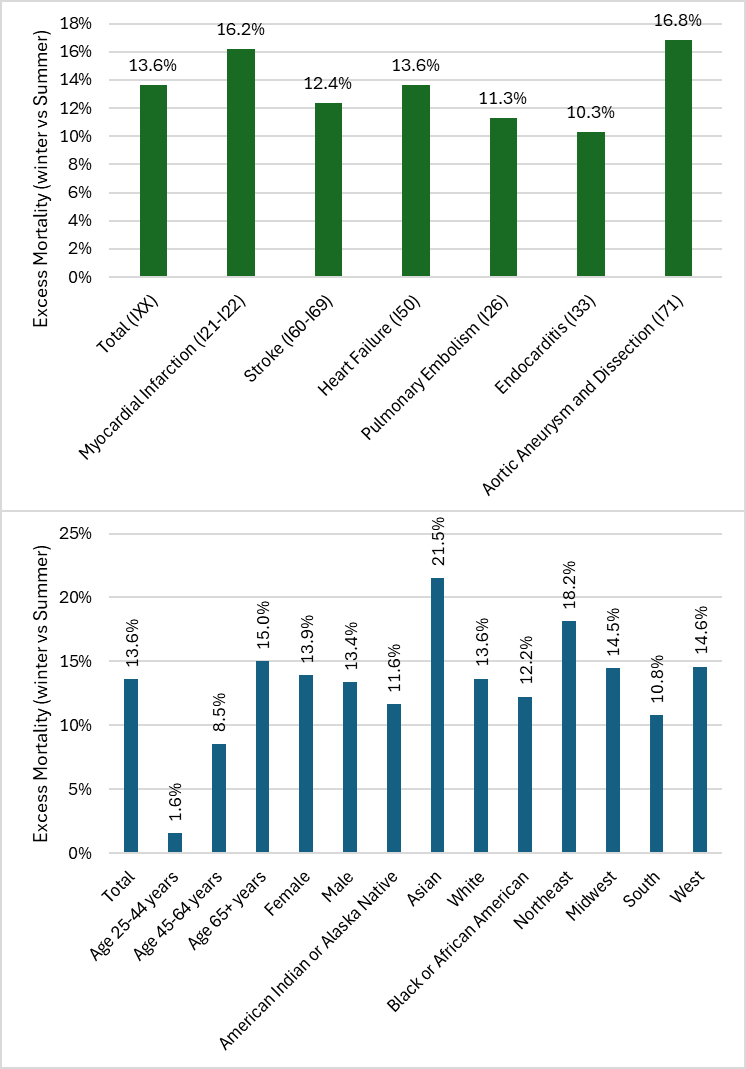
Abstract Body (Do not enter title and authors here): Background: Seasonal variations in cardiovascular mortality have been documented, with higher rates observed during winter months. This study examines winter-summer disparities in cardiovascular mortality, using monthly data from the CDC’s Multiple Cause of Mortality files (2018–2023). Methods: Cardiovascular mortality (IXX) was analyzed as the primary cause of death in decedents 25 years and older. Excess mortality during the winter months (December–February) compared to the summer months (June–August) was calculated using the formula: (deaths in winter - deaths in summer) / deaths in summer. Analyses were stratified by age, sex, race/ethnicity, location, and specific cardiovascular diseases, including myocardial infarction (MI), stroke, heart failure (HF), pulmonary embolism (PE), endocarditis, and aortic aneurysm and dissection. Results: The overall winter excess cardiovascular mortality was 13.6%. Disease-specific disparities showed the highest winter excess mortality for aortic aneurysm and dissection (16.8%) and myocardial infarction (16.2%), with the lowest for endocarditis (10.3%). Age-stratified analyses revealed excess mortality of 1.6% for individuals aged 25–44 years, 8.5% for those aged 45–64, and 15.0% for those aged 65 and older. Winter excess mortality was similar for females (13.9%) and males (13.4%). Among racial and ethnic groups, Asian individuals had the highest winter excess mortality (21.5%), followed by White (13.6%), Black or African American (12.2%), and American Indian or Alaska Native populations (11.6%). Regionally, the Northeast (Census Region 1) exhibited the highest excess mortality (18.2%), followed by the West (14.6%), Midwest (14.5%), and South (10.8%). Conclusion: Winter months are associated with significant increases in cardiovascular mortality, with notable disparities across age, sex, race/ethnicity, and geographic regions. Asians and residents of the Northeast experienced the highest winter-summer mortality differences. Targeted public health interventions are needed to address these seasonal disparities, particularly in high-risk populations.
Shivani, Prisha
(
Phillips Andover Acadamy
, Houston , Texas , United States )
Ardakani, Jad
(
Houston Methodist
, Houston , Texas , United States )
Al-kindi, Sadeer
(
Houston Methodist
, Houston , Texas , United States )
Author Disclosures:
Prisha Shivani:DO NOT have relevant financial relationships
| Jad Ardakani:DO NOT have relevant financial relationships
| Sadeer Al-Kindi:No Answer