Comparison study of Minimally invasive surgical thoracoscopic ablation and hybrid ablation vs Catheter Ablation in treatment of AF patients : Systematic review and meta-analysis
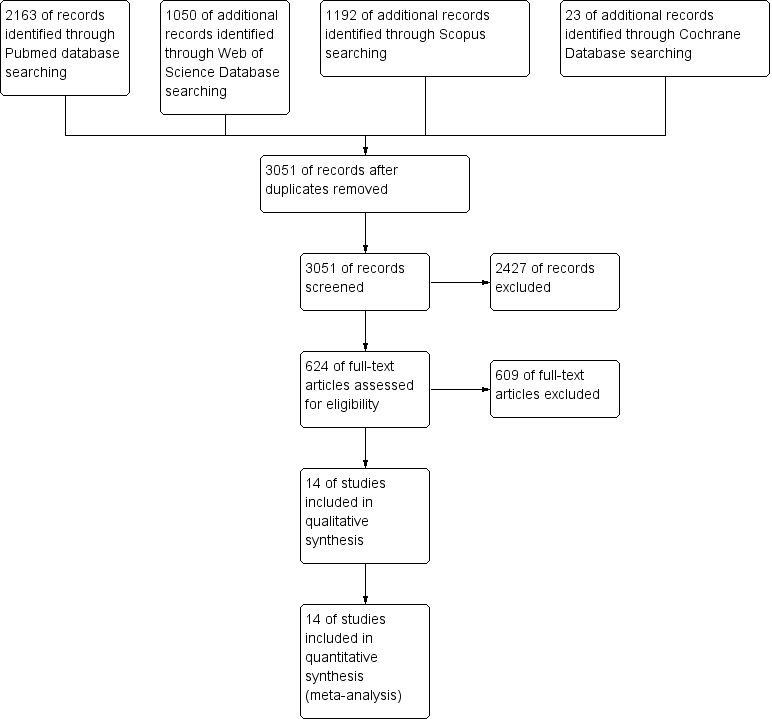
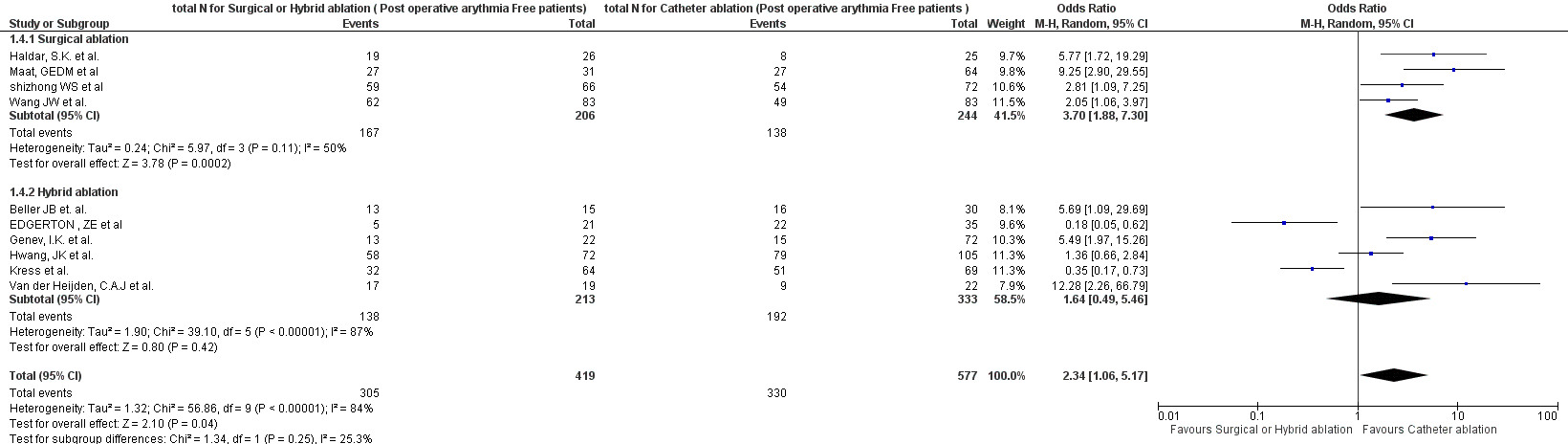
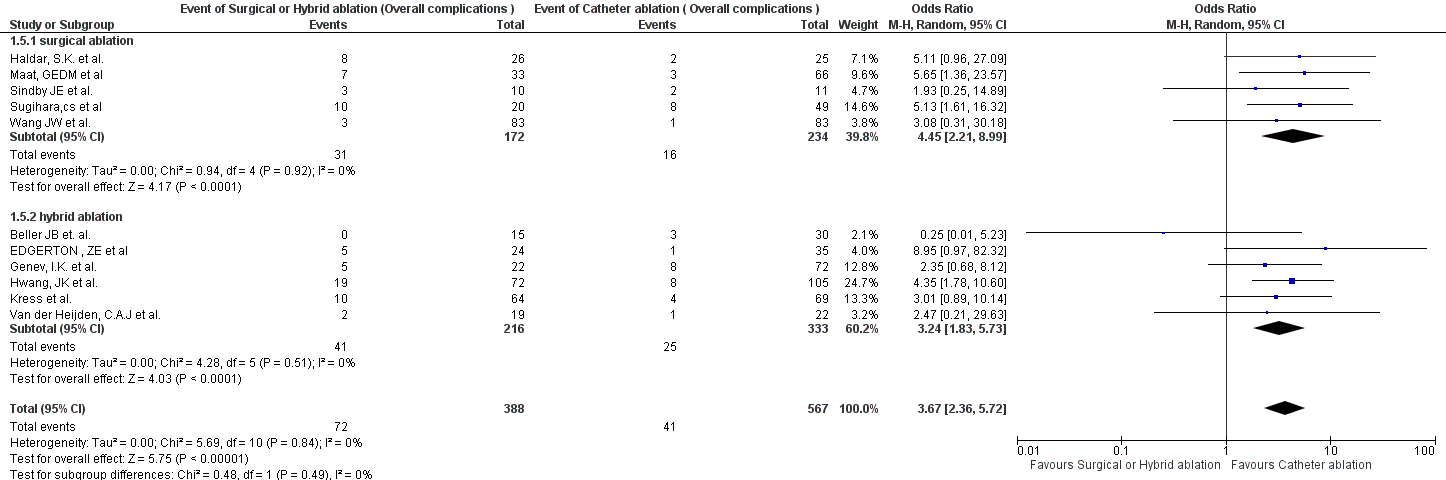
Abstract Body (Do not enter title and authors here): Background:Atrial fibrillation is the most common cardiac arrhythmia, affecting about 33.5 million patients. Its incidence varies extensively across countries, and was observed more in developed and high income countries in west Europe and south America.Nowadays different minimally invasive cardiac ablation techniques have been spreading on wide scales for management of AF patients. Aim:In the present systematic review, we compare surgical and hybrid techniques and analyze their efficacy and safety measures against catheter-based procedure for non re-ablated AF patients without concomitant surgical procedure,aiming to investigate which of those techniques take the upper hand. Method:A metaanalysis was conducted following PRISMA guidelines, including observational and interventional studies for comparing patients undergoing surgical thoracoscopic or Hybrid ablation Vs patients catheter ablation. Studies were selected based on predefined inclusion and exclusion criteria. Data were extracted independently by 11 investigators. Comprehensive searches were conducted across multiple databases up to March 4,2025, to identify eligible studies. Result:Total of 14 studies involving 1,297patients were included.Regarding subgroup differences, there is no significant subgroup effect, suggesting that surgical OR hybrid do not differ statistically from each other regarding decreasing risk of overall complications (p=0.49),mortality (p=0.48),bleeding (p=0.33),stroke (p=0.28) and also decreasing length of postoperative hospital stay (p=0.91),operative time(p=0.54) in comparison to catheter ablation.Also there was no significant subgroup effect regarding being free from arrhythmia post operation (p=0.25).Regarding postoperative arrhythmia free, it was significantly lower in the surgical ablation compared to the catheter ablation (OR: 3.70, ;P = 0.0002), but not significantly lower in hybrid group compared to the catheter group (OR: 1.64, ;P = 0.42).Regarding risk of overall complications, both subgroups were higher than catheter ablation group, (OR: 4.45, ;P < 0.0001,OR: 3.24, ;P <0.0001) . Regarding length of postoperative hospital stay, it was significantly lower in time in catheter group compared to both surgical and hybrid subgroups (MD: 37.92 ;P=0.57, MD: 79.76 ;P <0.0001) Conclusion:Catheter therapy showed upper hand on both hybrid and surgical groups in treating AF patients.Hybrid subgroups show no significant privilege over surgical ablation subgroups in all outcomes.
Hanna, Fouad
(
Cairo University
, Cairo , Egypt )
Hassan, Ahmed
(
Tanta University
, Tanta , Egypt )
Abdul-hafez, Hamza A.
(
An-Najah National University, Nablus
, Nablus , Palestine, State of )
Husseiny, Yousef M.
(
New Giza University
, Cairo , Egypt )
Helbawy, Abdulrahman
(
Helwan University
, Helwan , Egypt )
Yassin, Mazen Negmeldin Aly
(
Cairo University
, Cairo , Egypt )
Dway, Ali
(
Al-Andalus University for Medical Sciences
, Al-Andalus , Syrian Arab Republic )
Ayoub, Basel
(
Cairo University
, New Cairo, Cairo , Egypt )
Ayesh, Hadeel
(
Al-Quds university
, Jerusalem , Palestine, State of )
Hamam, Nada G.
(
Cairo University
, Cairo , Egypt )
Husseiny, Reem
(
Medway NHS Foundation Trust
, Kent , United Kingdom )
Author Disclosures:
Fouad Hanna:DO NOT have relevant financial relationships
| Nada G. Hamam:DO NOT have relevant financial relationships
| Reem Husseiny:DO NOT have relevant financial relationships
| Ahmed Hassan:DO NOT have relevant financial relationships
| Hamza A. Abdul-Hafez:DO NOT have relevant financial relationships
| Yousef M. Husseiny:DO NOT have relevant financial relationships
| Abdulrahman Helbawy:DO NOT have relevant financial relationships
| Mazen Negmeldin Aly Yassin:DO NOT have relevant financial relationships
| Ali Dway:No Answer
| Basel Ayoub:DO NOT have relevant financial relationships
| Hadeel Ayesh:No Answer