Differentiating between a prasugrel-induced hypersensitivity reaction and an atorvastatin-induced drug reaction with eosinophilia and systemic symptoms (DRESS) in the post-PCI setting
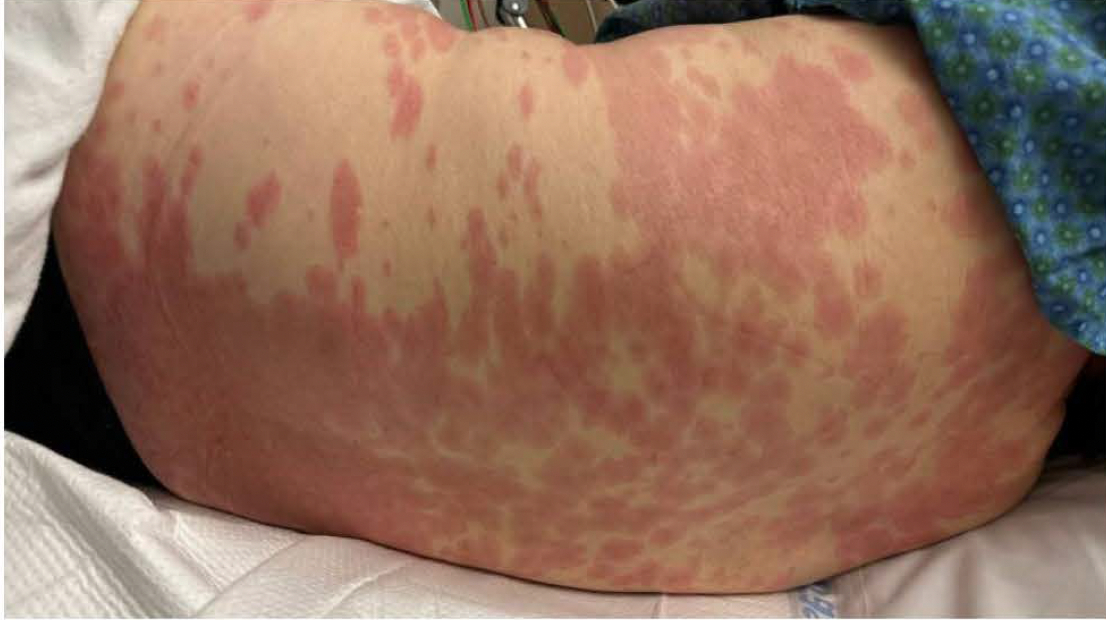
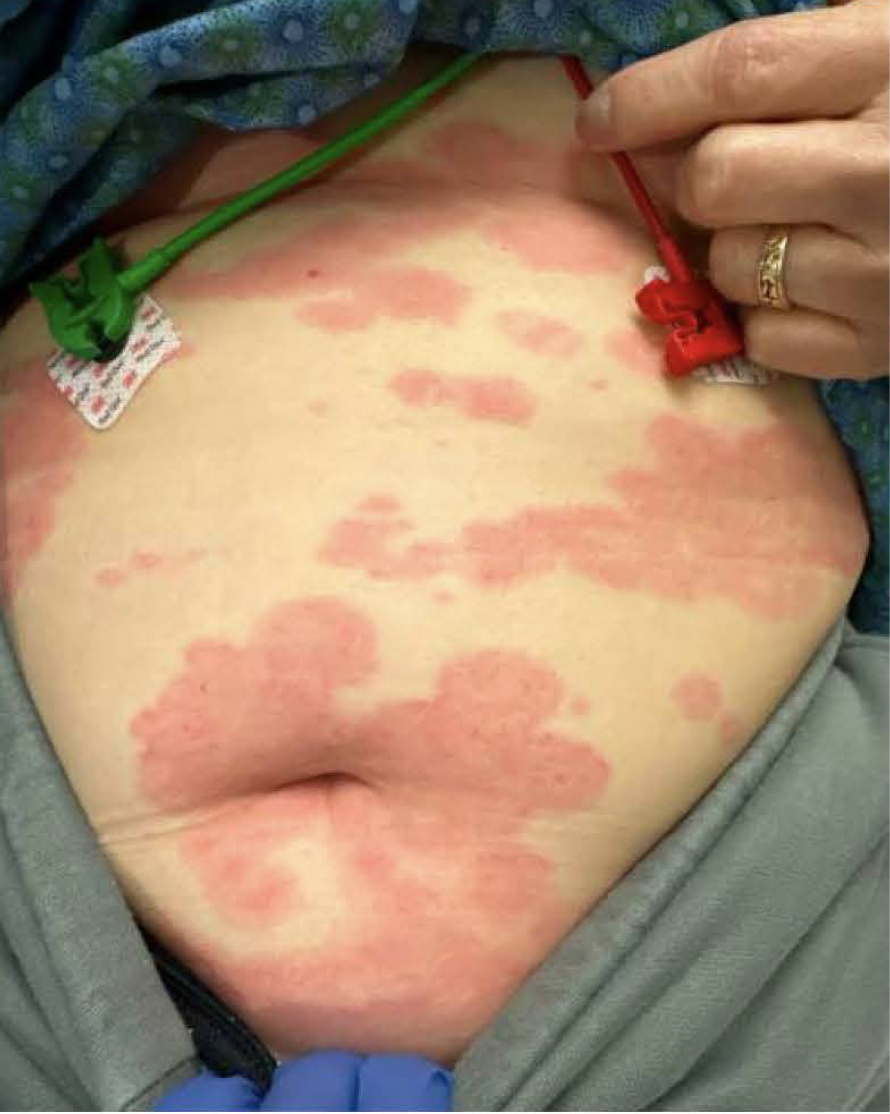
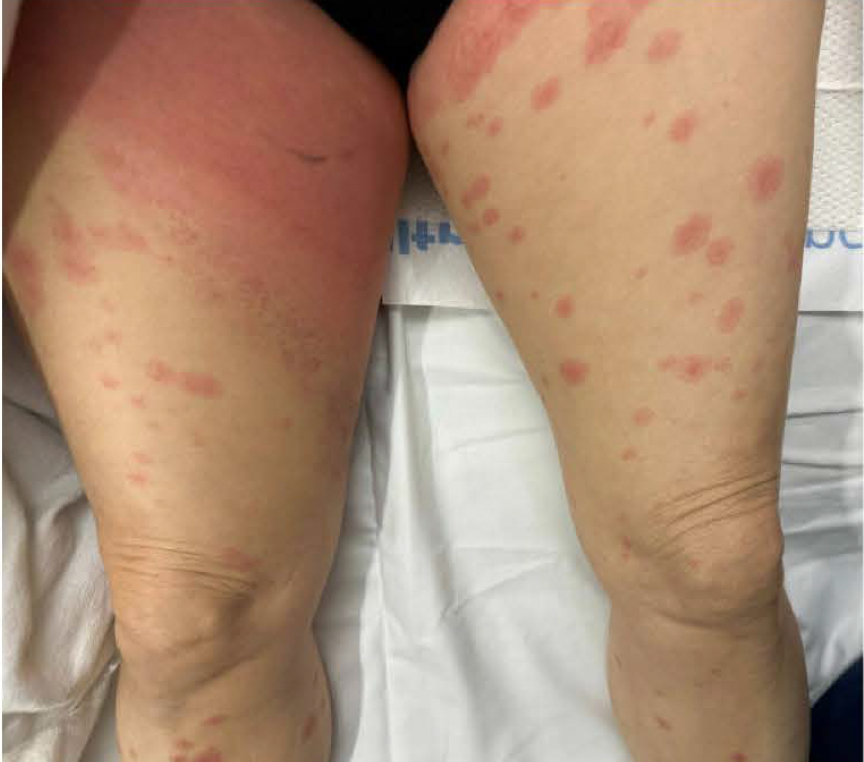
Abstract Body (Do not enter title and authors here): Case Report: A 74 y.o. F with a history of HTN, HLD, and pre-DM underwent DES placement for an STEMI and was started on Effient (10 mg QD) and Lipitor (80 mg QD). No additional concomitant medications were introduced. 9 days later, she developed a rash on her right forearm that then spread diffusely. 3 days later, she contacted her Cardiologist who changed her Effient to Plavix. 1 day later she developed a fever (101.5 F) and a productive cough, so she went to her PCP. She was then sent to the ED in the setting of a positive influenza A and elevated troponin (100 ng/L). Exam revealed a rash (see figures). No facial edema, lymphadenopathy, or mucosal involvement. Labs showed leukocytosis (white blood cell count, 11.4 x 10⁹/L) with eosinophilia (4.6 × 10⁹/L) and neutrophilia (12.5 × 10⁹/L). Liver enzymes were elevated (alkaline phosphatase, 1207 U/L; AST level, 132 U/L; ALT level, 130 U/L). EKG demonstrated T wave inversions in leads II, III, aVF consistent with prior inferior STEMI. The RegiSCAR scoring system demonstrated a score of 5, placing the patient in the "probable” category for DRESS. Lipitor was held and Plavix was resumed on admission. The patient was administered IV methylprednisolone (125 mg) followed by daily prednisone (60 mg). The rash, hematologic abnormalities, and liver dysfunction improved over the subsequent 6 days. At the 5-week follow up visit, the patient’s liver dysfunction and rash had resolved. She began a 4-week taper of oral corticosteroids and no recurring episodes to report. Discussion: Statins and P2Y12 inhibitors, such as Effient, are first-line therapies with significant mortality benefits after ACS, with DAPT recommended in the first year post-DES placement to prevent in-stent thrombosis. Statins have been associated with isolated case reports of DRESS syndrome. Conversely, while Plavix, another P2Y12 inhibitor, has been implicated in DRESS syndrome, Effient has not been reported as a causative agent, though other exanthematous hypersensitivity reactions have been documented. Effient hypersensitivity reactions do not usually present with organ involvement, the patient’s eosinophilia and liver involvement favor a diagnosis of DRESS syndrome. Lab monitoring in the presence of the onset of a rash after coadministration of Lipitor and Effient should be considered.Statins may be under-recognized triggers of DRESS.
Miotke, Katherine
(
Washington State University
, Lake Stevens , Washington , United States )
Author Disclosures:
Katherine Miotke:DO NOT have relevant financial relationships