Large-Scale Multi-Ancestry GWAS Meta-Analysis Reveals 125 Novel Loci for Varicose Veins
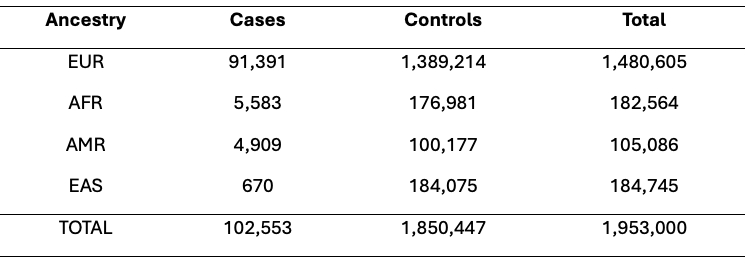
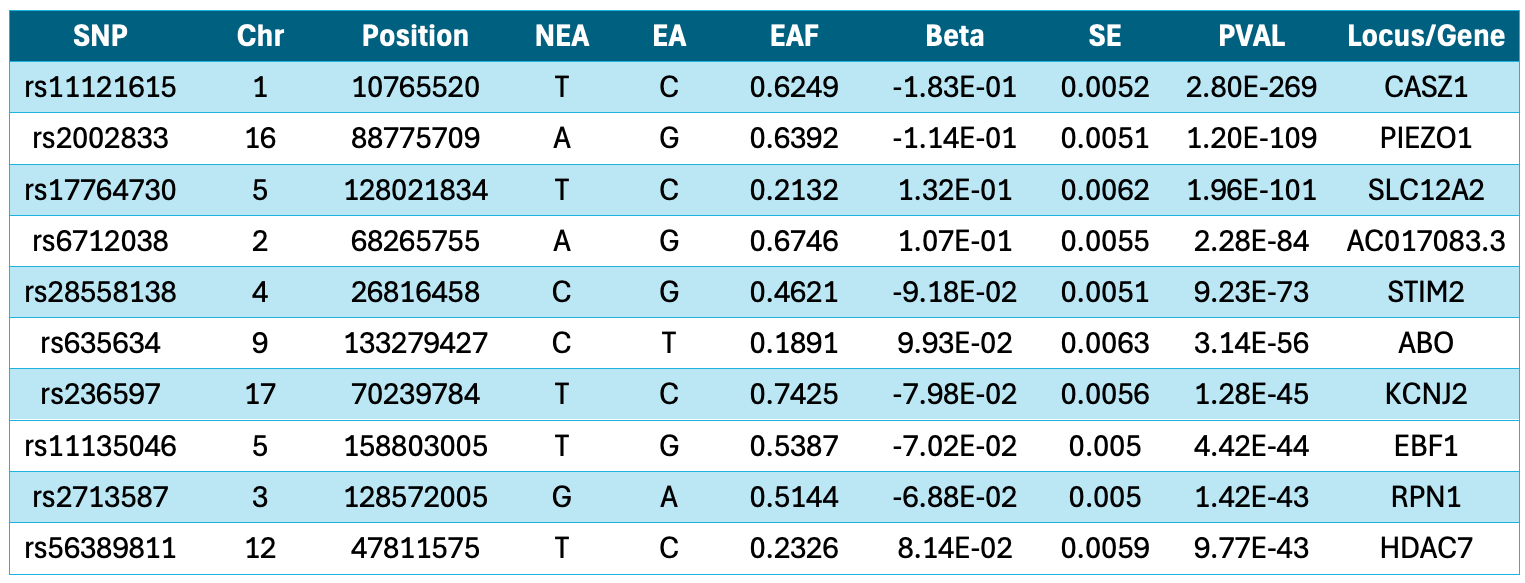
Abstract Body: Introduction: Varicose veins are a common disease affecting up to 40% of the adult population in Western nations. In advanced stages, varicose veins of the lower extremity may lead to ulcerations; the management of such ulcers is estimated to cost up $14.9 billion annually in the United States. Thus, varicose veins represent a tremendous burden on the American healthcare system. Varicose veins are heritable; however, the molecular and genetic basis remains to be further elucidated. The purpose of this study is to build on previous work by creating the largest varicose vein meta-analysis to date. Methods: We conducted a genome-wide association study for varicose veins in the Million Veterans Program. Veterans were divided into European (EUR), African (AFR), American admixed (AMR), and East Asian (EAS) cohorts based on genetic similarity to 1000 Genome reference populations. Association testing was conducted for each population. Next, these results were combined with summary statistics from the UK Biobank, All of Us, FinnGen, Biobank Japan, and BioME, first within and then across populations, using an inverse-weighted fixed-effects meta-analysis. Results: After quality control metrics, over 120 million variants were analyzed. Across all populations, our analysis included 102,553 individuals with varicose veins and 1,850,447 individuals without varicose veins in the lower extremities (Table 1). We identified 22,703 variants at 317 unique loci reaching genome-wide significance (p < 5 × 10⁻⁸) - 125 more unique loci than the largest previous meta-analysis. Table 2 has a breakdown of the top 10 loci from the analysis. Conclusion: Leveraging genome-wide association studies across multiple biobanks and ancestries, this study identifies 317 unique genome-wide significant loci associated with varicose veins, 125 of which have not previously been reported. These findings provide a foundation for further investigation into the genetic and molecular basis of varicose veins, thus potentially paving the way for the discovery of novel non-surgical therapies.
Cabot, John
(
Stanford
, Palo Alto , California , United States )
Pregnall, Andrew
(
University of Pennsylvania
, Philadelphia , Pennsylvania , United States )
Judy, Renae
(
Penn Medicine
, Glenolden , Pennsylvania , United States )
Mimouni, Nour
(
University of Pennsylvania
, Philadelphia , Pennsylvania , United States )
Vy, Ha My
(
Mount Sinai
, New York , New York , United States )
Do, Ron
(
Mount Sinai
, New York , New York , United States )
Levin, Michael
(
University of Pennsylvania
, Philadelphia , Pennsylvania , United States )
Chang, Kyong-mi
(
University of Pennsylvania
, Philadelphia , Pennsylvania , United States )
Dochtermann, Daniel
(
Boston VA Healthcare System
, Boston , Massachusetts , United States )
Pyarajan, Saiju
(
Boston VA Healthcare System
, Boston , Massachusetts , United States )
Tsao, Philip
(
Stanford University-VAPAHCS
, Los Altos , California , United States )
Adkar, Shaunak
(
Stanford
, Palo Alto , California , United States )
Damrauer, Scott
(
University of Pennsylvania
, Philadelphia , Pennsylvania , United States )
Author Disclosures:
John Cabot:DO NOT have relevant financial relationships
| Saiju Pyarajan:No Answer
| Philip Tsao:DO NOT have relevant financial relationships
| Shaunak Adkar:No Answer
| Scott Damrauer:DO have relevant financial relationships
;
Consultant:Tourmaline Bio:Past (completed)
; Research Funding (PI or named investigator):Amgen:Active (exists now)
; Research Funding (PI or named investigator):Novo Nordisk:Active (exists now)
| Andrew Pregnall:DO NOT have relevant financial relationships
| Renae Judy:No Answer
| Nour Mimouni:No Answer
| Ha My Vy:No Answer
| Ron Do:No Answer
| Michael Levin:DO have relevant financial relationships
;
Research Funding (PI or named investigator):MyOme:Active (exists now)
; Consultant:BridgeBio Pharma:Active (exists now)
| Kyong-Mi Chang:No Answer
| Daniel Dochtermann:No Answer