
Logo

American Heart Association

  3
  0


Final ID: Or108

Single-Nuclei Transcriptomics Reveals Divergent Regenerative Trajectories and Signaling Networks in Response to Exercise Therapy in Peripheral Artery Disease

Abstract Body: Introduction Supervised Exercise Therapy (SET) is the standard non-invasive treatment for Peripheral Artery Disease (PAD), yet clinical outcomes are heterogeneous. While many patients improve, others fail to respond or experience exacerbated myopathy. The cellular and molecular mechanisms driving these divergent regenerative responses remain undefined. Hypothesis We hypothesized that distinct failures in nuclear transcriptional programming, regenerative differentiation trajectories, and intercellular signaling networks distinguish patients who improve after SET from those with worsened outcomes.
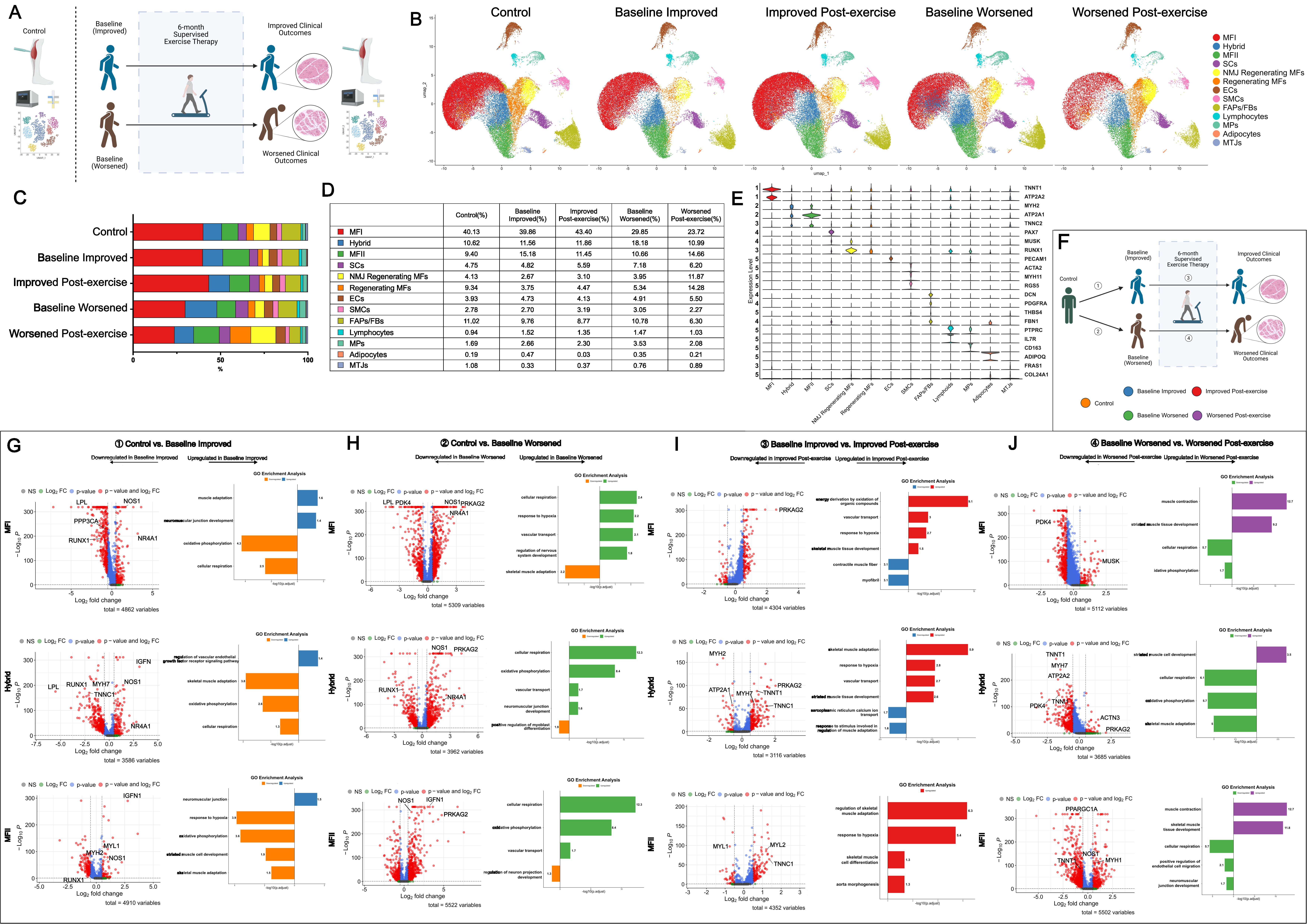
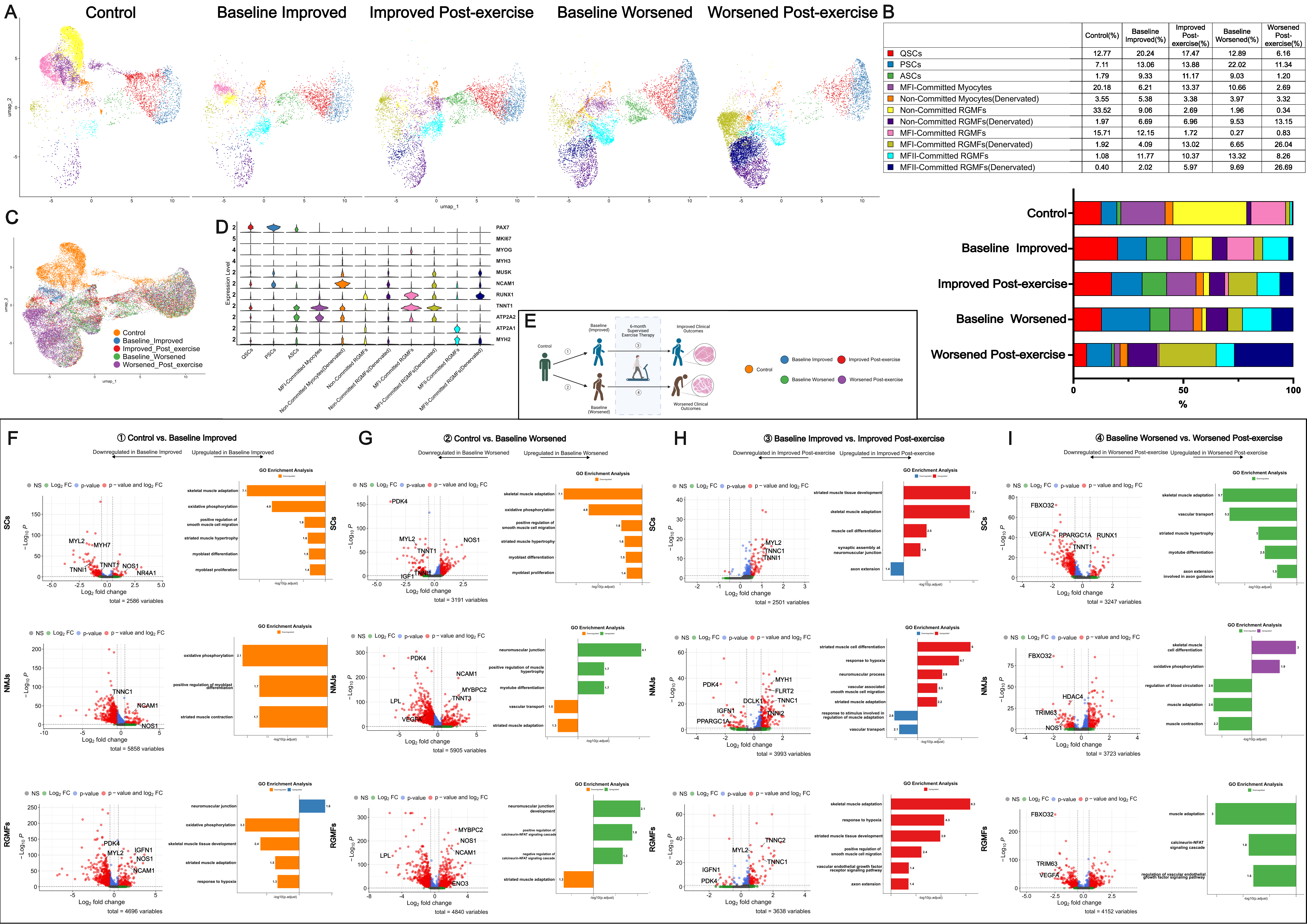
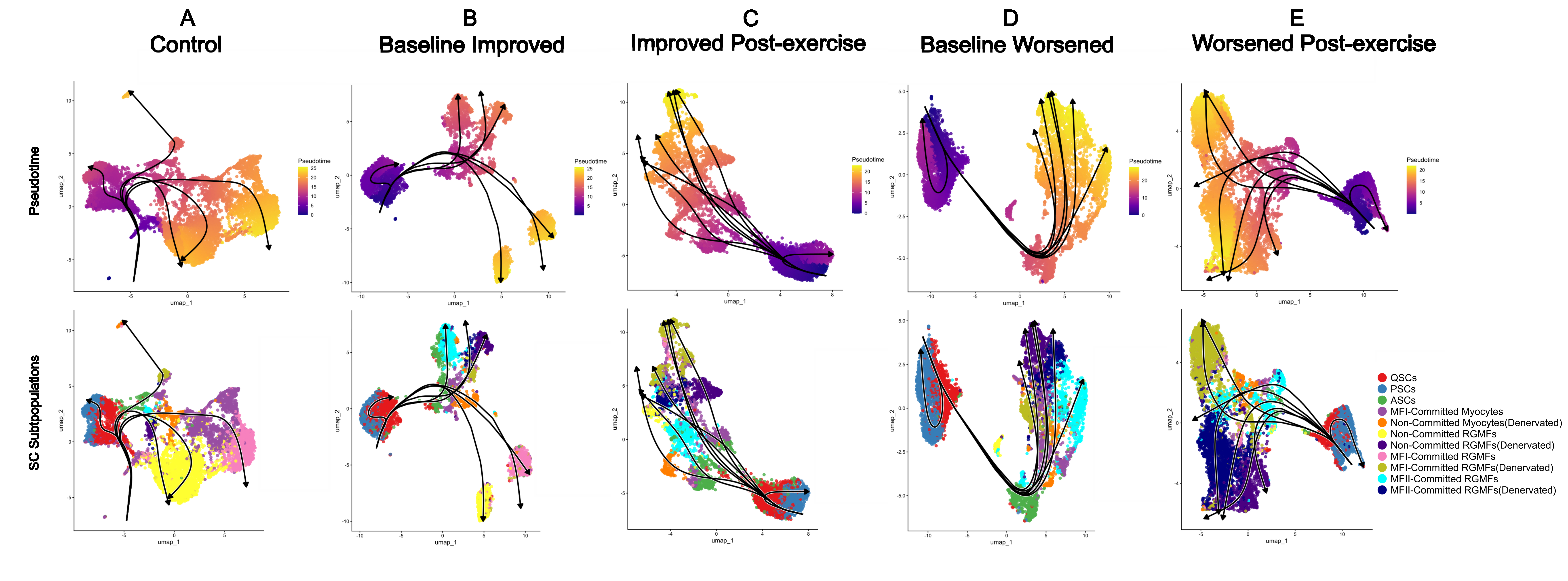
Methods We performed single-nuclei RNA sequencing on 184,410 nuclei from gastrocnemius muscle biopsies of 9 subjects, comparing a control group against paired baseline and post-SET samples from patients with "Improved" versus "Worsened" clinical outcomes. We utilized differential expression, pseudotime trajectory inference (Slingshot), and ligand-receptor modeling (CellChat) to map the regenerative dynamics and signaling networks associated with each outcome. Results Patients with Improved outcomes exhibited a robust restoration of oxidative Type I (MFI) fiber identity and a functional "response to hypoxia" characterized by upregulated HIF1A and EPAS1. This group also uniquely upregulated arteriogenesis-related pathways, specifically smooth muscle cell migration, post-exercise. In contrast, patients with Worsened outcomes displayed a pathological metabolic drift toward atrophy-prone Type II (MFII) fibers, driven by specific disruption of the Calcineurin-NFAT signaling pathway. Trajectory analysis revealed that myogenic progenitors in the Worsened group failed to commit to MFI lineages, instead retaining a "denervated" transcriptomic signature (NCAM1+, MUSK+) that persisted despite exercise intervention. Furthermore, while exercise restored homeostatic signaling networks in responders, the Worsened group exhibited a collapse in intercellular communication and blunted angiogenic signaling (NOS1 downregulation) despite elevated baseline VEGFA expression, suggesting a failure to resolve pathological ischemic hypoxia. Conclusions Divergent PAD outcomes depend on the capacity to restore oxidative identity and resolve neurovascular stress. We identified persistent regenerative denervation and Calcineurin-NFAT disruption as key barriers in non-responders, establishing a framework for targeting SET resistance.
  • Oh, Dong Gun  ( Emory University , Atlanta , Georgia , United States )
  • Koutakis, Panagiotis  ( University of Nebraska at Medical Center , Omaha , Nebraska , United States )
  • Fletcher, Emma  ( University of West Florida , Pensacola , Florida , United States )
  • Pipinos, Iraklis  ( UNIV NEBRASKA MEDICAL CTR , Omaha , Nebraska , United States )
  • Hansen, Laura  ( EMORY UNIVERSITY , Atlanta , Georgia , United States )
  • Author Disclosures:
    Dong Gun Oh: DO NOT have relevant financial relationships | Panagiotis Koutakis: DO NOT have relevant financial relationships | Emma Fletcher: DO NOT have relevant financial relationships | Iraklis Pipinos: No Answer | Laura Hansen: DO NOT have relevant financial relationships
More abstracts on this topic:
Age-stratified Monogenic and Polygenic Contributions for Atrial Fibrillation in the All of Us Research Program

Chen Zhanlin, Gordon Adam, Webster Gregory

Cardiac Adaptations and Mitochondrial Protection Through Long Noncoding RNAs Regulation in Mice on a Ketogenic Diet

Tran Talan, Robison Lisa, Gurusamy Narasimman, Noto Natalia, Hernandez Ariana, Pulido-correa Victoria, Vogel Chana, Lawrence Zachary, James Shalet, Uribe Iliana, Speth Robert

More abstracts from these authors:
You have to be authorized to contact abstract author. Please, Login
Not Available