Investigating Changes in Satellite Cell Proliferation and Angiogenic Potential in Response to Exercise
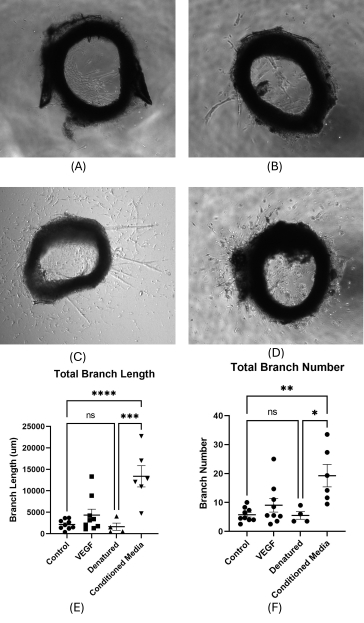
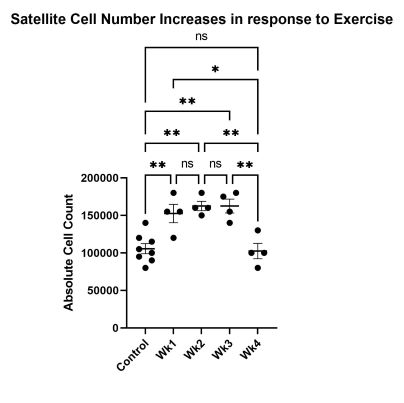
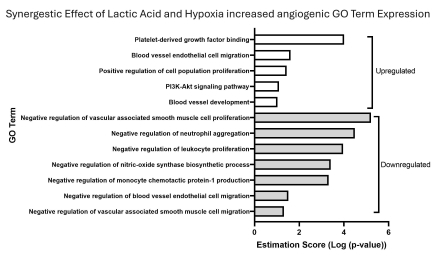
Abstract Body: Background: Peripheral Artery Disease (PAD) is an atherosclerotic process leading to vessel obstruction. Supervised walking exercise is a first-line treatment to improve walking ability and quality of life scores of patients. Despite its known benefits, the underlying mechanism is not fully understood. Thus, this study focuses on satellite cells’ (SCs) underinvestigated role as mediators of vascular growth through the secretion of cytokines. Previous in vivo models have demonstrated increased migration of endothelial cells and smooth muscle cells, as well as blood vessel growth in response to SC activity. Therefore, we assessed the hypothesis that exercise therapy affects satellite cell proliferation, activation, and expression and results in improved perfusion in PAD patients via mouse study. Aim: The project aims to enhance the efficacy of exercise therapy through a better understanding SC biology and their pro-vasculogenic ability. Methods: Aortic Ring Assay: Murine thoracic aortic sections were embedded in a Type I collagen matrix in 96-wells. The wells were seeded with Opti-MEM (control), control+0.3% VEGF (+ control), SC Conditioned Media (CM) (24hr, 2M cells/plate), or denatured CM (56°C, 1 hr). The total length/number of branches were measured via ImageJ. Flow Cytometry: 18+ months old C57BL/6 were housed with voluntary running wheels with activity counter until day 28. SCs were digested and were labeled as: CD11b, CD45, CD31, Sca1 (-), and α7-integrin+ at 7-day intervals. Mass Spectrometry: Cell supernatant of 2 million satellite cell incubated with Opti-MEM was collected after 24 hours. Each group was incubated with normoxia, 1% hypoxia, 4mM lactate, and synergy (both hypoxia and 4mM lactate). GO Term analysis was followed. Results: Aortic Ring Assay: SC CM showed significantly higher total branch length (13381.89±2470.44μm, n=6) (****p<0.0001) and numbers (19.24±3.87, n=6) (**p<0.01) compared to control (2158.18±382.31μm, n=9), (5.76±0.81, n=9). Flow Cytometry: Absolute SC count on Week 2 (162500±10897.25,n=4)(**p<0.01) and Week 3 (162500±16007.81,n=4)(**p<0.01) were significantly higher than control (105625±17754.84,n=8)(*p<0.05). Mass Spectrometry: angiogenesis-related GO term expression was increased in Synergy group to compare with normoxia. Conclusion(s): These findings indicate that SC CM induces angiogenesis by secreting pro-angiogenic factors and this effect is further heightened by exercise-induced stimuli (hypoxia and lactic acid).
Oh, Dong Gun
(
Emory University
, Atlanta , Georgia , United States )
Yu, Tao
(
Emory University
, Atlanta , Georgia , United States )
Valdivia, Alejandra
(
Emory University
, Atlanta , Georgia , United States )
Hansen, Laura
(
EMORY UNIVERSITY
, Atlanta , Georgia , United States )
Author Disclosures:
Dong Gun Oh:DO NOT have relevant financial relationships
| Tao Yu:DO NOT have relevant financial relationships
| Alejandra Valdivia:No Answer
| Laura Hansen:DO NOT have relevant financial relationships