Logo

American Heart Association

  3
  0


Final ID: Thu149

Hemadyne-Assisted Transient Hemodynamics Recapitulates Endothelial Homeostasis and Dysfunction

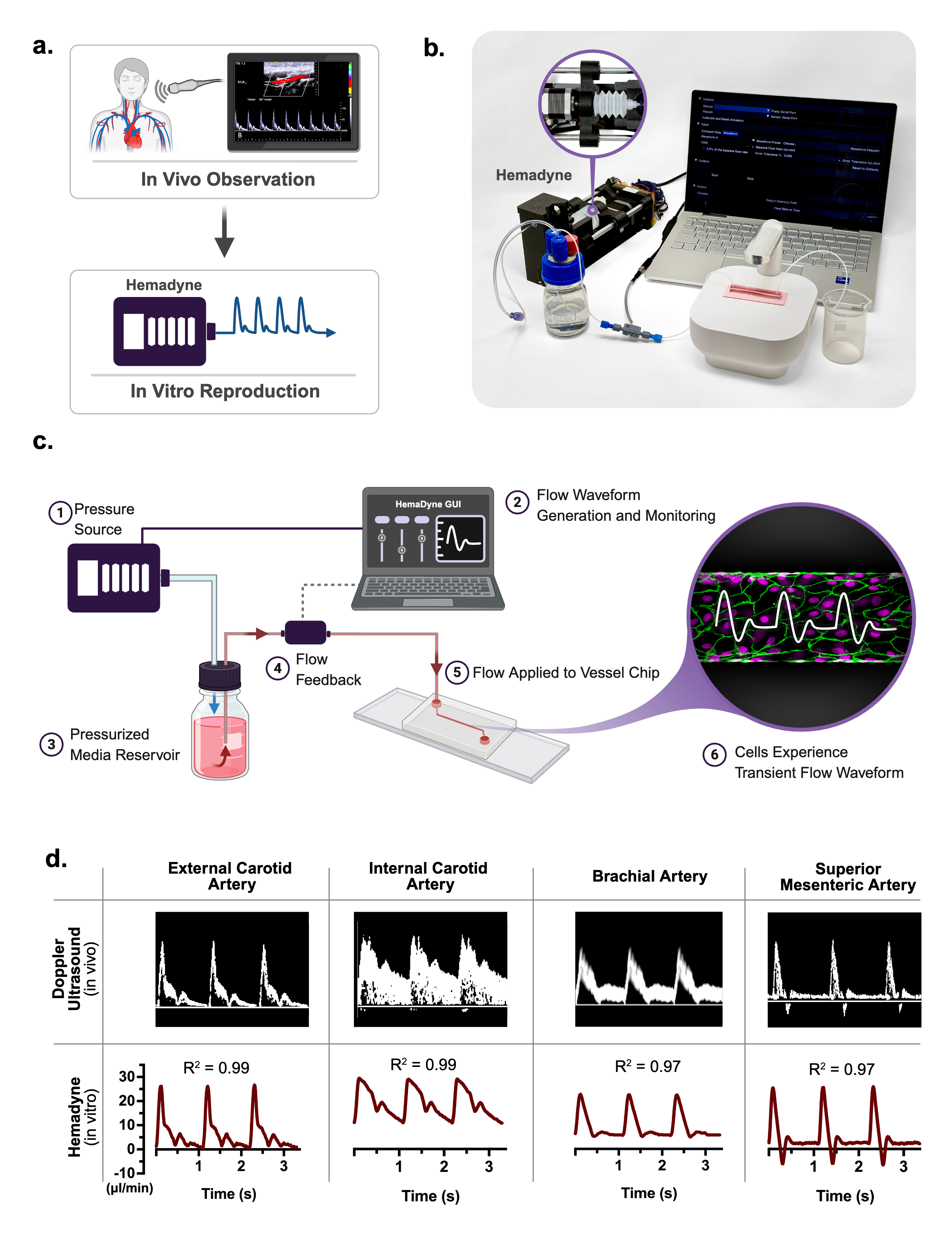
Abstract Body: Background: The vascular endothelium mediates many vital physiological functions. Endothelial cells experience various hemodynamic forces such as shear stress, pressure, and tensile strain which profoundly influence their structure, function, and signaling. Yet, key gaps remain in understanding how these flow–derived forces influence vascular biology and contribute to thrombosis and atherosclerosis. Prior studies often use syringe or peristaltic pump systems that fail to reproduce clinically observed multiphasic hemodynamic complexity. Consequently, systematic investigation of endothelial mechanosensing under human blood flow waveforms has been limited. We developed a novel in vitro perfusion system, Hemadyne, that produces vessel and patient-specific waveforms to enables such studies.

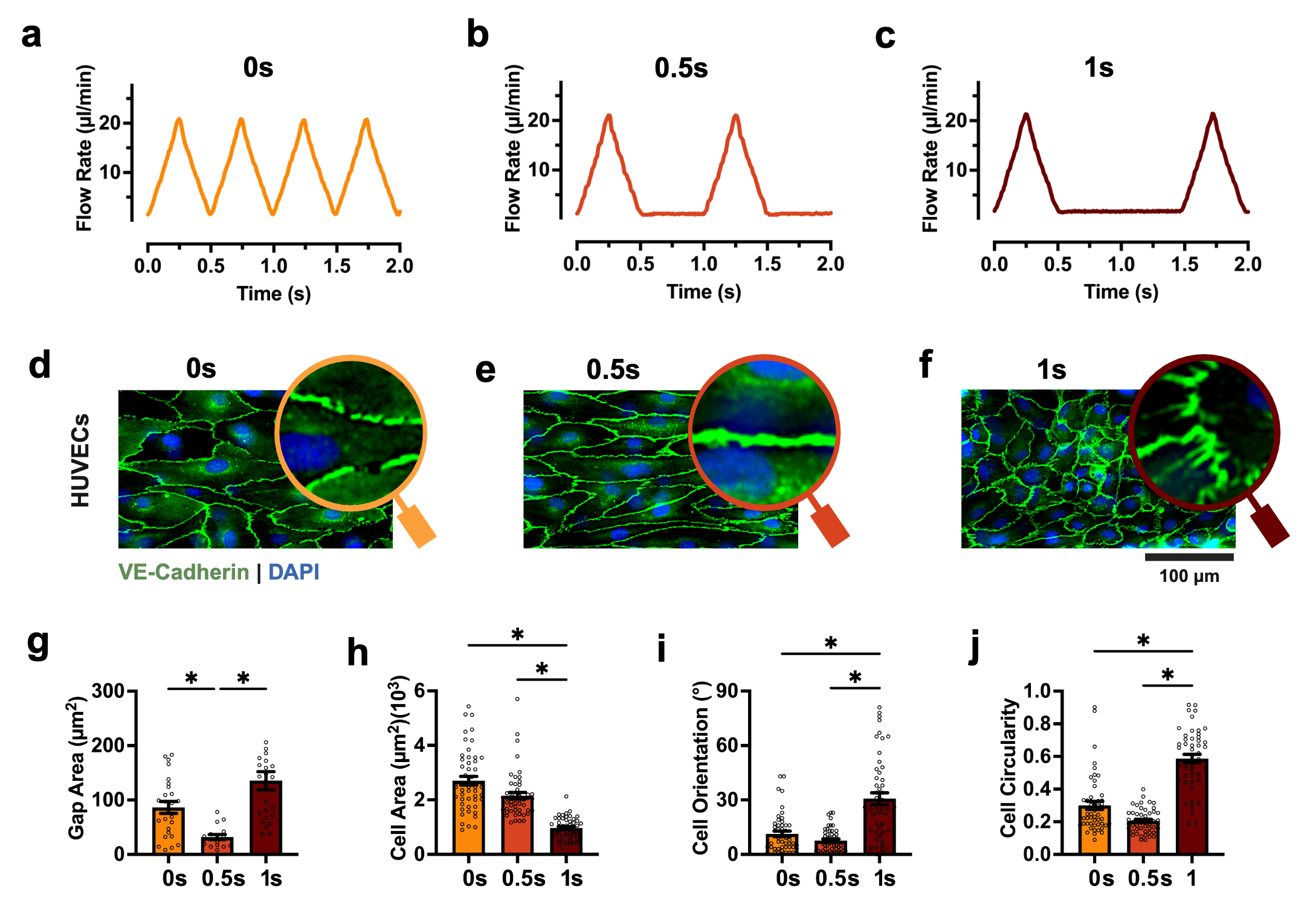
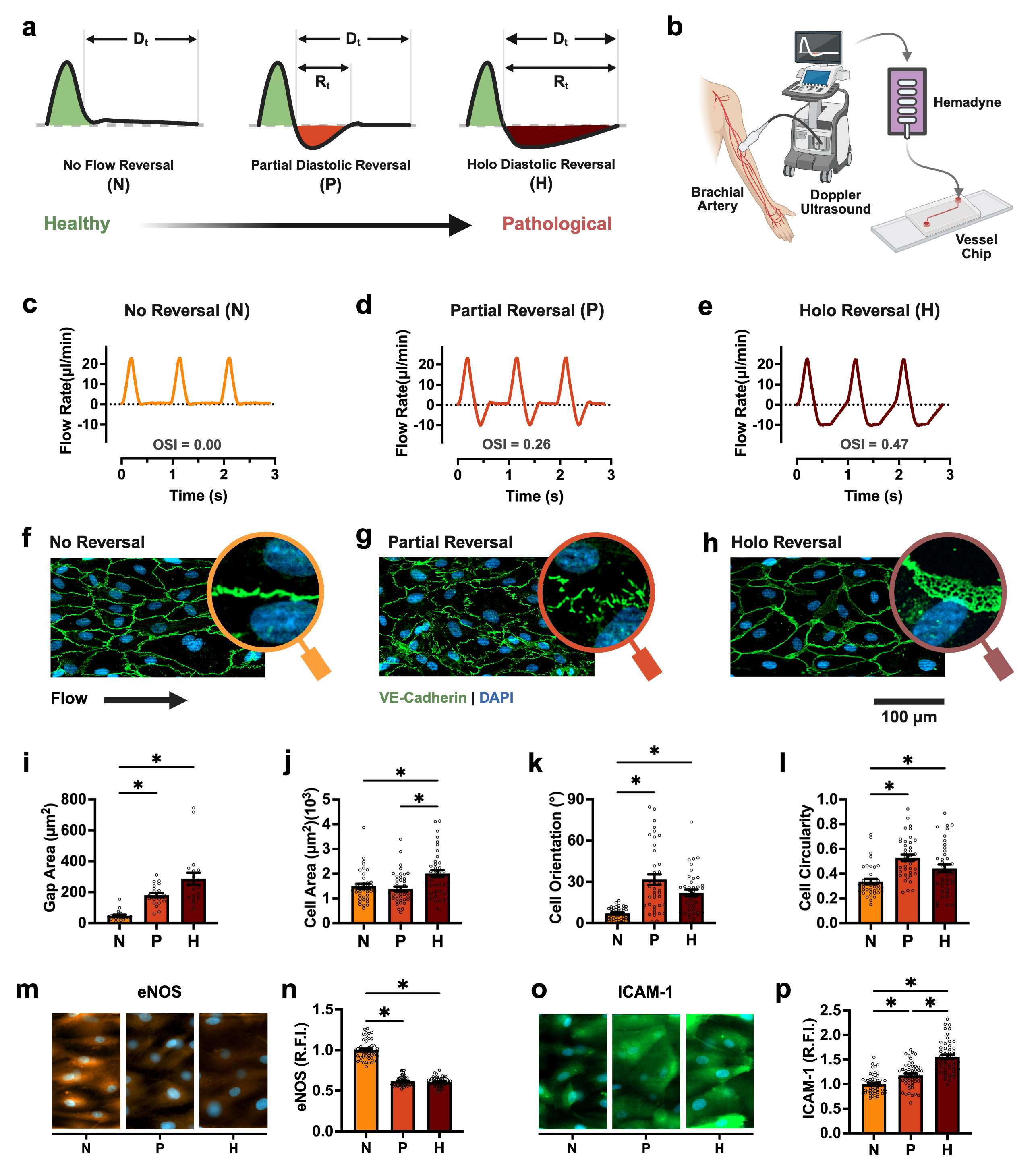
Objective: This study deployed Hemadyne to 1) determine whether diastolic rest duration governs endothelial homeostasis, and 2) recapitulate clinically observed diastolic retrograde flow–associated vascular dysfunction

Methods: Human flow waveforms captured by clinical Doppler ultrasound were programmed to Hemadyne. Human aortic (HAECs) and umbilical vein endothelial cells (HUVECs) were cultured on collagen-I coated microfluidic vessel-chips and exposed to the corresponding waveforms for 24 hours. The cells were then fixed, immunostained for cadherin junctions, nitric oxide synthase, and intercellular adhesion molecule 1 (ICAM–1), followed by imaging and quantitative analysis.

Results: Hemadyne faithfully reproduced multiphasic clinical flow profiles (Pearson correlation > 0.97). After exposure, both HAECs and HUVECs maintained intact adherens junctions only when the flow included a 0.5 s diastolic rest period. Either doubling this rest time or eliminating it compromised endothelial barrier integrity in both cell types. Analysis of diastolic retrograde flow interactions with HAECs showed that transient reversal lasting over 300ms induced endothelial dysfunction in a duration dependent manner, evidenced by disrupted cadherin junctions, reduced eNOS production, elevated ICAM–1 expression, and loss of actin cytoskeletal organization.

Conclusions: Hemadyne enabled physiologically relevant study of hemodynamic–endothelial interactions and replicated clinical retrograde flow associated vascular dysfunction in vitro. This system may facilitate discovery of novel mechanosensory pathways and enable discovery of targeted therapeutic intervention strategies for vascular disorders.
  • Kumar, Ankit  ( Texas AnM University , College Station , Texas , United States )
  • Pandey, Rashmi  ( Texas AnM University , College Station , Texas , United States )
  • Rahbar, Elaheh  ( Texas AnM University , College Station , Texas , United States )
  • Jain, Abhishek  ( Texas AnM University , College Station , Texas , United States )
  • Author Disclosures:
    Ankit Kumar: DO NOT have relevant financial relationships | Rashmi Pandey: DO NOT have relevant financial relationships | Elaheh Rahbar: DO have relevant financial relationships ; Consultant:CCJ Medical :Past (completed) | Abhishek Jain: DO NOT have relevant financial relationships
Meeting Info:
Session Info:

08. Poster Session 2 & Reception-Sponsored by the ATVB Journal

Thursday, 05/14/2026 , 05:00PM - 07:00PM

Poster

More abstracts on this topic:
A combined approach of cardiac magnetic resonance and CardioMEMS to assess right ventricular dysfunction during exercise in HFpEF-PH

Bekhuis Youri, Bogaert Jan, La Gerche Andre, Claessen Guido, Janssens Stefan, Droogne Walter, Rosseel Thomas, Barrios Leticia, Verwerft Jan, Timmermans Philippe, Trenson Sander, Dresselaers Tom

A Silent Storm: Incidental Discovery of IVC and Right Atrium Thrombus in a Patient with Uterine Stromal Sarcoma

Wasef Natale, Fatima Tehreem, Stys Adam

More abstracts from these authors:
The Repurposing of FDA-Approved Hypoxia-Inducible Factor 1 Agonists is an Alternative Therapeutic Option for Deep Vein Thrombosis

Dhar Rana, Chakrabarti Mrinmay, Gandham Shriya, Phillips Mollie, Obi Andrea, Henke Peter, Jain Abhishek, Evans Colin

You have to be authorized to contact abstract author. Please, Login
Not Available