The IDO1-Kynurenine Axis Drives Endothelial Mitochondrial Dysfunction: A Novel Mechanism of Uremic Vascular Impairment
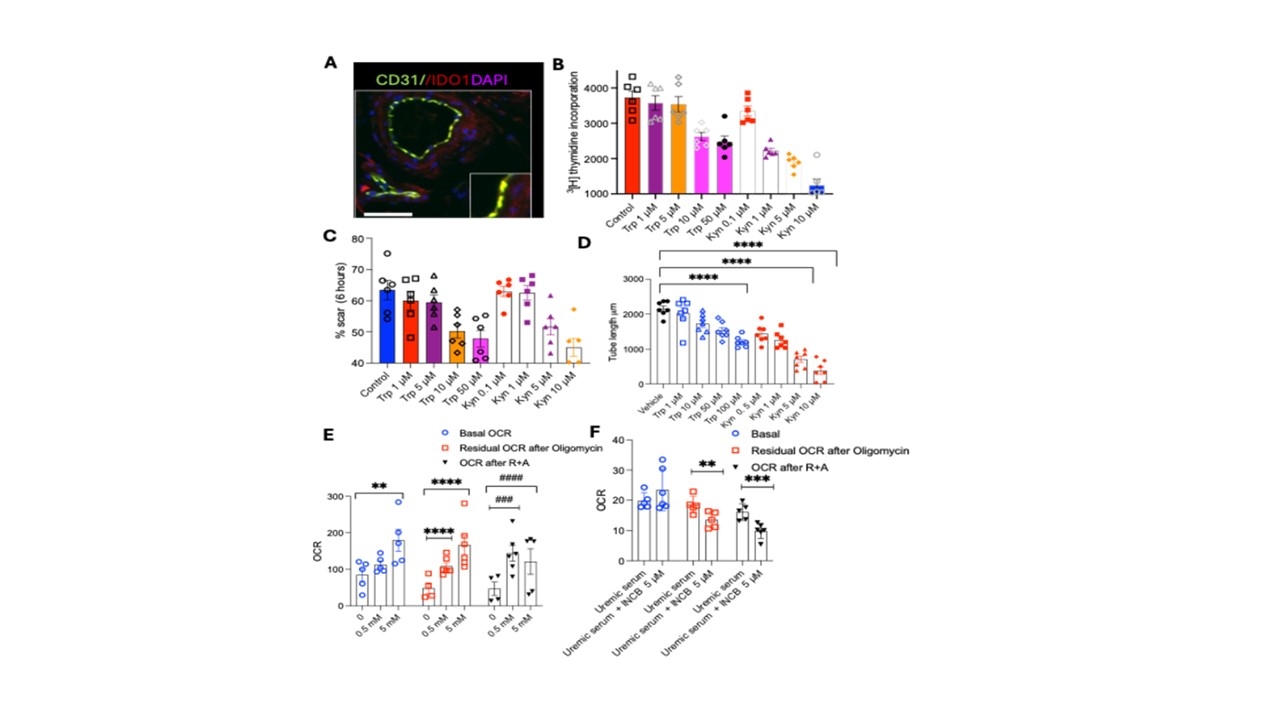
Abstract Body: Background Chronic Kidney Disease (CKD) is a unique milieu characterized by the retention of uremic solutes and the universal presence of endothelial cell (EC) dysfunction. While mitochondrial bioenergetics are essential for EC health, the specific triggers of mitochondrial decay in CKD remain elusive. Kynurenine (Kyn), a byproduct of Indoleamine 2,3-dioxygenase 1 (IDO1), is a potent vasculotoxin. We hypothesized that the IDO1-Kyn axis drives mitochondrial dysfunction in ECs, representing a potential, yet unexplored, therapeutic target for vascular rescue in CKD. Methods Primary ECs were treated with Kyn or pooled uremic serum from CKD patients. The IDO1 levels and mitochondrial bioenergetics were quantified using the Seahorse XF96 Cell Mito Stress Test. Key parameters: basal oxygen consumption rate (OCR), proton leak, and non-mitochondrial respiration were measured and normalized to protein concentration. The mechanistic role of IDO1 was probed using the pharmacological inhibitor INCB24360. To transition to in vivo modeling, a differential centrifugation protocol was optimized to isolate high-purity mitochondria from murine aorta and femoral arteries, confirmed via COXIV enrichment. Results Uremic serum and Kyn, at concentrations found in patients with CKD, robustly induced IDO1 and increased its activity, converting tryptophan to Kyn. In turn, kyn induced a significant, dose-dependent increase in mitochondrial proton leak, suggesting a breakdown of the inner mitochondrial membrane potential. Similarly, Kyn and uremic serum elevated non-mitochondrial OCR, an indicator of increased cellular oxidative stress. These bioenergetic defects were significantly attenuated with INCB24360, which reduced both proton leakage and non-mitochondrial OCR. Finally, we validated a robust pipeline for microvascular mitochondrial isolation from the aorta and the femoral artery, establishing the methodology to evaluate tissue-specific bioenergetics. Conclusion Our preliminary data identify the IDO1-Kyn axis as a critical mediator of endothelial mitochondrial dysfunction under uremic conditions. While IDO1 inhibition shows promise in restoring bioenergetic homeostasis in vitro, these findings lay the essential groundwork for studies using endothelial-specific IDO1 knockout mice. Determining whether restoring mitochondrial flux can rescue limb ischemia and capillary rarefaction in CKD models remains a vital next step in defining the translational potential of this pathway.
Lotfollahzadeh, Saran
(
Boston University
, Boston , Massachusetts , United States )
Chitalia, Vipul
(
Boston Medical Center
, Boston , Massachusetts , United States )
Author Disclosures:
Saran Lotfollahzadeh:DO NOT have relevant financial relationships
| Vipul Chitalia:DO NOT have relevant financial relationships