
Xenium Spatial Profiling Reveals Endothelial Disruption and Smooth Muscle Predominance After Saphenous Vein Distension During Conduit Harvest
Abstract Body: We have previously identified early injury-associated transcriptional and signaling pathways linked with vein graft distention and injury during conduit harvest in canine models; however, how these responses are spatially organized across the human vein wall and integrated into multicellular communication networks remains incompletely defined. We assessed the hypothesis that vein graft distension initiates a maladaptive, spatially coordinated remodeling across vascular cell types that promotes pathological healing and graft failure. We therefore applied cutting-edge Xenium in situ spatial transcriptomics to human greater saphenous vein samples (non-distended control and mechanically distended; n = 3 pairs) to define how mechanical injury during vein graft preparation reshapes cellular organization and intercellular communication at single-cell resolution.
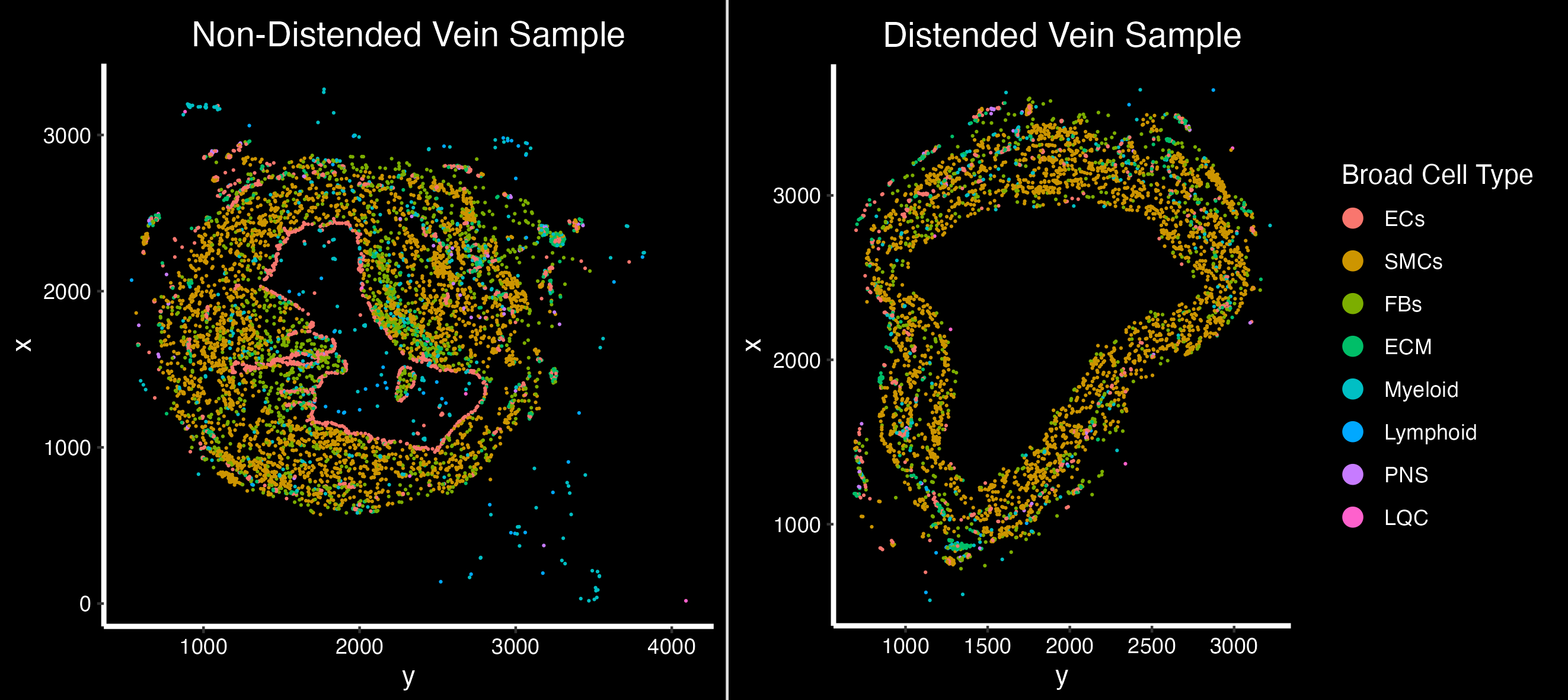
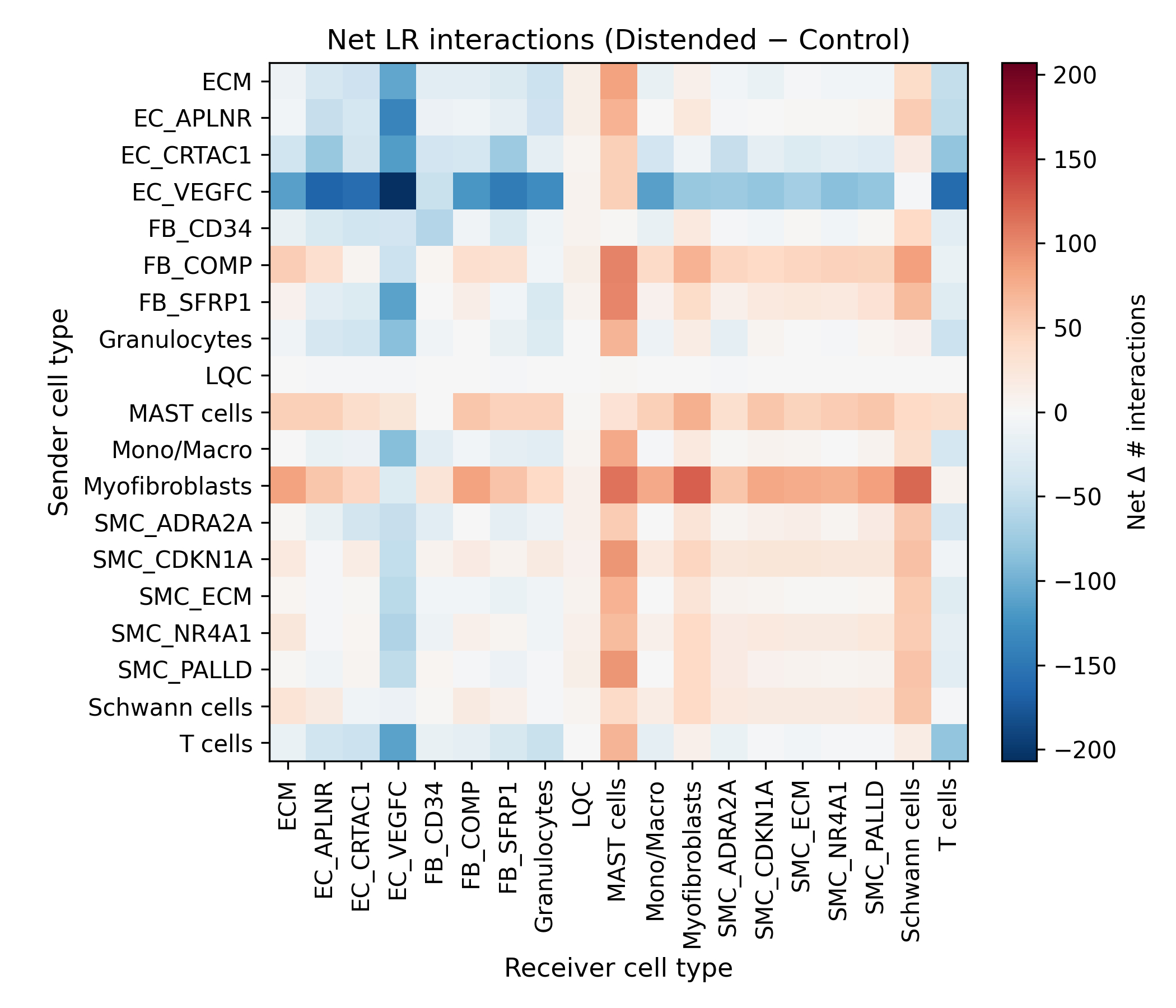
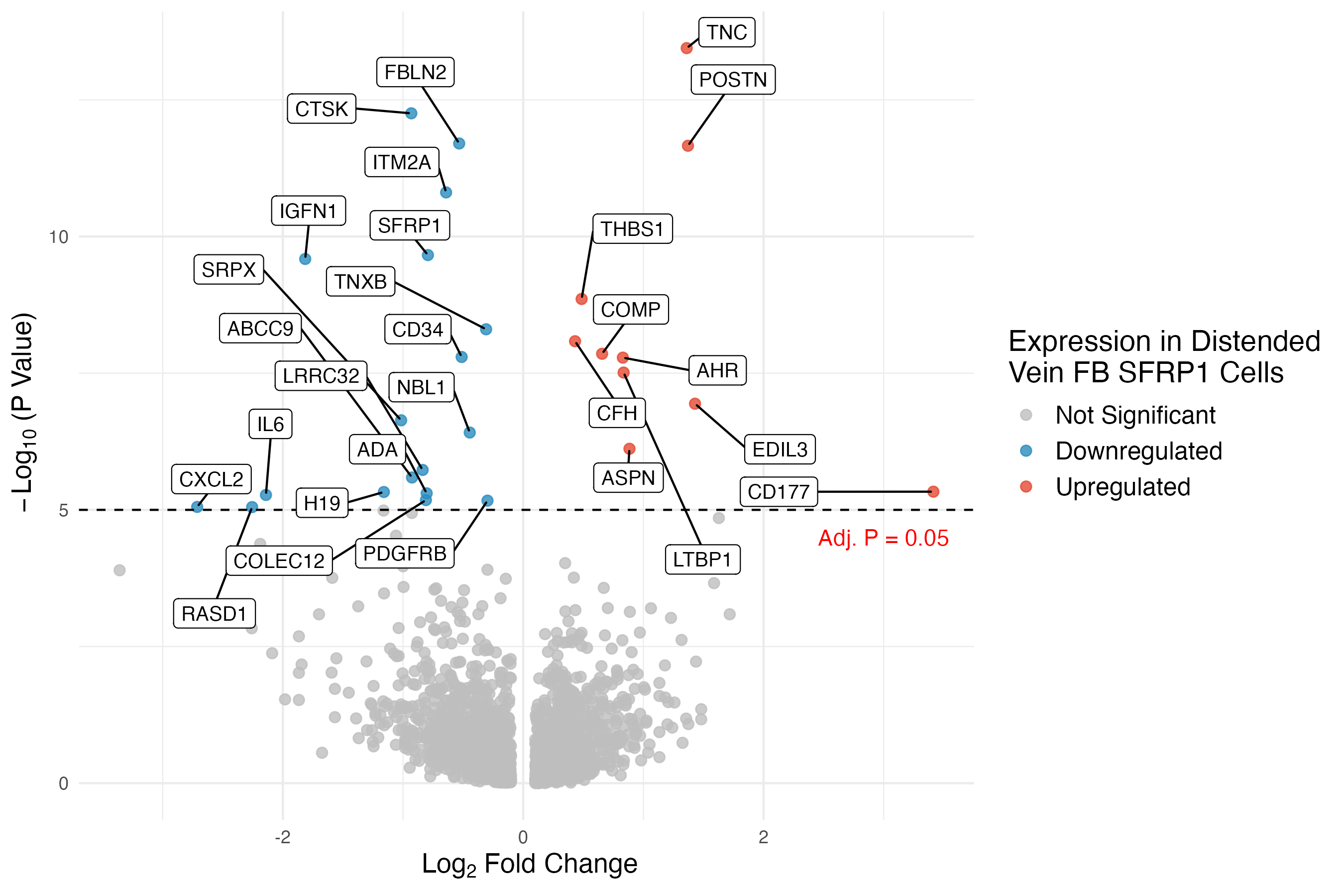
Spatial neighborhood enrichment and co-occurrence analyses revealed a conserved CRTAC1+ endothelial subpopulation in the intima of control veins that was replaced by inwardly expanding PALLD+ smooth muscle cells following distention, reflecting broader vessel wall reorganization. Ligand-receptor interaction analysis provided functional support for this architectural shift, revealing a global loss of incoming and outgoing endothelial signaling capacity in distended veins. In contrast, myofibroblasts and mast cells emerged as prominent signaling hubs, exhibiting increased transmission and reception of intercellular signals associated with pro-inflammatory signaling and fibroblast-smooth muscle crosstalk—hallmarks of early pathological vascular remodeling. Consistent with this signaling rewiring, complementary transcriptional analysis identified SFRP1+ fibroblast populations enriched for gene programs associated with extracellular matrix remodeling and cellular activation, supporting fibroblast activation in response to injury.
In conclusion, these findings define a coordinated injury response in distended human veins characterized by loss of endothelial organization and signaling, emergence of smooth muscle cells as structural organizers, and activation of fibroblast and immune compartments. These results provide mechanistic insight into early vein graft injury and identify spatially resolved cellular targets for therapeutic intervention prior to graft failure.
Jordan, Sean
(
Emory University
, Atlanta , Georgia , United States )
Park, Jemin
(
Harvard University
, Boston , Massachusetts , United States )
Ciaramella, Michael
(
Harvard University
, Boston , Massachusetts , United States )
Nie, Karen
(
Harvard University
, Boston , Massachusetts , United States )
Michaud, Marina
(
Emory University
, Atlanta , Georgia , United States )
Bakhtiari, Mojtaba
(
Emory University
, Atlanta , Georgia , United States )
Liang, Patric
(
Harvard University
, Boston , Massachusetts , United States )
Bhasin, Manoj
(
Emory University
, Atlanta , Georgia , United States )
Author Disclosures:
Sean Jordan:DO NOT have relevant financial relationships
| Jemin Park:DO NOT have relevant financial relationships
| Michael Ciaramella:No Answer
| Karen Nie:DO NOT have relevant financial relationships
| Marina Michaud:DO NOT have relevant financial relationships
| Mojtaba Bakhtiari:No Answer
| Patric Liang:No Answer
| Manoj Bhasin:No Answer
Ciaramella Michael, Ferran Christiane, Bhasin Manoj, Liang Patric, Michaud Marina, Park Jemin, Nie Karen, Mota Lucas, Jordan Sean, Bakhtiari Mojtaba, Contreras Mauricio, Pradhan Leena