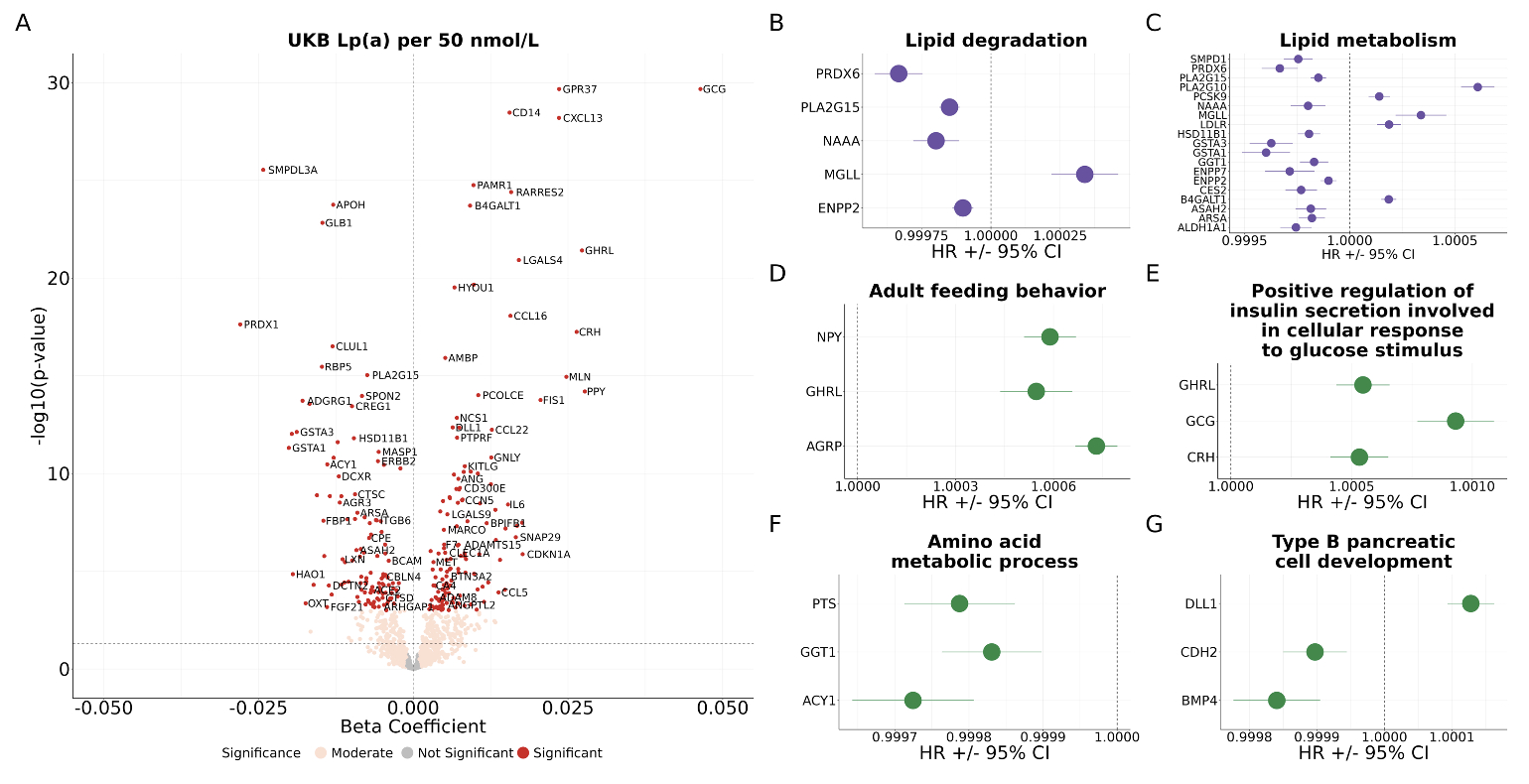
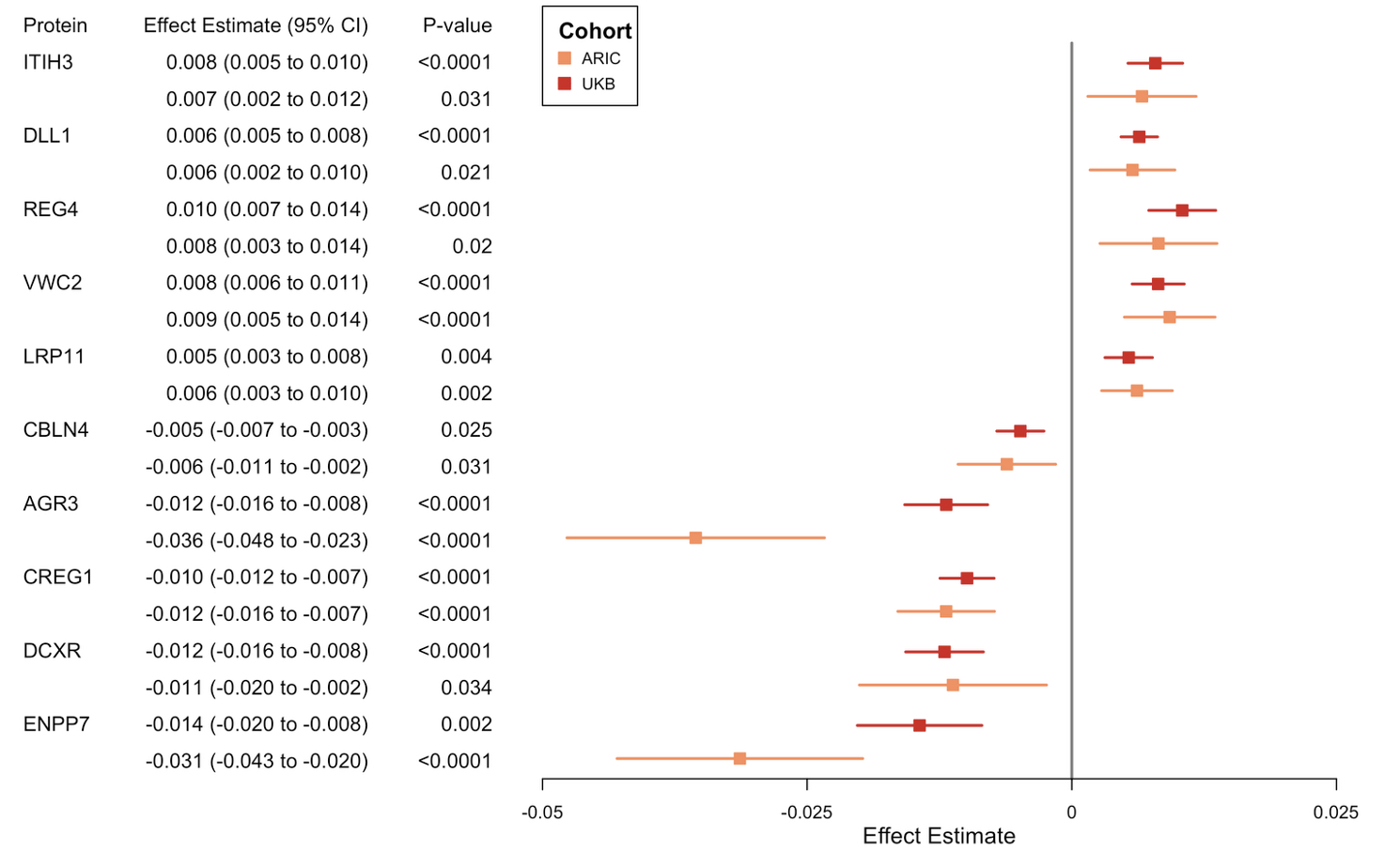
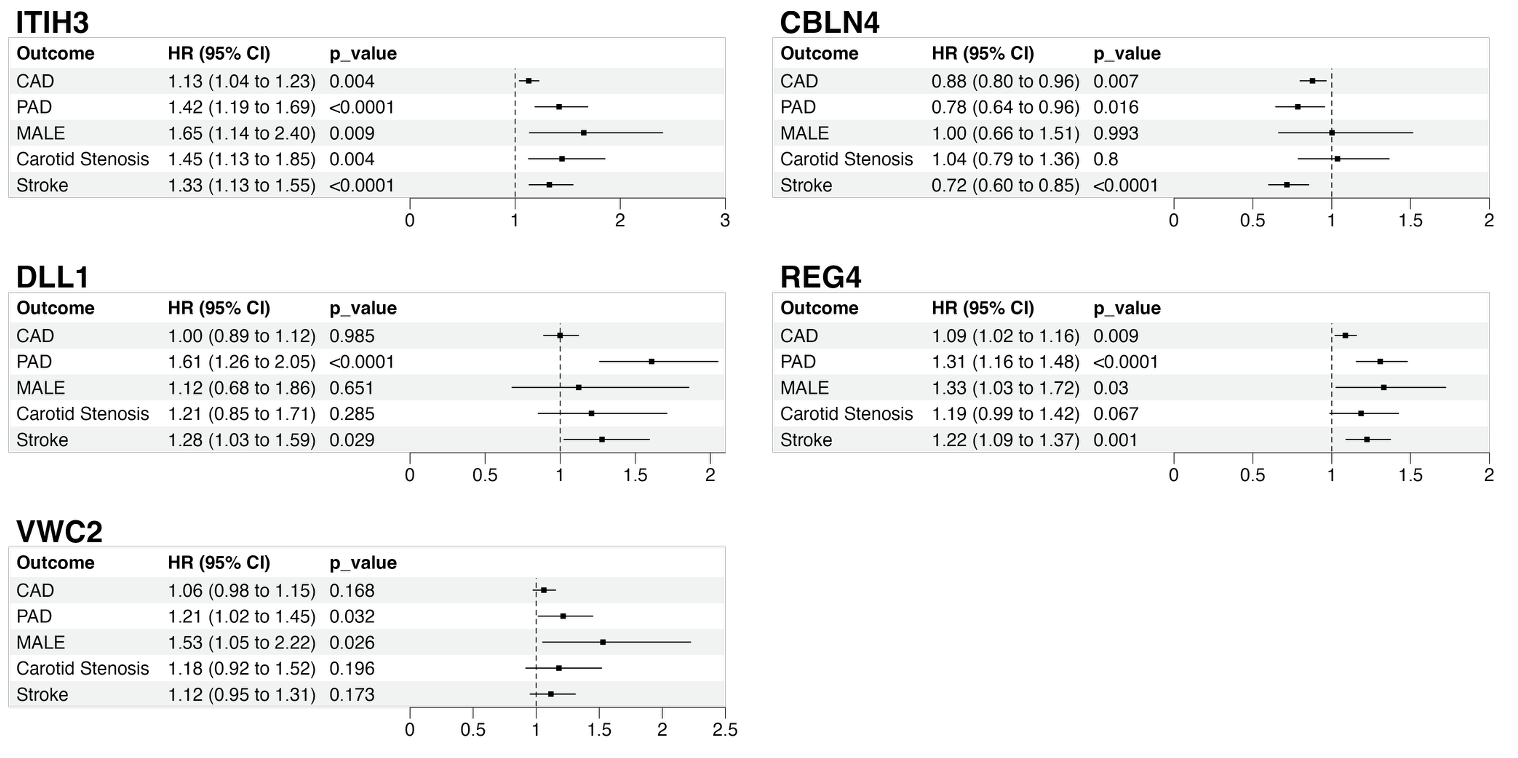
Abstract Body: Background: The pathways linking lipoprotein(a) (Lp[a]) to atherosclerotic cardiovascular disease (ASCVD) are unclear. This study aimed to discover Lp(a)-associated plasma proteins and estimate their associations with incident ASCVD. Methods: We evaluated associations between plasma proteins and measured Lp(a) levels in 48,859 UK Biobank participants, with external replication in 9,416 Atherosclerosis Risk in Communities (ARIC) participants profiled using an independent proteomic platform. Associations were tested using generalized linear models adjusted for age, sex, smoking status, diabetes, BMI, systolic blood pressure, hypertension, LDL-C, HDL-C, triglycerides, eGFR, statin use, and the first 10 genetic ancestry components. Multiple testing correction used the Benjamini–Hochberg FDR threshold of p<0.05. We compared protein effect sizes for Lp(a) with those derived using an LPA genetic risk score (GRS) and LDL-C as outcomes. Incident ASCVD associations were evaluated using Cox proportional hazards models to estimate hazard ratios. Results: Participants were a mean age of 57 years (SD 8.22), 93.9% European, and 53.8% male, with median follow-up of 8.9 years (IQR 8.3–9.7). Of 1,459 circulating proteins, 164 were significantly associated with Lp(a) after FDR correction, with enrichment for lipid degradation, metabolism, and insulin secretion (Figure 1). In ARIC, 10 proteins replicated with consistent effects (Figure 2); none were associated with an LPA GRS. Only REG4 and VWC2 showed concordant associations with LDL-C (P < 0.001). Five proteins exhibited concordant associations with Lp(a) and incident ASCVD (ITIH3, DLL1, REG4, VWC2, CBLN4) (Figure 3). ITIH3 was positively associated with coronary artery disease (HR 1.13, 95% CI 1.04–1.23), peripheral artery disease (HR 1.42, 95% CI 1.19–1.69), major adverse limb events (HR 1.65, 95% CI 1.14–2.40), carotid stenosis (HR 1.45, 95% CI 1.13–1.85), and ischemic stroke (HR 1.33, 95% CI 1.13–1.55). CBLN4 uniquely showed inverse associations with Lp(a) and disease: higher levels were linked to lower risk of CAD (HR 0.88, 95% CI 0.80–0.96), PAD (HR 0.78, 95% CI 0.64–0.96), and ischemic stroke (HR 0.72, 95% CI 0.60–0.85). Conclusion: Using high-throughput proteomics, we discovered and replicated 10 proteins associated with circulating Lp(a), several of which were independent of genetically predicted Lp(a). While Lp(a) is highly heritable, these atherogenic proteins represent a non-heritable Lp(a) axis.
Bellomo, Tiffany
(
Massachusetts General Hospital
, Boston , Massachusetts , United States )
Saadatagah, Seyedmohammad
(
Baylor College of Medicine
, Houston , Texas , United States )
Lee, Jiwoo
(
Massachusetts General Hospital
, Boston , Massachusetts , United States )
Bramel, Emily
(
The Broad Institute
, Cambridge , Massachusetts , United States )
Abushamat, Layla
(
Baylor College of Medicine
, Houston , Texas , United States )
Misra, Anika
(
Broad Institute of MIT and Harvard
, Cambridge , Massachusetts , United States )
Nakao, Tetsushi
(
Broad Institute of MIT and Harvard
, Cambridge , Massachusetts , United States )
Koyama, Satoshi
(
Broad Institute of MIT and Harvard
, Cambridge , Massachusetts , United States )
Patel, Aniruddh
(
Broad Institute of MIT and Harvard
, Cambridge , Massachusetts , United States )
Urbut, Sarah
(
Massachusetts General Hospital
, Boston , Massachusetts , United States )
Ballantyne, Christie
(
Baylor College of Medicine
, Houston , Texas , United States )
Natarajan, Pradeep
(
Massachusetts General Hospital
, Boston , Massachusetts , United States )