Logo

American Heart Association

  109
  0


Final ID:

PCSK9 Inhibition Attenuates Experimental Abdominal Aortic Aneurysm Formation

Abstract Body: Objectives: Lipid-lowering agents have been shown to be associated with decreased abdominal aortic aneurysm (AAA) growth and rupture. Proprotein convertase subtilisin/kexin type 9 (PCSK9) is an enzyme that binds and degrades the LDL receptor to reduce LDL uptake. It is hypothesized that PCSK9 inhibition reduces aortic inflammation and vascular remodeling to mitigate AAA growth.

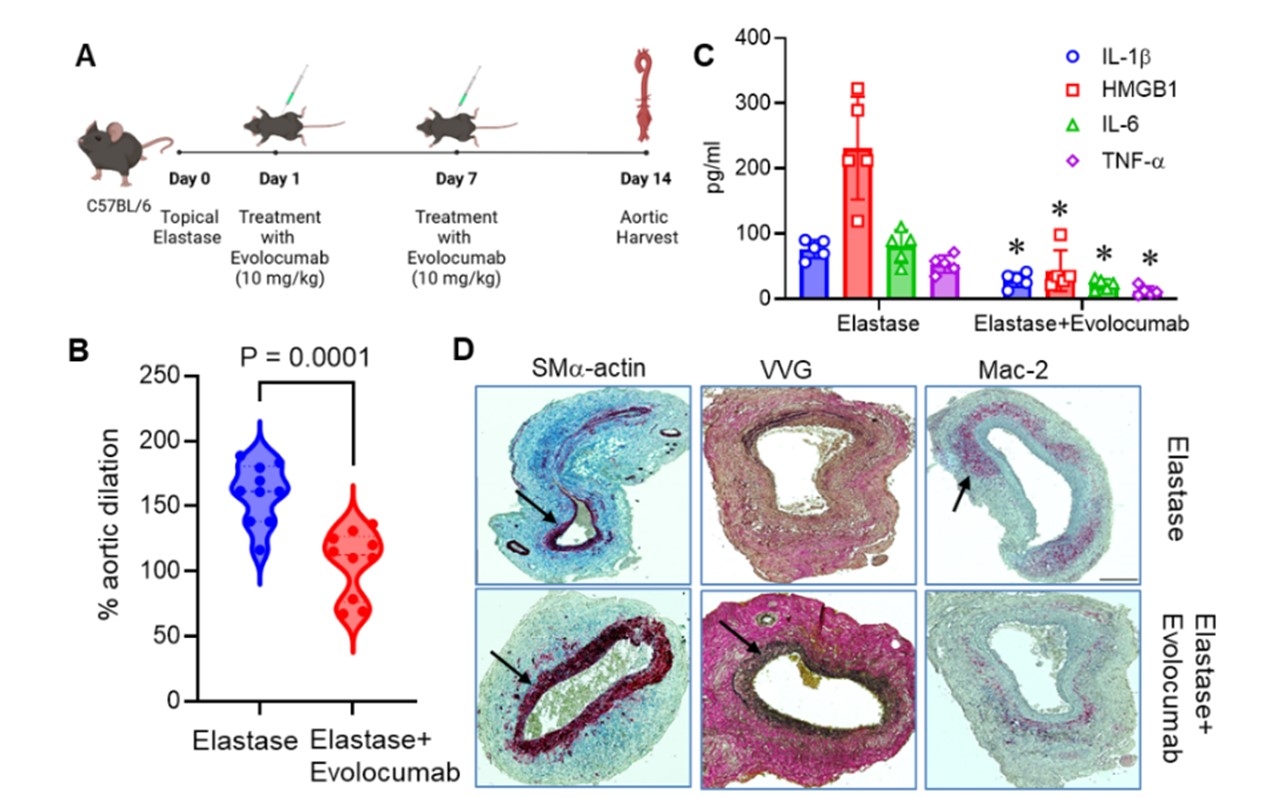
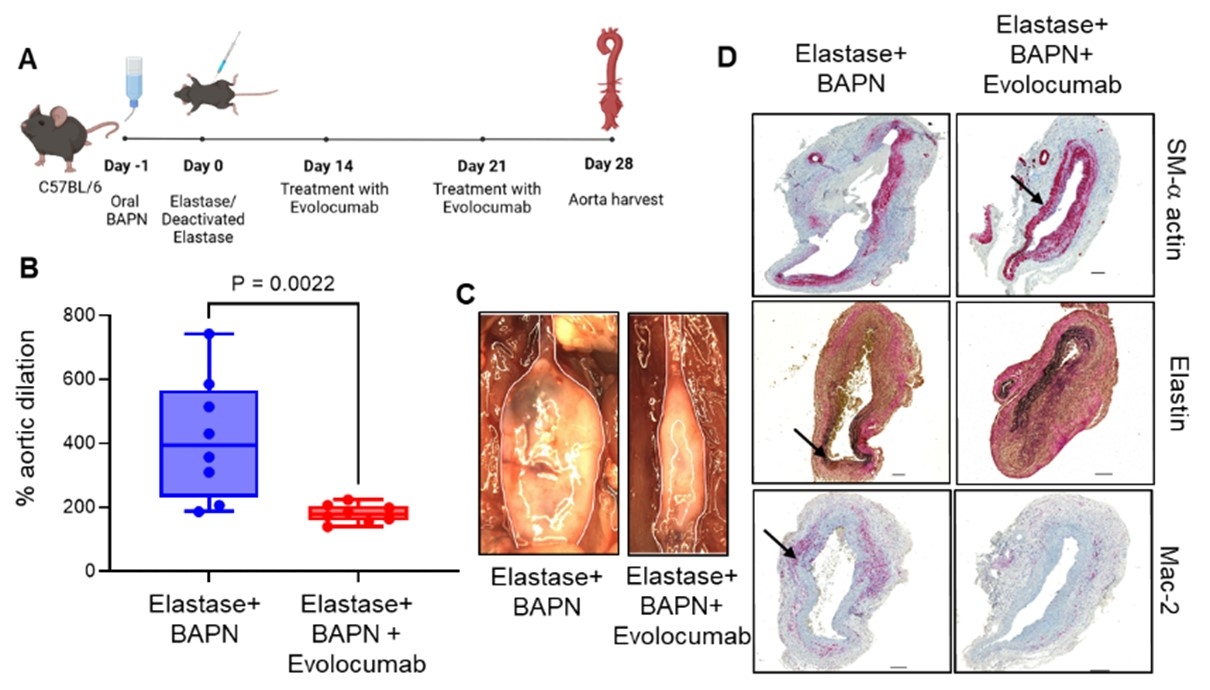
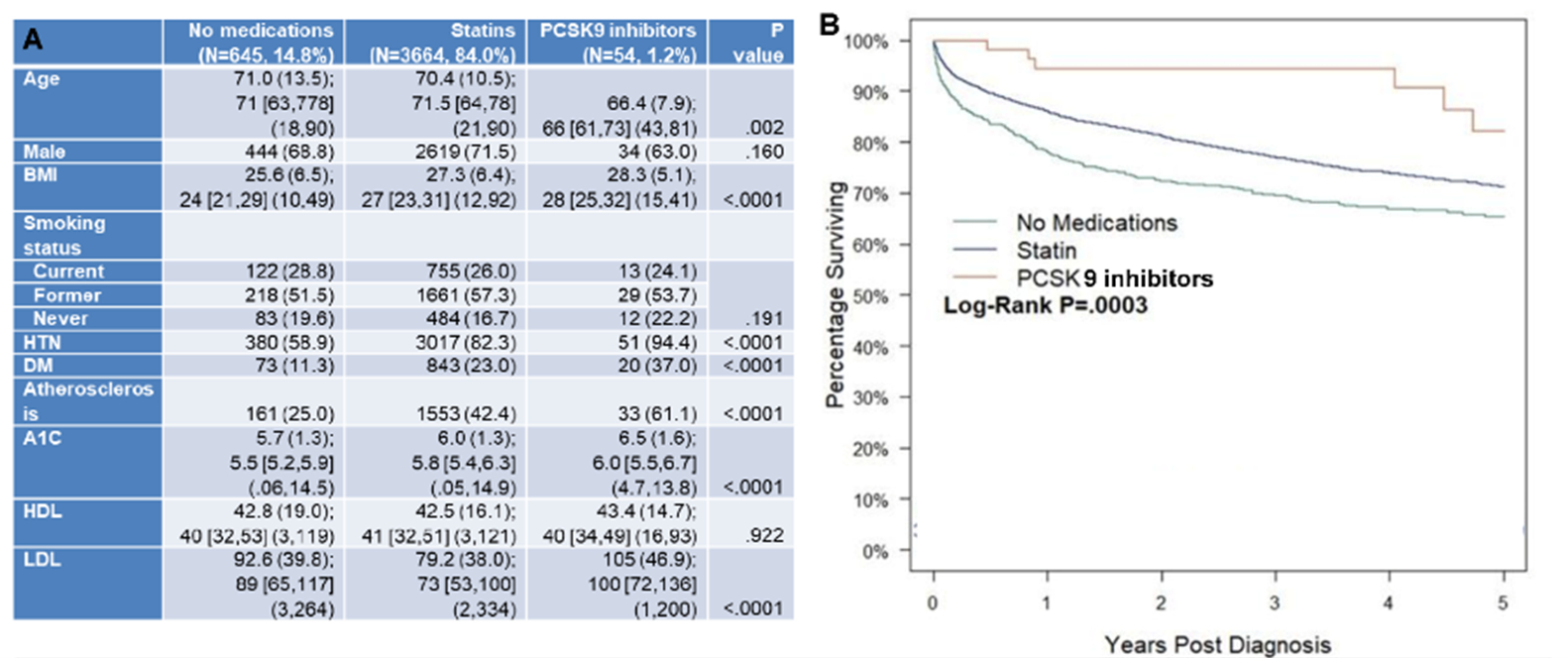
Methods: AAAs were induced in 8–12-week-old male C57BL6 (WT) mice with 0.4U/ml topical porcine pancreatic or heat-inactivated elastase with or without Evolocumab (10mg/kg) given i.p. on days 1 and 7. Aortic diameter was measured and tissue harvested for histology and cytokine analysis on day 14. A model of chronic AAA with elastase+BAPN treatment was also used with or without administration of Evolocumab on day 14 and 21 following aneurysm formation, with harvest on day 28. Finally, a retrospective chart review was performed on AAA patients from 2015-2023 taking PCSK9 inhibitor alone (n=54), statins (n=3664), or neither (n=645) to determine survival. Statistical analyses were performed using GraphPad Prism with two-tailed t-tests, ANOVA, or non-parametric tests and Kaplan-Meier analysis was used to estimate survival. Data is shown as mean+/-S.E. with p<0.05 being significant.

Results: An increase in aortic diameter was observed in elastase-treated WT mice which was attenuated by Evolocumab on day 14 (147.5±7.2% vs. 103.4±5.6%, n=19-20/group, p<0.0001). Similarly, the elastase+BAPN-induced increase in aortic diameter was mitigated with Evolocumab on day 28 (368.0±62.3% vs. 206.0±32.1%, n=8-10/group, p<0.05). Evolocumab treatment significantly decreased proinflammatory cytokine expression (IL-1β, HMGB1, IL-6, & TNFα) in aortic tissue compared to untreated controls in both models and was associated with less macrophage infiltration and elastin disruption on VVG staining, and increased SMa-actin expression. In the human data, freedom from all-cause mortality in patients with AAAs at the time of last follow up was lowest in the PCSK9i group (85%) compared to statins (72%) and no treatment groups (69%; log-rank p<0.001).

Conclusion: Our results suggest that PCSK9 inhibition attenuates aortic inflammation and aneurysm formation in murine models of AAA. Moreover, PCSK9 inhibition was associated with reduced mortality in AAA patients. Further studies are underway to elucidate the molecular pathways of PCSK9 inhibition and decipher their role in the pathogenesis of AAAs and aortic rupture.
  • Fassler, Michael  ( Univ of FL Department of Surgery , Gainesville , Florida , United States )
  • Upchurch, Gilbert  ( Univ of FL Department of Surgery , Gainesville , Florida , United States )
  • Krebs, Jonathan  ( Univ of FL Department of Surgery , Gainesville , Florida , United States )
  • Viscardi, Chelsea  ( University of Florida , Gainesville , Florida , United States )
  • Gillies, Gwendolyn  ( Univ of FL Department of Surgery , Gainesville , Florida , United States )
  • Stinson, Griffin  ( University of Florida , Gainesville , Florida , United States )
  • Ueland, Walker  ( Univ of FL Department of Surgery , Gainesville , Florida , United States )
  • Valisno, Jeff Arni  ( University of Florida , Gainesville , Florida , United States )
  • Gang, Su  ( Univ of FL Department of Surgery , Gainesville , Florida , United States )
  • Sharma, Ashish  ( Univ of FL Department of Surgery , Gainesville , Florida , United States )
  • Author Disclosures:
    Michael Fassler: DO NOT have relevant financial relationships | Gilbert Upchurch: No Answer | Jonathan Krebs: No Answer | Chelsea Viscardi: No Answer | Gwendolyn Gillies: No Answer | Griffin Stinson: No Answer | Walker Ueland: No Answer | Jeff Arni Valisno: No Answer | Su Gang: No Answer | Ashish Sharma: No Answer
Meeting Info:
Session Info:
More abstracts on this topic:
You have to be authorized to contact abstract author. Please, Login
Not Available