
Logo

American Heart Association

  55
  0


Final ID: LBP13

Microvascular and Blood Brain Barrier dysfunction in COL4A1-related cSVD can be identified by MR DSC perfusion imaging

Abstract Body: Introduction: Pathogenic variants in COL4A1 lead to a broad spectrum of cerebrovascular diseases, with symptomatic onset ranging from fetal stages to adulthood. Loss of vessel wall integrity due to abnormal collagen causes diffuse cerebral small vessel disease (cSVD) characterized by extensive bilateral periventricular white matter hyperintensities (WMH) and lacunar ischemic and hemorrhagic infarctions with a predilection for the anterior circulation. To date, there are no disease biomarkers that can determine risk of stroke or rate of disease progression. To address this gap, we probed microvascular flow and blood-brain barrier (BBB) permeability functions in patients with pathogenic COL4A1 missense variants using dynamic susceptibility contrast (DSC) MR perfusion.

Methods: We conducted a retrospective review of MRI Dynamic Susceptibility Contrast (DSC) perfusion imaging across three scans from two unique symptomatic COL4A1 patients with pathogenic variants c.3742 G>A, p.G1248R and c.3725 G>A, p.G1242D along with 10 control patients without cerebral pathologies. Microvascular flow patterns including capillary transit time heterogeneity (CTH) and blood-brain barrier (BBB) apparent leakage parameter (Kapp) were obtained with Cercare® perfusion software. Co-registration and brain matter segmentation were performed using 3D Slicer. Data were compared using unpaired t-test and one-way ANOVA analyses.

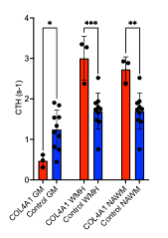
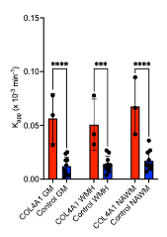
Results: Our analysis revealed COL4A1 patients had significantly elevated CTH in both WMH (p=0.0014) and normal-appearing white matter (p=0.0036) and decreased CTH in gray matter (p=0.0217) compared to controls. Additionally, Kapp was significantly increased in COL4A1 patient data across all regions relative to controls (p=<0.0001).

Conclusion: MR DSC perfusion imaging effectively detects COL4A1-related microvascular dysfunction throughout the brain, and these are most pronounced in WMH. Microvascular flow heterogeneity and BBB permeability appear to be sensitive markers of cSVD. DSC-MRI perfusion may therefore serve as a valuable biomarker for risk stratification and could aid monitoring therapeutic interventions. Further studies correlating structural MRI lesion and neurological symptoms burden in a larger and longitudinal cohort are needed.
  • Tambala, Diana  ( Massachusetts General Hospital , Boston , Massachusetts , United States )
  • Snow, John  ( Massachusetts General Hospital , Boston , Massachusetts , United States )
  • Balentine, Daniel  ( Massachusetts General Hospital , Boston , Massachusetts , United States )
  • Helmer, Karl  ( Massachusetts General Hospital , Charlestown , Massachusetts , United States )
  • Alhadid, Kenda  ( Massachusetts General Hospital , Boston , Massachusetts , United States )
  • Musolino, Patricia  ( Massachusetts General Hospital , Boston , Massachusetts , United States )
  • Lauer, Arne  ( Department of Neuroradiology, University of Heidelberg , Heidelberg , Germany )
  • Author Disclosures:
    Diana Tambala: DO NOT have relevant financial relationships | John Snow: No Answer | Daniel Balentine: No Answer | Karl Helmer: DO have relevant financial relationships ; Research Funding (PI or named investigator):Minoryx:Active (exists now) | Kenda Alhadid: DO NOT have relevant financial relationships | Patricia Musolino: No Answer | Arne Lauer: DO NOT have relevant financial relationships
Meeting Info:
Session Info:

Late-Breaking Science Posters

Wednesday, 02/05/2025 , 07:00PM - 07:30PM

Poster Abstract Session

More abstracts on this topic:
Disruption of Proteostasis and Activation of the Heat Shock Response in the Post-Ischemic Astrocyte Endfoot

Ciryam Prajwal, Shim Bosung, Tosun Cigdem, Serra Riccardo, Tsymbalyuk Natalia, Keledjian Kaspar, Gerzanich Volodymyr, Simard J. Marc

Edaravone Dexborneol Protects Against Blood-brain Barrier Disruption Following Cerebral Ischemia/reperfusion By Activating The PDGFB/PDGFR-β Signaling Pathway To Inhibit Pericyte Injury

Sun Zhiyu, Zhao Hanshu, Yang Shanshan, Liu Ruijia, Yi Lian, Gao Jiadi, Liu Sihan, Chen Yinlin, Zhang Zhongling

More abstracts from these authors:
Surgical Repair of Patent Ductus Arteriosus Lesions in Multisystemic Smooth Muscle Dysfunction Syndrome

Wittenberg Rachel, Lindsay Mark, Gower Oliver, Ondeck Benjamin, Tambala Diana, Da Cruz Emily, Podias Erika, Balaguru Duraisamy, Bloom Jordan, Musolino Patricia

The Effects of Atrial Fibrillation Burden on Cognitive Function and Brain Structure

Rotschild Ofer, Le Brian, Gokcal Elif, Abramovitz Fouks Avia, Das Alvin, Greenberg Steven, Helmer Karl, Gurol Edip

You have to be authorized to contact abstract author. Please, Login
Not Available

Readers' Comments

We encourage you to enter the discussion by posting your comments and questions below.

Presenters will be notified of your post so that they can respond as appropriate.

This discussion platform is provided to foster engagement, and simulate conversation and knowledge sharing.


You have to be authorized to post a comment. Please, Login or Signup.


   Rate this abstract  (Maximum characters: 500)