
Logo

American Heart Association

  36
  0


Final ID: 083

Mitochondrial acetylation of endothelial LCAD and SOD2 promotes female endothelial dysfunction and hypertension

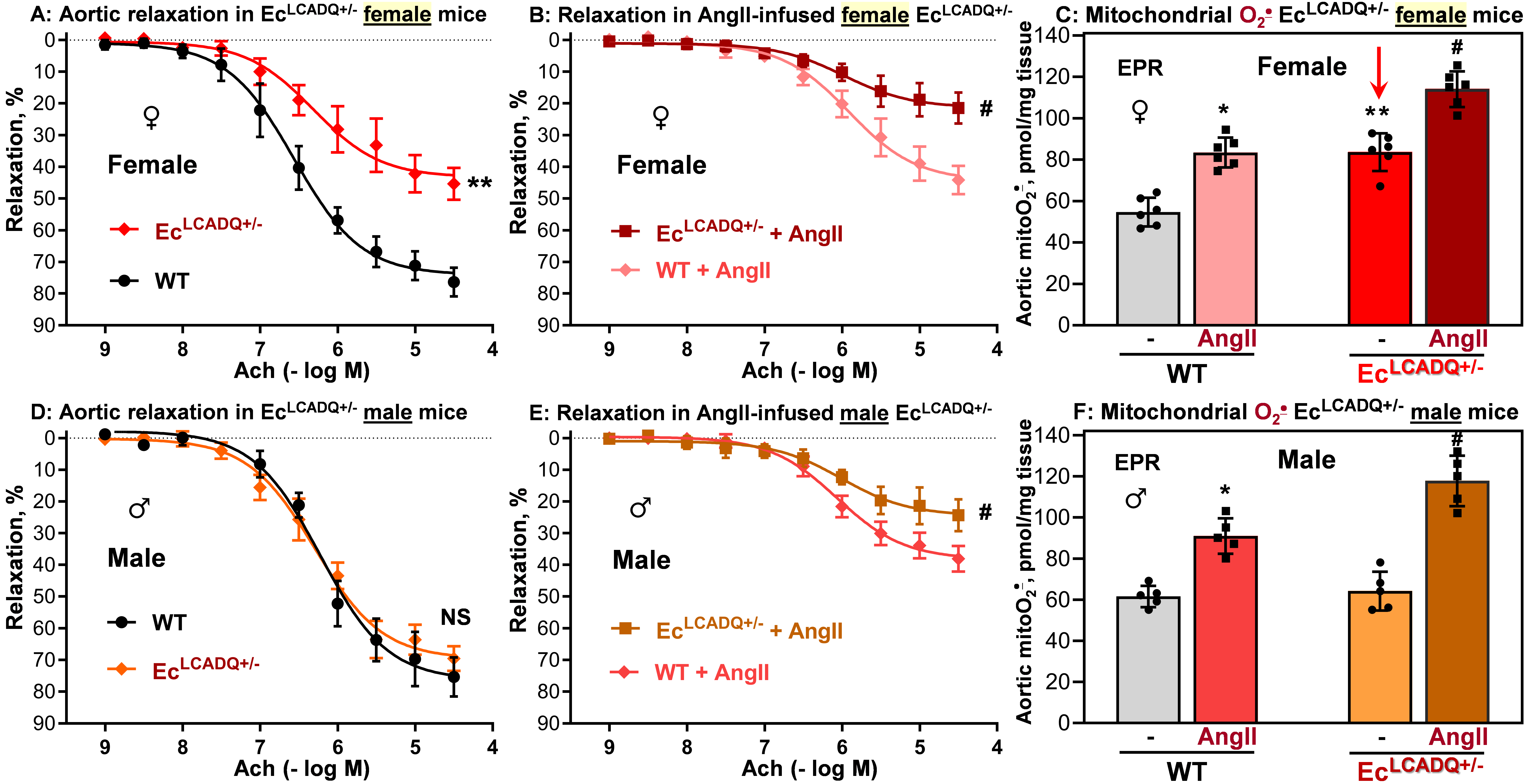
Abstract Body: The prevalence of hypertension in early adulthood among women is 3-times lower than in men; but with aging hypertension rate increases in women much steeper, and hypertensive vascular and kidney damage is significantly higher in women. Sex-specific aspects of hypertension are poorly understood, and clinical studies did not show protection by estrogen hormone therapy. Hypertension accounts for 1 in 5 deaths among American women, posing a greater burden for women than men. Meanwhile, female-specific aspects of hypertension are poorly understood, and women or female-specific risk factors are understudied. We propose that female antihypertensive protection is critically dependent on deacetylation of mitochondrial proteins. We found that essential hypertension is linked to hyperacetylation and inactivation of critical mitochondrial metabolic and antioxidant enzymes, long-chain acyl coenzyme A dehydrogenase (LCAD) and superoxide dismutase 2 (SOD2). Our mouse studies showed that female antihypertensive phenotype is linked to diminished acetylation of mitochondrial LCAD and SOD2 protecting endothelial cell metabolism and function. We hypothesized that LCAD-K318/322 and SOD2-K68 acetylation promotes female endothelial dysfunction and hypertension. To test this hypothesis, we have developed endothelial-specific acetylation mimetic LCADQ and SOD2Q knock-in mice by mutation of corresponding lysine residues to glutamine. We found significant impairment of endothelial-dependent relaxation in EcLCADQ female, but not male mice compared with wildtype littermates which was coupled with superoxide increase in EcLCADQ female but not in male mice (Figure 1). EcLCADQ female mice had more severe angiotensin II-induced endothelial dysfunction compared with wildtype mice. We found that both endothelial specific acetylation mimetic LCADQ and SOD2Q knock-in female mice lost antihypertensive phenotype and had higher blood pressure compared with angiotensin II-infused wild-type female mice. These studies demonstrate critical role of mitochondrial acetylation in endothelial dysfunction and hypertension suggesting that female antihypertensive phenotype is associated with the reduced mitochondrial acetylation protecting mitochondrial and endothelial functions. We suggest that targeting mitochondrial metabolic and antioxidant pathways can rescue female cardiovascular protection and improve treatment of endothelial dysfunction and hypertension.
  • Dikalova, Anna  ( Vanderbilt University Medical Cente , Brentwood , Tennessee , United States )
  • Ao, Mingfang  ( Vanderbilt University Medical Cente , Brentwood , Tennessee , United States )
  • Gius, David  ( UTHSCSA , San Antonio , Texas , United States )
  • Dikalov, Sergey  ( Vanderbilt University Medical Cente , Brentwood , Tennessee , United States )
  • Author Disclosures:
    Anna Dikalova: DO NOT have relevant financial relationships | Mingfang Ao: No Answer | David Gius: DO NOT have relevant financial relationships | Sergey Dikalov: DO NOT have relevant financial relationships
Meeting Info:
Session Info:

Concurrent A: Mitochondria and Hypertension

Saturday, 09/06/2025 , 04:30PM - 05:30PM

Oral Abstract Session

More abstracts on this topic:

A Longitudinal 20-year Analysis Indicates Acceleration of Cardiometabolic Comorbidities on Dementia Risk

Lihua Huang, Danish Muhammad, Auyeung Tw, Jenny Lee, Kwok Timothy, Abrigo Jill, Wei Yingying, Lo Cecilia, Fung Erik

A cerebrovascular longitudinal atlas: different rates of morphological change in aneurysm patients associated with hypertension and diabetes

Chien Aichi, Salamon Noriko, Vinuela Fernando, Szeder Viktor, Colby Geoffrey, Jahan Reza, Boyle Noel, Villablanca Juan, Duckwiler Gary

You have to be authorized to contact abstract author. Please, Login
Not Available