Endometriosis and Subsequeent Risk of Hyperlipidemia
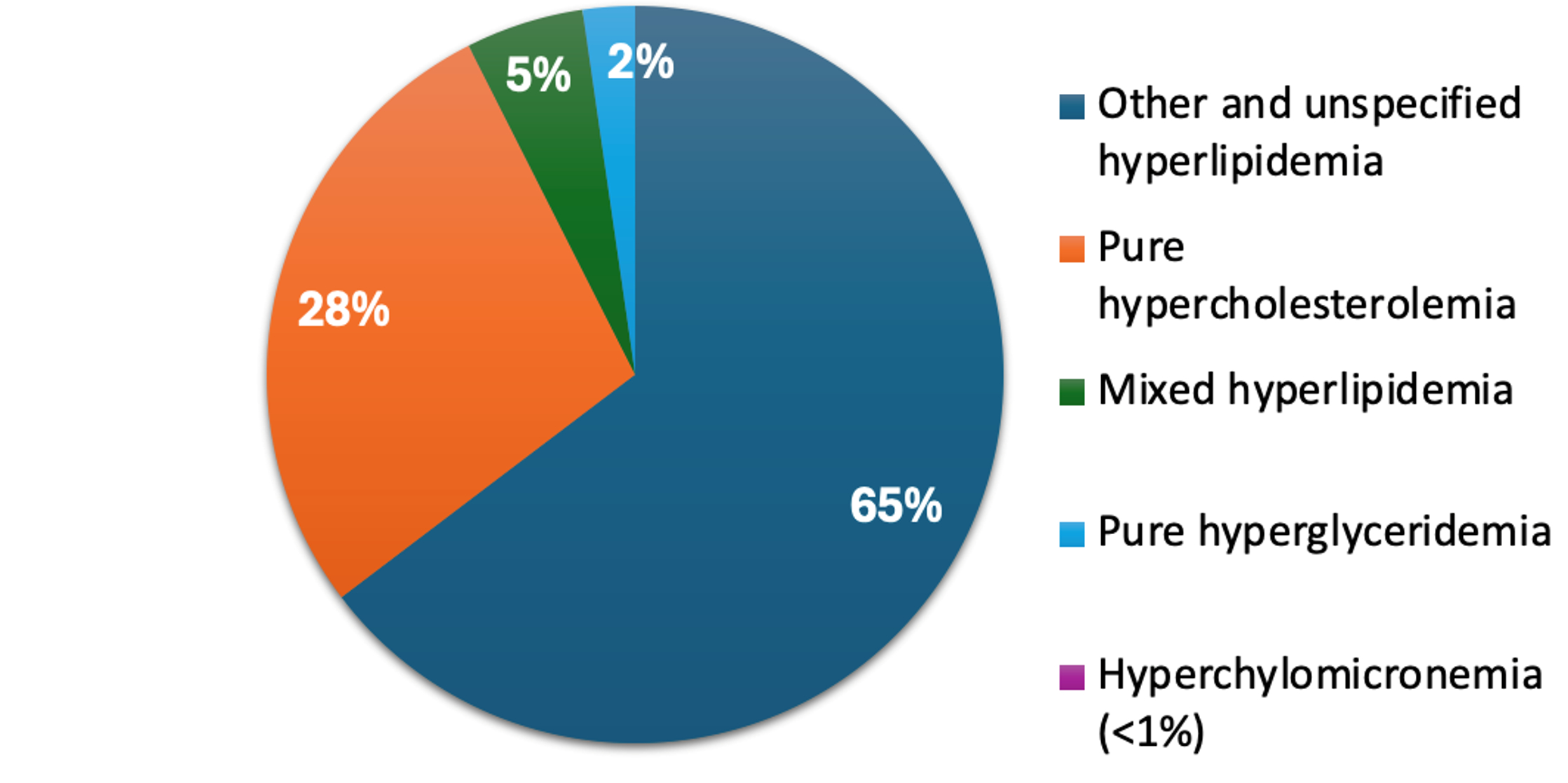
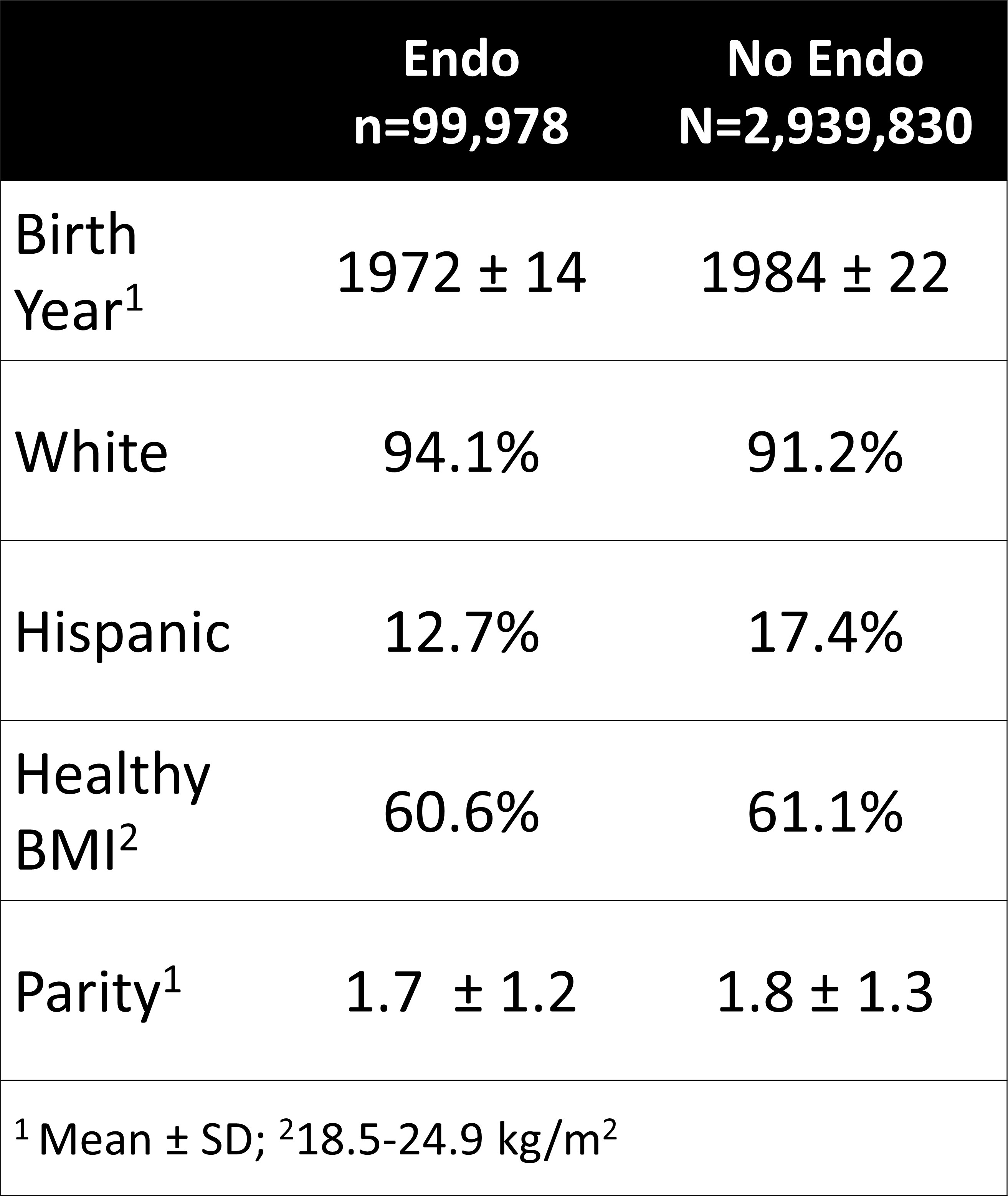
Abstract Body: Background: Endometriosis affects 11% of reproductive-aged women in the US. Endometriosis has been associated with increased risk of hypercholesterolemia (>240 mg/dL total cholesterol) in the Nurses’ Health Study II (NHS II). Limited research has investigated this finding in a US population-based sample, and expanded beyond total cholesterol to include elevated triglycerides. Methods: We leveraged the Utah Population Database to perform a 25-year retrospective study (1996–2021) of 2,939,380 among reproductive-aged women. Endometriosis cases were identified using electronic health records (ICD 9: 617* and ICD 10: N80*). Using Cox proportional hazard models and generalized linear models, we estimated adjusted hazard ratios (aHRs), risk ratios (aRR), risk differences (aRD) and 95% confidence intervals (CIs) for hyperlipidemia (ICD 9: 272.4* and ICD 10: E78*), comparing women with versus without endometriosis. Results: Among our study cohort, 99,978 (3.4%) were diagnosed with endometriosis; 2,839,402 (96.6%) were without an endometriosis diagnosis over the study period. Hyperlipidemia was more than twice as common in women with endometriosis than those without (12.8% vs 5.1%). Women with endometriosis had a 50% higher aHR (95% CI: 51%, 57%) and a 28% higher aRR (95% CI: 1.26, 1.30) of hyperlipidemia after adjusting for birth year, race/ethnicity, and baseline parity and body mass index. In absolute terms, endometriosis was associated with an additional 3.6 cases (95% CI: 3.4, 3.9) of hyperlipidemia per 100 women after adjustment for important confounding factors. Conclusion: We found a 28% increased risk of hyperlipidemia among women with, versus without, endometriosis. Our results are in line with the NHS II, which found a 22% higher aRR (95% CI: 1.15, 1.31) of hypercholesteremia. Direct comparison of the results is difficult given the use of self-report of hypercholesterolemia in the NHS II versus our use of ICD-codes of hyperlipidemia; and the ability of the NHS II to adjust for additional lifestyle factors, which we were limited in assessing. Given prior evidence that chronic disease risk varies by endometriosis typology (e.g., superficial, deep infiltrating, ovarian endometriomas, and adenomyosis), future research should investigate associations between endometriosis subtypes and hyperlipidemia, in addition to assessing differing risks for the spectrum of lipid abnormalities and considering other important confounding and mediating factors.
Wickens, Emily
(
UNIVERSITY UTAH
, Salt Lake City , Utah , United States )
Yan, Bin
(
UNIVERSITY UTAH
, Salt Lake City , Utah , United States )
Farland, Leslie
(
University of Arizona
, Tucson , Arizona , United States )
Pollack, Anna
(
George Mason University
, Fairfax , Virginia , United States )
Rexrode, Kathryn
(
BRIGHAM AND WOMENS HOSPITAL
, Boston , Massachusetts , United States )
Page, Jessica
(
Intermountain Health
, Salt Lake City , Utah , United States )
Majersik, Jennifer
(
UNIVERSITY UTAH
, Salt Lake City , Utah , United States )
Stanford, Joseph
(
UNIVERSITY UTAH
, Salt Lake City , Utah , United States )
Peterson, Matt
(
UNIVERSITY UTAH
, Salt Lake City , Utah , United States )
Varner, Michael
(
UNIVERSITY UTAH
, Salt Lake City , Utah , United States )
Schliep, Karen
(
UNIVERSITY UTAH
, Salt Lake City , Utah , United States )
Ahmad Husnain, Khan Muhammad, Sharif Aleena, Hossain Mohammad, Eltawansy Sherif, Faizan Muhammad, Ali Muhammad Faizan, Ahmed Ashraf, Abdul Malik Mohammad Hamza Bin, Pahwani Ritesh, Patel Rahul, Mehdi Hassan