Logo

American Heart Association

  1
  0


Final ID: 54

Body Weight, Human Gut Microbiome, Blood Metabolome, and incident Type 2 Diabetes- A Multi-Omics Integration Study

Abstract Body: Background: Few prospective human studies have characterized interrelationships between body weight, gut microbiome, plasma metabolome, and incident type 2 diabetes (T2D).
Aims: To identify microbial profiles associated with adiposity, derive its responsive metabolomic signatures, and evaluate their associations with future weight change and incident T2D.
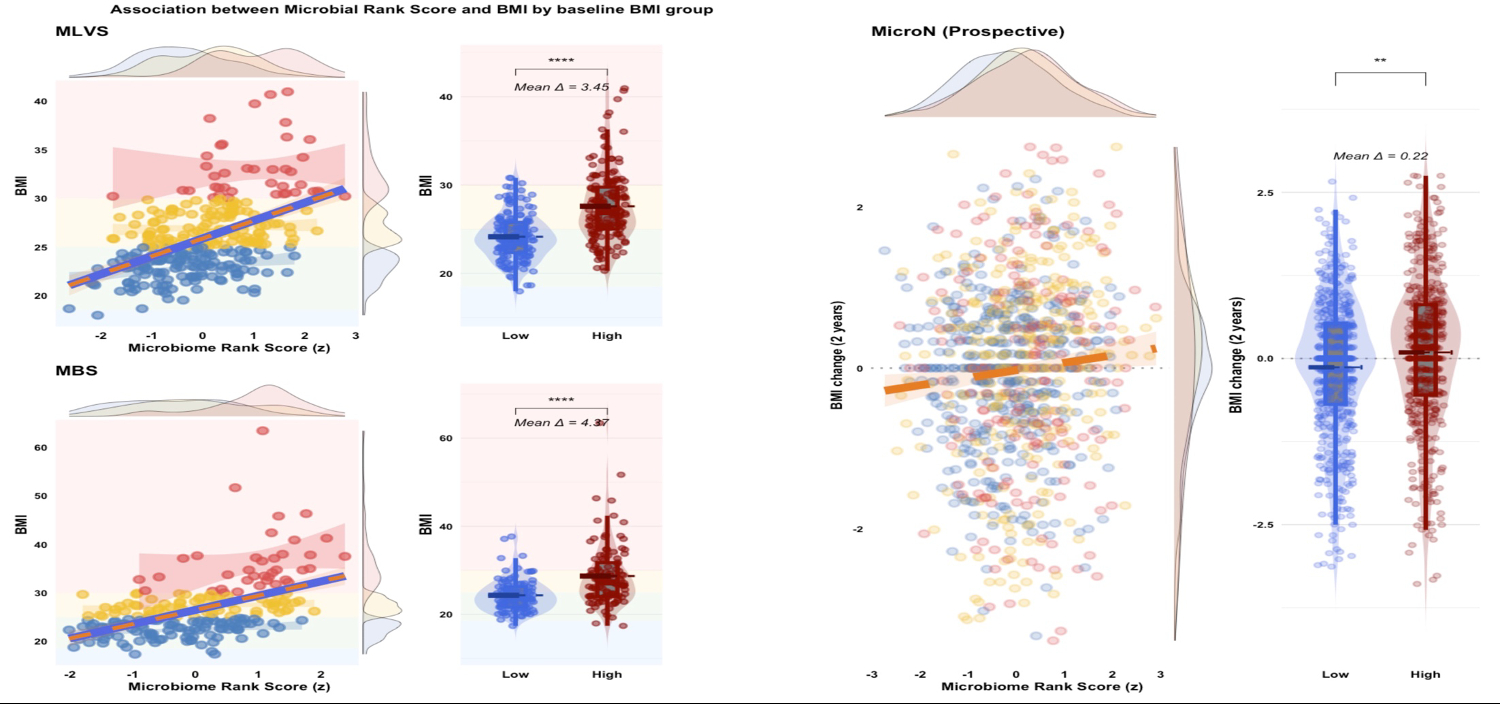
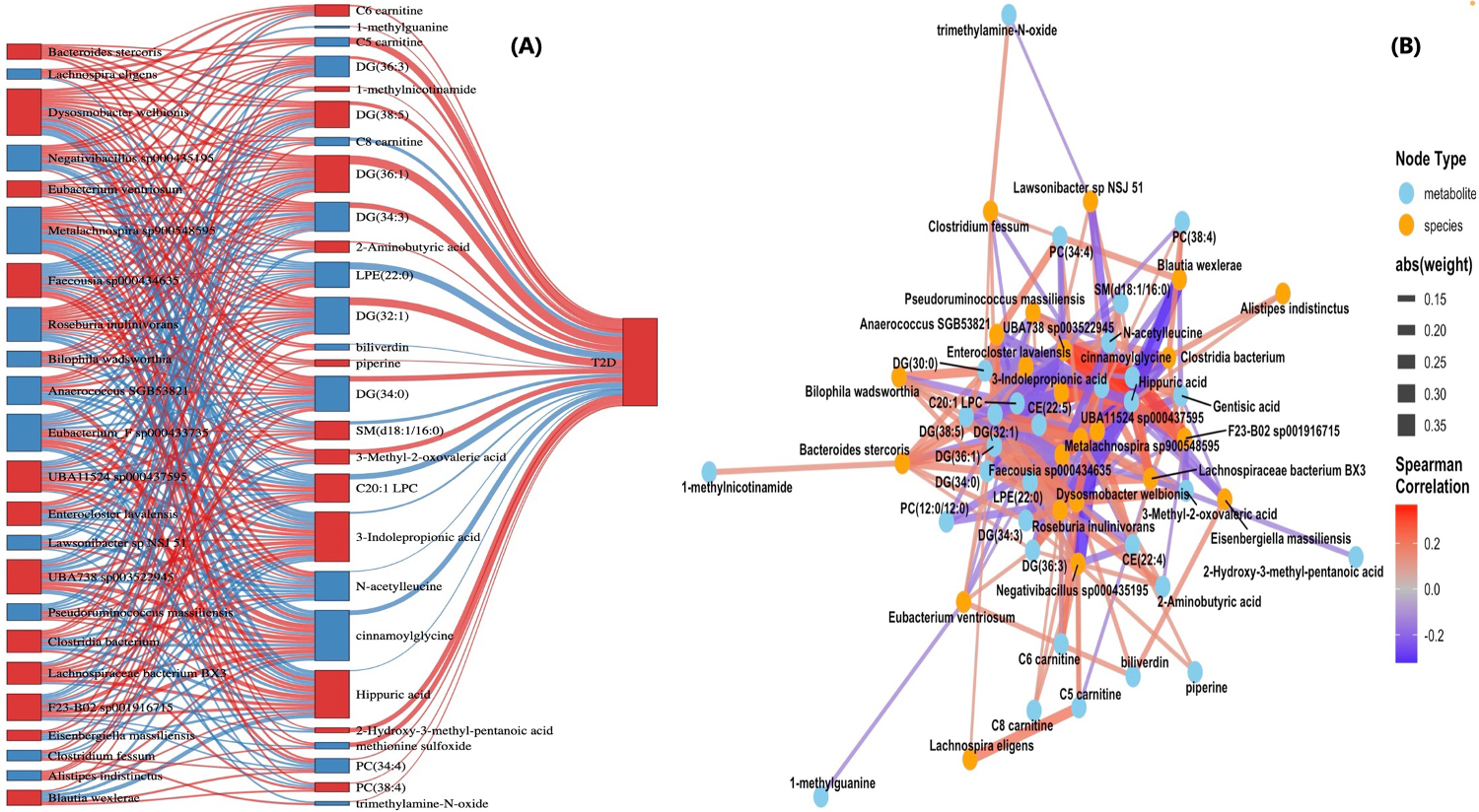
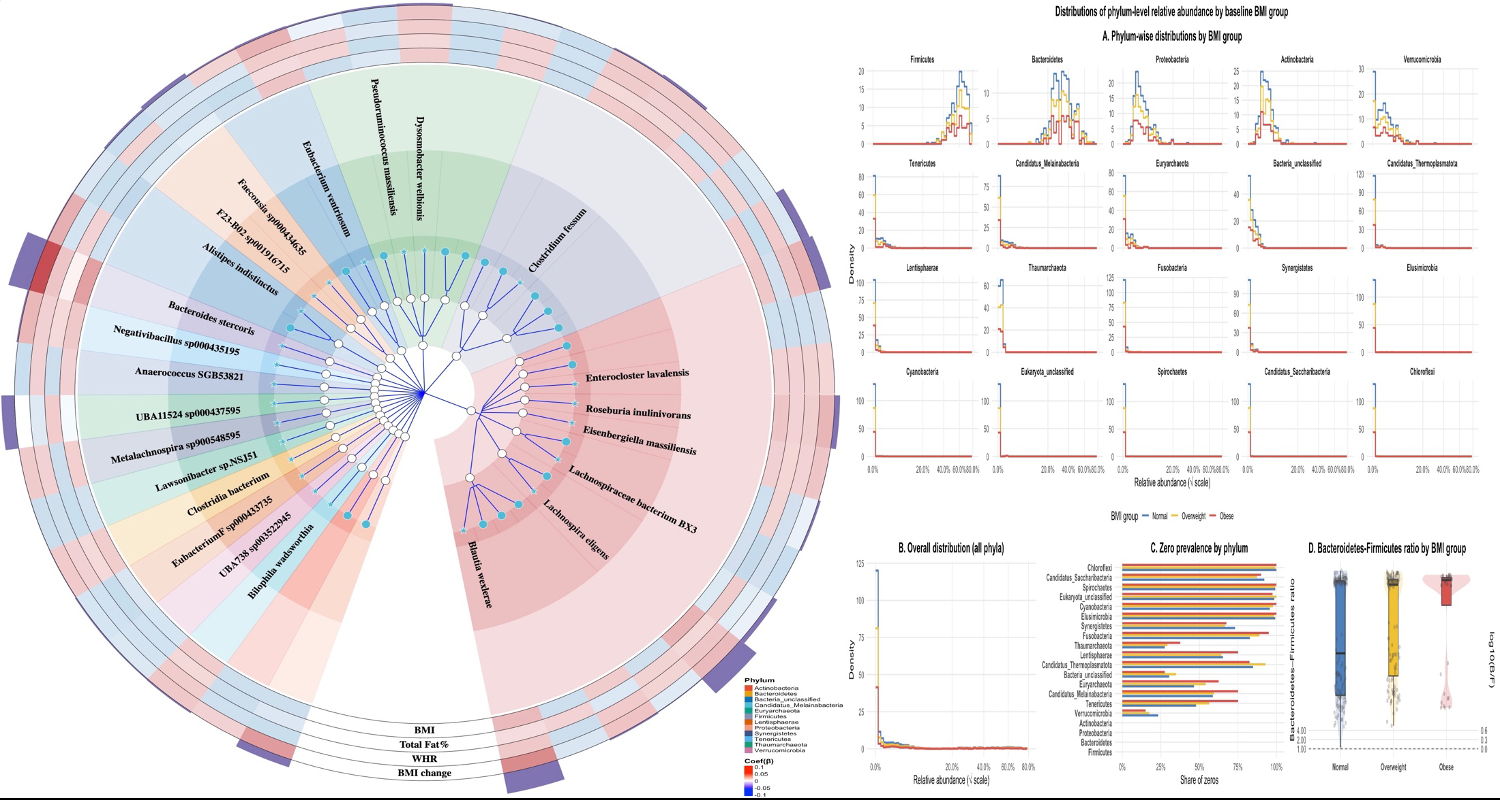
Methods: Shotgun stool metagenomes were profiled in the Men’s Lifestyle Validation Study (MLVS; n=924). Body mass index (BMI)-associated microbial species were identified after adjusting for age, total energy, physical activity, alcohol and smoking, and were synthesized into a composite microbiome score. We evaluated its association with waist-to-hip ratio (WHR) and DEXA-measured fat mass in MLVS and validated its association with BMI in female Mind–Body Study (MBS; n=807). Next, the score was examined for its association with prevalent T2D in the multiethnic Micro-Cardio consortium (n=8,117). Prospectively, we tested its predictability of 2-year BMI increase and incident T2D risk in the Micro-N (n=3,318). To further characterize the downstream metabolism of this microbial profile, we linked it to >300 LC–MS metabolites in the MLVS and derived a microbiome-informed multi-metabolite score, which was validated in the MBS. We examined the metabolomic score for incident T2D risk in a prospective cohort, the Nurses’ Health Study (NHS; n=1,057).
Results: We identified 23 microbial species associated with BMI in MLVS. The 23-species composite score was correlated with higher BMI (High vs.Low: MLVS β=3.45; MBS β=4.37 both P<0.001), and also correlated with WHR (r=0.45) and fat mass (r=0.73). Additionally, higher microbiome score consistently predicted 2-year BMI increase (β=0.22, P =0.003) and predicts incident T2D in Micro-N (HR [high vs. low] = 2.19, P=0.01), as well as prevalent T2D in the Micro-Cardio (HR [per SD] =1.19, P<0.001). A 32-plasma metabolite signature was responsive to this microbial profile in MLVS (r=0.66) and validated in MBS (r=0.38), and also predicted incident T2D in NHS (RR=2.18, P<0.0001) independent of baseline BMI.
Conclusions: We identified and validated a gut microbiome score predictive of adiposity across multiple cohorts, showing consistent associations with plasma metabolomic signatures and increased risk of T2D. This highlights a potential role of the gut microbiome in weight regulation and T2D development, providing new insights into microbiome-informed strategies for T2D prevention.
  • Wang, Siyue  ( Harvard T.H. Chan , Boston , Massachusetts , United States )
  • Qi, Qibin  ( ALBERT EINSTEIN COLLEGE OF MEDICINE , Bronx , New York , United States )
  • Hu, Yang  ( Harvard T.H. Chan , Boston , Massachusetts , United States )
  • Wang, Fenglei  ( Harvard T.H. Chan , Boston , Massachusetts , United States )
  • Mei, Zhendong  ( Harvard T.H. Chan , Boston , Massachusetts , United States )
  • Song, Mingyang  ( Harvard T.H. Chan , Boston , Massachusetts , United States )
  • Wang, Dong  ( Harvard Medical School , Boston , Massachusetts , United States )
  • Shai, Iris  ( Harvard T.H. Chan , Boston , Massachusetts , United States )
  • Zhang, Cuilin  ( Harvard T.H. Chan , Boston , Massachusetts , United States )
  • Sun, Qi  ( Harvard T.H. Chan , Boston , Massachusetts , United States )
  • Wang, Tengteng  ( Section of Cancer Epidemiology and Health Outcomes , New Brunswick , New Jersey , United States )
  • Eliassen, A Heather  ( Harvard T.H. Chan , Boston , Massachusetts , United States )
  • Chan, Andrew  ( Massachusetts General Hospital , Boston , Massachusetts , United States )
  • Huttenhower, Curtis  ( Harvard T.H. Chan , Boston , Massachusetts , United States )
  • Rimm, Eric  ( Harvard T.H. Chan , Boston , Massachusetts , United States )
  • Hu, Frank  ( Harvard T.H. Chan , Boston , Massachusetts , United States )
  • Lee, Kyu Ha  ( Harvard T.H. Chan , Boston , Massachusetts , United States )
  • Wang, Molin  ( Harvard T.H. Chan , Boston , Massachusetts , United States )
  • Author Disclosures:
Meeting Info:

EPI-Lifestyle Scientific Sessions 2026

2026

Boston, Massachusetts

Session Info:

Diabetes

Friday, 03/20/2026 , 08:30AM - 10:00AM

Oral Abstract Session

More abstracts on this topic:
Associations between Body Mass Index, Adverse Pregnancy Outcomes, and Cardiovascular Risk Factors in Midlife: A Mediation analysis in the Hyperglycemia and Adverse Pregnancy Outcomes (HAPO) Study

Borrowman Jaclyn, Huang Xiaoning, Petito Lucia, Perak Amanda, Scholtens Denise, Lowe William, Lloyd-jones Donald, Grobman William, Khan Sadiya

2-Deoxyuridine Associates with Recurrent Coronary Events

Pistritu Dan, Castano David, Liehn Elisa, Koh Cho Yeow, Gerszten Robert, Singaraja Roshni, Chan Mark, Shah Svati

More abstracts from these authors:
Urinary sodium and potassium excretions, gut microbiome, circulating metabolites, and cardiometabolic risk

Liang Xinxiu, Rimm Eric, Hu Frank, Wang Dong, Qi Qibin, Hu Yang, Sun Qi, Li Jun, Li Yanping, Ivey Kerry, Lee Kyu Ha, Eliassen A Heather, Chan Andrew, Huttenhower Curtis, Zhang Cuilin

Gut Microbiota, Plasma Hippuric Acid, Fiber Intake, and Cardiometabolic Health in U.S. Populations.

Wang Xiaowen, Zeleznik Oana, Song Mingyang, Rimm Eric, Wang Siyue, Mei Zhendong, Wang Fenglei, Zhang Cuilin, Wang Dong, Burk Robert, Kaplan Robert, Liang Xinxiu, Qi Qibin, Sun Qi, Wang Zheng, Hu Yang, Xia Pengfei, Huttenhower Curtis, Chan Andrew, Clish Clary, Eliassen A Heather

You have to be authorized to contact abstract author. Please, Login
Not Available