Impact of the Mindfulness-Based Blood Pressure Reduction (MB-BP) Program on Cardiovascular Health: A Randomized Clinical Trial
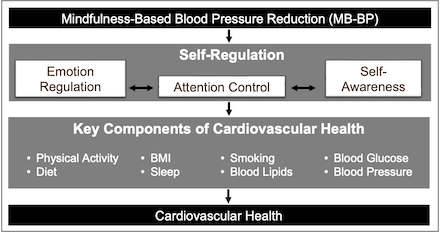
Abstract Body: Background: Mindfulness-based interventions may improve cardiovascular health (CVH) by supporting behavioral change across multiple risk factors. This study evaluated the impact of Mindfulness-Based Blood Pressure Reduction (MB-BP), a mindfulness program targeting hypertension-related behaviors (Image 1), on CVH using the American Heart Association’s Life’s Essential 8 framework.
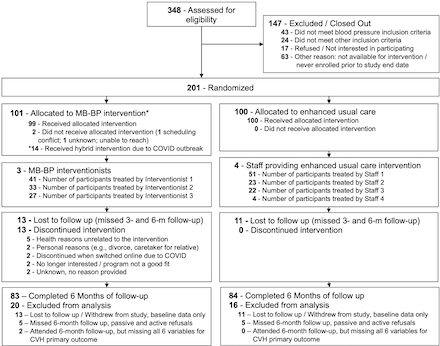
Methods: This secondary analysis of parallel-group, phase 2 randomized clinical trial evaluated the effects of MB-BP on CVH in 201 participants with elevated office BP (≥120/80 mmHg). The MB-BP group (n=101) received an 8-week program focused on mindfulness training and education targeting diet, physical activity, medication adherence, alcohol use, and stress, whereas the control group (n=100) received enhanced usual care (Image 2). CVH was assessed using available Life’s Essential 8 components: systolic blood pressure, body mass index (BMI), diet (DASH adherence), physical activity, smoking, and sleep duration. Generalized estimating equations evaluated intervention effects through six months.
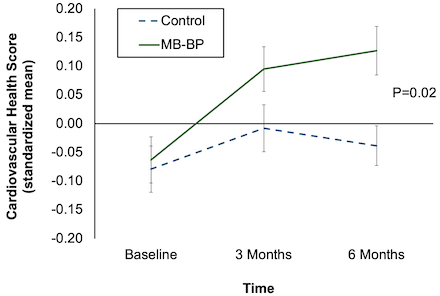
Results: At six months follow-up, MB-BP participants significantly improved composite CVH scores compared to controls (standardized mean difference: 0.144; 95% CI: 0.023, 0.266) (Image 3). MB-BP influenced most CVH components in healthier directions at trend levels, with the strongest responses for physical activity (47.9 MET min/week; 95% CI: -16.5, 112.3), sleep (0.34 hours/night; 95% CI: -0.10, 0.78), systolic blood pressure (-4.95 mmHg; 95% CI: -10.34, 0.44) and DASH diet score (0.27, 95% CI: -0.15, 0.69).
Conclusions: MB-BP led to modest but clinically significant improvements in CVH, driven by multiple Life’s Essential 8 components. These findings suggest that MB-BP may be an effective behavioral intervention to support CVH and reduce risk for cardiovascular disease.