
Lipoprotein(a) Across Menopause: Longitudinal Changes in the UK Biobank
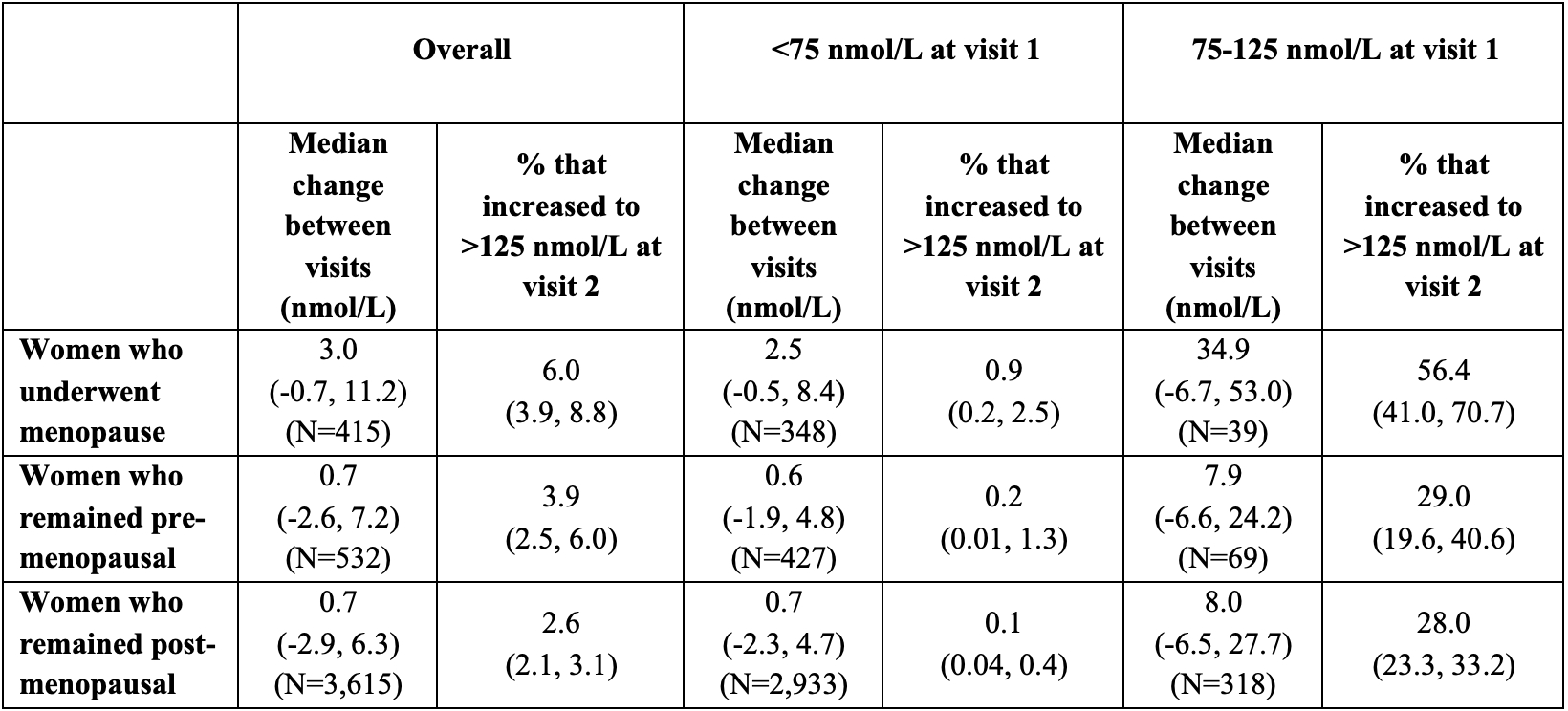
Abstract Body: Introduction: Menopause may coincide with rising lipoprotein (a) [Lp(a)] levels, a pro-atherogenic, pro-thrombotic, and pro-inflammatory atherosclerotic cardiovascular disease (ASCVD) risk factor. Characterizing changes in Lp(a) across menopause may improve risk stratification and inform testing recommendations for women. Hypothesis: Lp(a) levels increase during menopause and these increases are most pronounced in women with intermediate Lp(a) levels. Methods:We examined changes in serum Lp(a) levels by menopausal status among women with Lp(a) measured at visits 1 and 2 in the UK Biobank. Lp(a) was measured via isoform-insensitive immunoturbidimetry, and menopausal status was self-reported. Analyses were stratified by menopausal status: those who underwent menopause (N=415), those who remained premenopausal (N=532), and those who remained postmenopausal (N= 3,615) between visits. The primary outcome of interest was crossing the risk-enhancing threshold of Lp(a) >125 nmol/L between visits. Results: Data were available for 4,562 women (100% European ancestry, mean age at visit 1 = 57±7 years; median Lp(a) at visit 1 = 22 (IQR: 47) nmol/L; median time between visits = 4 (IQR: 1) years; 5% prevalence of hormone therapy use). Median Lp(a) at visit 1 was similar among women who underwent menopause and the premenopausal group (17 nmol/L and 19 nmol/L, respectively) and higher for the postmenopausal group (23 nmol/L). Overall, Lp(a) median changes were modest among women who underwent menopause (3.0 nmol/L, IQR: -0.7, 11.2) and women in the pre- and post-menopausal groups (both 0.7 nmol/L) (Table). However, among women with intermediate visit 1 Lp(a) levels (75-125 nmol/L), the median change between visits increased to 34.9 nmol/L (-6.7, 53.0) for women who underwent menopause. These changes were on average 26 nmol/L larger than changes estimated for women in the pre- and post-menopausal groups. Further, 56% of women with intermediate visit 1 Lp(a) levels who transitioned through menopause during the study exceeded 125 nmol/L by visit 2, compared with 29% and 28% of women who remained pre- or post-menopausal. Conclusion:Relying on a single lifetime Lp(a) measurement may miss clinically relevant increases during menopause. Repeat testing in women as they age may improve identification of those at high risk for ASCVD.
Palmer, Catherine
(
University of North Carolina at Chapel Hill
, Chapel Hil , North Carolina , United States )
Avery, Christy
(
UNIV N CAROLINA
, Chapel Hill , North Carolina , United States )
Ballantyne, Christie
(
BAYLOR COLLEGE MEDICINE
, Houston , Texas , United States )
Graff, Mariaelisa
(
UNC-CHAPEL HILL
, Chapel Hill , North Carolina , United States )
Hoogeveen, Ron
(
BAYLOR COLLEGE MEDICINE
, Houston , Texas , United States )
Jukic, Anne Marie
(
National Institute of Environmental Health Sciences
, Durham , North Carolina , United States )
Conners, Katherine
(
University of North Carolina at Chapel Hill
, Carrboro , North Carolina , United States )