Higher education level and years of education are negatively associated with equol-producing status among older adults
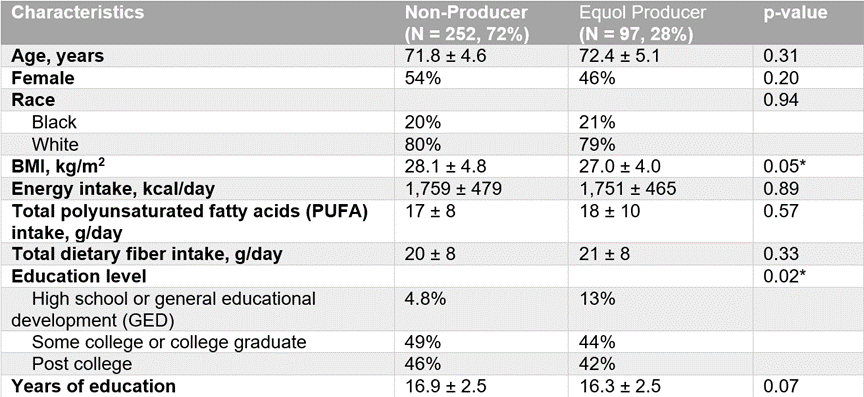
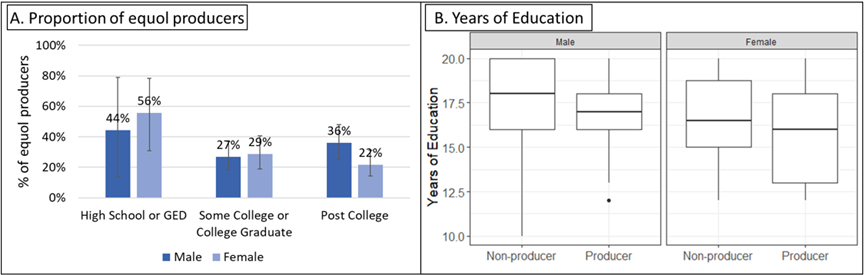
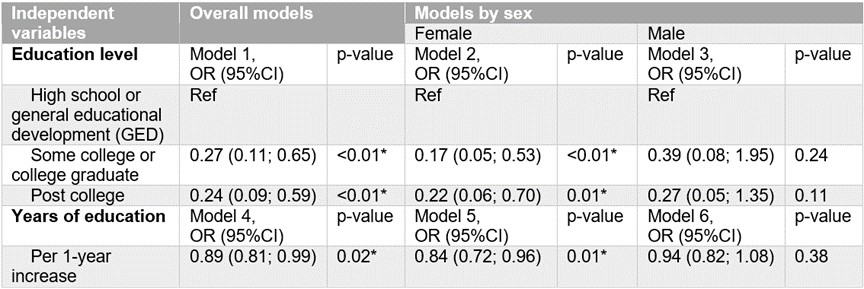
Abstract Body: Background: Equol, a gut microbiome-derived metabolite of the soy isoflavone daidzein, is a selective estrogen receptor-agonist that has been associated with lower arterial stiffness, reduced subclinical atherosclerosis, lower risks of coronary heart disease and dementia through its antioxidative, anti-inflammatory, and vasodilatory effects. However, equol-producing status, defined as the ability to convert the soy isoflavone daidzein into equol, occurs in only 20–30% of Westerners. Socioeconomic factors, such as education, may influence equol-producing status through dietary patterns and gut microbiome composition, yet the role of these factors remains unclear. Objective: To evaluate whether education level and years of education are associated with equol-producing status among older healthy Western adults and to test for effect modification by sex. Methods: The Arterial Stiffness, Equol, and Cognition (ACE) trial (NCT05741060) enrolled healthy US adults aged 65-85 years with low habitual soy consumption to test whether equol supplementation slows the progression of arterial stiffness, white matter lesions, and cognitive decline. The current analysis included baseline data from ACE participants who were tested for equol-producing status after a three-day soy challenge and completed self-reported questionnaires on sociodemographic characteristics and 24-hour dietary recall. Equol producers were defined using the urinary equol-to-daidzein ratio (log10 ≥ -1.75). Associations of equol-producing status with education level and years of education were evaluated and potential effect modification by sex was examined using logistic regression adjusting for age, sex, race, BMI, energy intake, total polyunsaturated fatty acids and total fiber intake (Table 2). Results: Among 349 ACE participants (mean age 72 ± 4.8 years; 52% female; 20% African American), 28% of participants were equol producers. Higher education level and more years of education were significantly associated with lower odds of being equol producers. These negative associations were driven by females and not observed in males; yet, sex interactions were not statistically significant. Conclusions: Higher education level and longer years of education were unexpectedly negatively associated with equol-producing status, possibly reflecting dietary, lifestyle or microbiome differences less conducive to equol production.
Gusmanov, Arnur
(
University of Pittsburgh
, Pittsburgh , Pennsylvania , United States )
Li, Mengyi
(
University of Pittsburgh
, Pittsburgh , Pennsylvania , United States )
Li, Jiatong
(
University of Pittsburgh
, Pittsburgh , Pennsylvania , United States )
Jacobs, Ian
(
University of Pittsburgh
, Pittsburgh , Pennsylvania , United States )
Wharton, Whitney
(
Emory University
, Atlanta , Georgia , United States )
Hughes, Timothy
(
Wake Forest University
, Winston-Salem , North Carolina , United States )
Sekikawa, Akira
(
University of Pittsburgh
, Pittsburgh , Pennsylvania , United States )