Weekday Temporal Step Accumulation Patterns and Hypertensive Disorders of Pregnancy
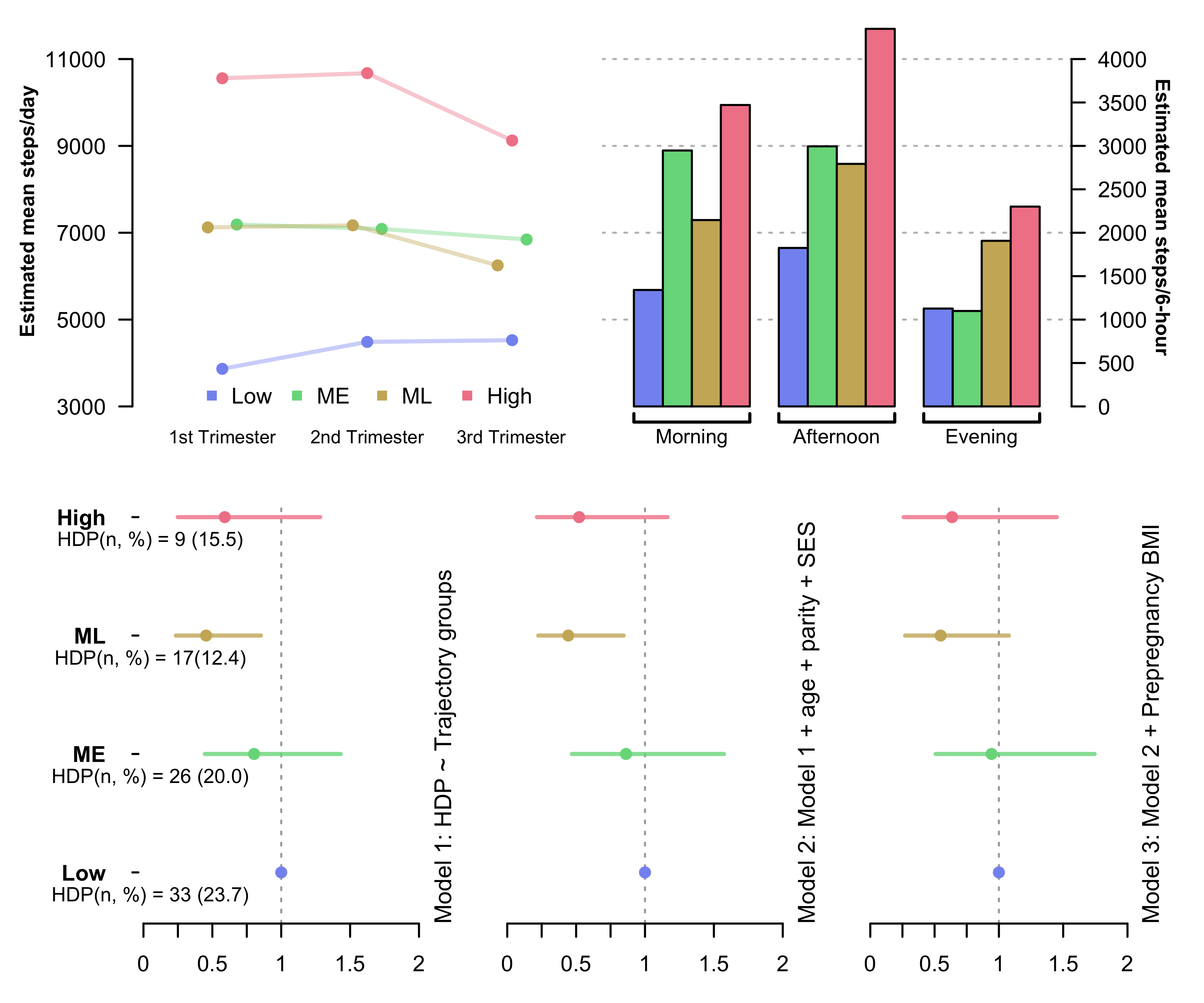
Abstract Body: Introduction: Physical Activity (PA) during pregnancy is known to reduce the risk of hypertensive disorders of pregnancy (HDP). However, little is known regarding how daily PA patterns, particularly the timing of step accumulation, affect HDP risk. Given the growing interest in PA timing, this study aims to examine weekday step accumulation patterns during pregnancy and their associations with HDP. Hypothesis: We hypothesize that pregnant individuals who accumulate steps later in the day will have a greater reduction of HDP risk compared to those who accumulate steps earlier, relative to those with the low overall step counts. Methods: A total of 500 women participated in the Pregnancy 24/7 multi-site cohort study. Demographics (age, parity, socioeconomic status) were collected via questionnaire. Pre-pregnancy BMI was calculated using measured height and pre-pregnancy weight abstracted from medical charts. HDP diagnoses were abstracted from medical charts and confirmed by the study obstetricians. Step counts were recorded using thigh-worn accelerometers worn continuously for 7 full days during each trimester. Daily steps were grouped into morning (6 am – 12 pm), afternoon (12 – 6 pm), and evening (6 pm – 12 am). Group-based multivariable trajectory modeling identified four weekday step patterns: Low (n = 143), Middle-Early day (n = 130; ME), Middle-Later day (n = 139; ML), and High (n = 59). Multivariable logistic regression estimated HDP odds ratios using the low pattern as the referent group, sequentially adjusting for demographics and pre-pregnancy BMI. Results: Of 464 participants (mean age: 30.7 ± 4.5 years; mean pre-pregnancy BMI: 27.2 ± 6.5 kg/m2), estimated mean daily steps across trajectory groups were 4,293 (Low), 7,041 (ME), 6,847 (ML), and 10,119 (High). The estimated means of weekday temporal step counts by trajectory group are illustrated in the Figure. Compared to the Low group, the odds of HDP were lower in all groups (OR [95% CI], ME: 0.861 [0.469 – 1.573]; ML: 0.443 [0.225 – 0.845]; and High: 0.522 [0.216 – 1.164]). All associations were attenuated after adjusting for pre-pregnancy BMI (Figure). Conclusions: Weekday step accumulation patterns during pregnancy were associated with reduced odds of HDP, particularly among those with steps accumulated later in the day. Further research is encouraged to investigate the associations between the timing of PA and various pregnancy health outcomes.
Kim, Jaemyung
(
University of Iowa
, Iowa City , Iowa , United States )
Barone Gibbs, Bethany
(
West Virginia University
, Morgantown , West Virginia , United States )
Paluch, Amanda
(
University of Massachusetts Amherst
, Amherst , Massachusetts , United States )
Whitaker, Kara
(
University of Iowa
, Iowa City , Iowa , United States )