
Logo

American Heart Association

  5
  0


Final ID: MPTH72

Systemic Inflammation Mediates the Association Between Central Obesity and Incident Heart Failure

Abstract Body: Background: Central obesity is a stronger determinant of cardiovascular diseases than body mass index (BMI), yet the biological mechanisms linking adiposity distribution to heart failure (HF) remain unclear. Recent evidence suggests that diabetes-associated HF is driven primarily by visceral adiposity rather than hyperglycemia. Whether systemic inflammation quantitatively mediates the relationship between central obesity and HF has not been well established.
Hypothesis: We hypothesized that systemic inflammation, indexed by high-sensitivity C-reactive protein (hs-CRP), mediates the association between central adiposity and incident HF.
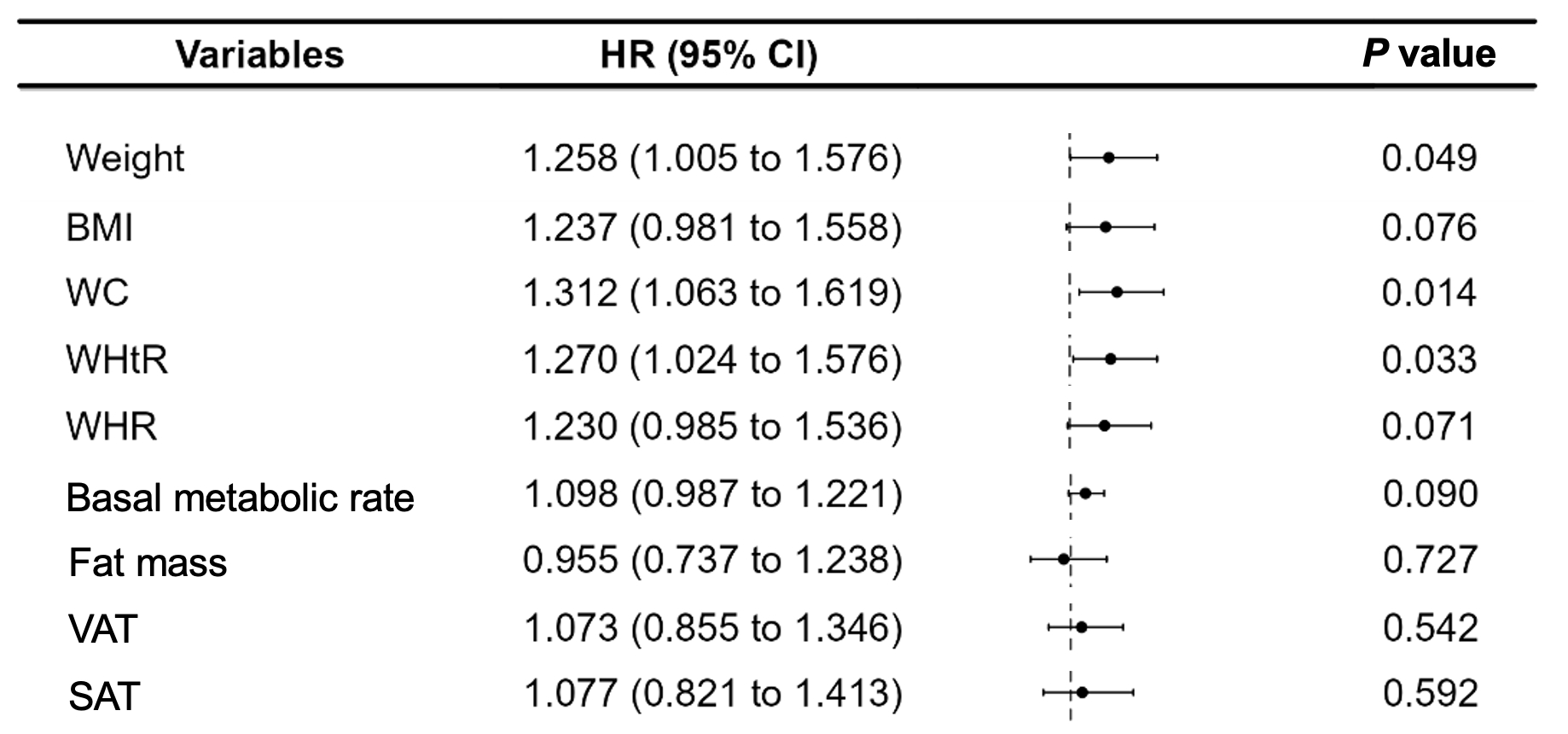
Methods: We analyzed 1,998 adults from the Jackson Heart Study without HF at baseline. Adiposity indicators included weight, BMI, waist circumference (WC), and waist-to-height ratio (WHtR). hs-CRP was measured as a marker of systemic inflammation. Weibull accelerated failure time models estimated adjusted hazard ratios (HRs) for HF, and causal mediation analysis quantified the proportion of adiposity-related HF risk mediated through hs-CRP.
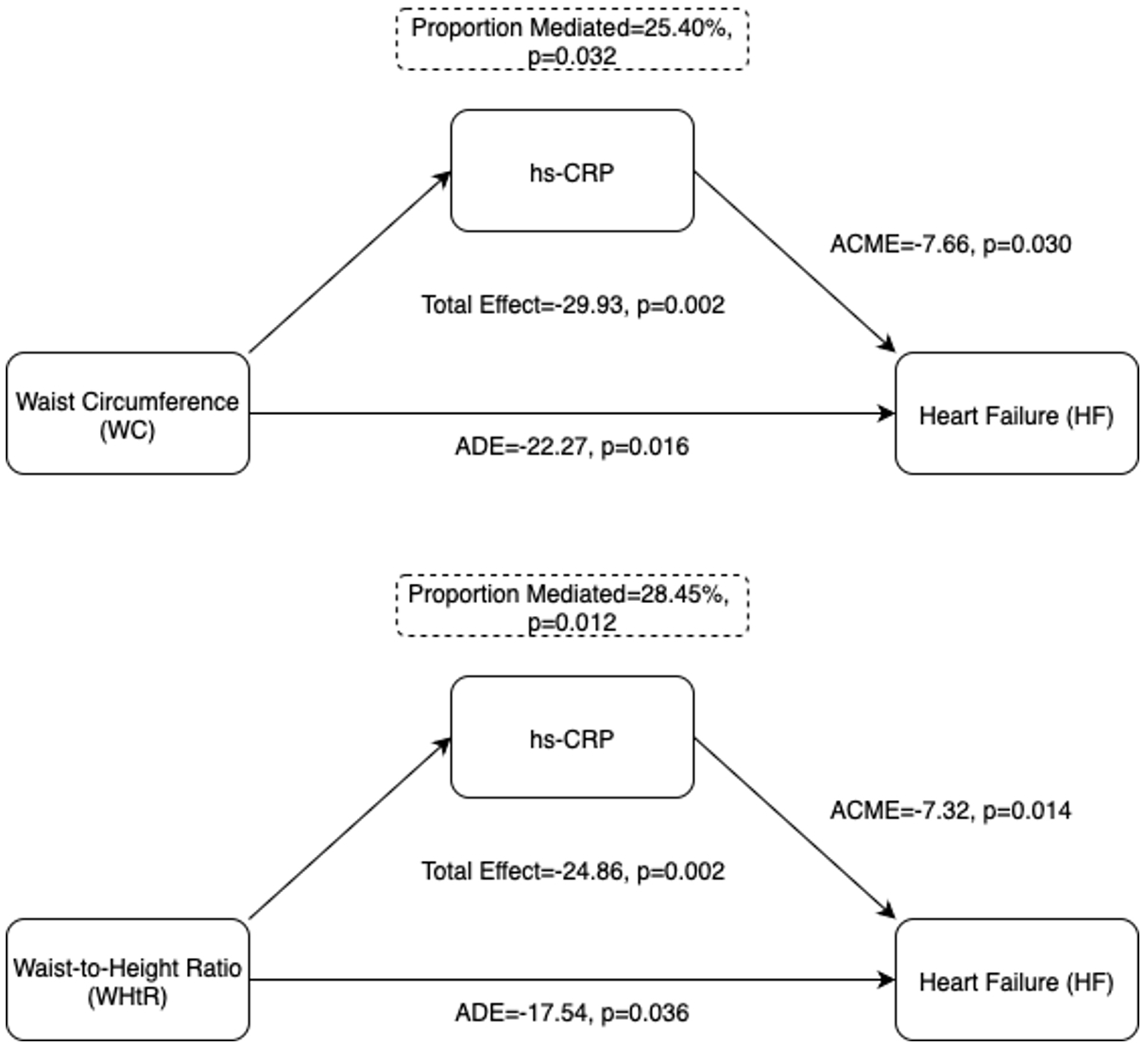
Results: Over a median follow-up of 6.9 years, elevated hs-CRP (≥ 1 mg/L) was associated with lower HF-free survival (log-rank p = 0.010). In adjusted models, WC (HR 1.31, 95% CI 1.06–1.62) and WHtR (HR 1.27, 95% CI 1.02–1.58) were independent predictors of HF, whereas BMI was not. Mediation analysis showed that hs-CRP accounted for 25.4% of the effect of WC and 28.5% of the effect of WHtR on HF risk, both with statistically significant indirect effects.
Conclusions: Systemic inflammation mediates approximately one quarter of the relationship between central obesity and incident HF, reinforcing the paradigm that visceral fat–driven inflammation is a key causal pathway linking obesity to HF. These findings underscore the importance of targeting adiposity-related inflammation in HF prevention strategies.
  • Chen, Szu-han  ( National Yang Ming Chiao Tung University , Taipei City , Taiwan )
  • Lee, Yu-hsuan  ( Taipei Veteran General Hospital , Taipei City , Taiwan )
  • Chuang, Shao-yuan  ( National Health Research Institute , Miaoli , Taiwan )
  • Fudim, Marat  ( Duke Medical Center , Durham , North Carolina , United States )
  • Lee, Chun-wei  ( MacKay Memorial Hospital , New Taipei City , Taiwan )
  • Huang, Chi-jung  ( Taipei Veterans General Hospital , Taipei City , Taiwan )
  • Cheng, Hao-min  ( Taipei Veteran General Hospital , Taipei City , Taiwan )
  • Author Disclosures:
Meeting Info:

EPI-Lifestyle Scientific Sessions 2026

2026

Boston, Massachusetts

Session Info:

Cardiovascular Kidney Metabolic Health (CKM) and Obesity

Thursday, 03/19/2026 , 05:00PM - 07:00PM

Moderated Poster Session

More abstracts on this topic:
A multi-proteomic Risk Score Predicts Adverse Cardiovascular Outcomes in Patients with Angina and Non-obstructive Coronary Artery Disease

Huang Jingwen, Lodhi Rafia, Lodhi Saleha, Eldaidamouni Ahmed, Hritani Wesam, Hasan Muhammet, Haroun Nisreen, Quyyumi Arshed, Mehta Puja, Leon Ana, Ko Yi-an, Yang Huiying, Medina-inojosa Jose, Ahmed Taha, Harris Kristen, Alkhoder Ayman, Al Kasem Mahmoud

Association of Body Composition and Incident Heart Failure and Heart Failure with Preserved Ejection Fraction and Heart Failure with Reduced Ejection Fraction in postmenopausal women

Eaton Charles, Madani Mir Mad, Miller Connor, Odegaard Andrew, Lamonte Michael

You have to be authorized to contact abstract author. Please, Login
Not Available