Cannabis Legalization and Emerging Adult Risk: A Cross-Sectional Analysis
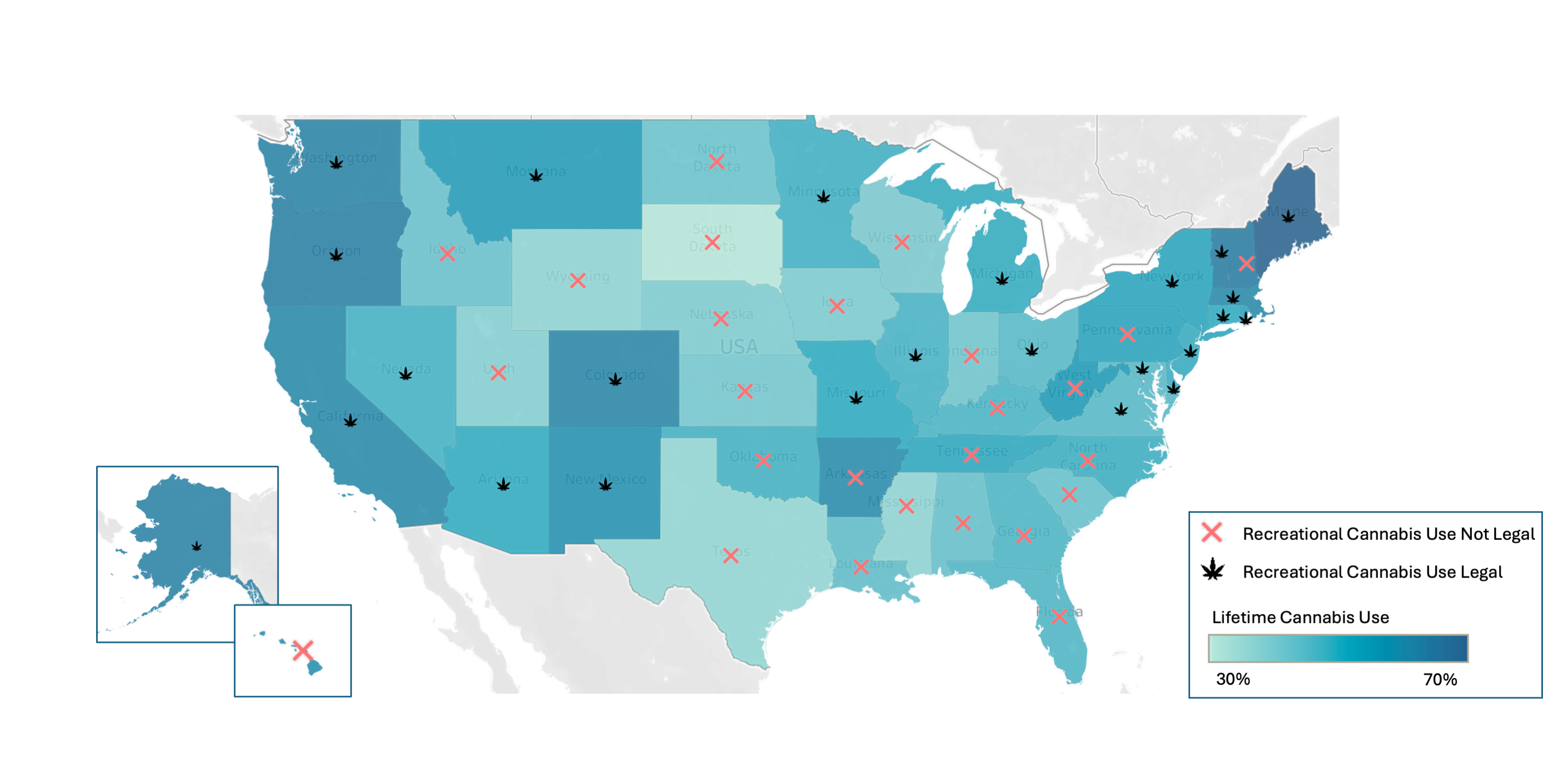
Abstract Body: Introduction: Cannabis use may result in adverse cardiovascular outcomes and, with growing legalization, is emerging as an important cardiovascular risk factor. More than 20% of Americans currently use cannabis, but the influence of cannabis-related policies on patterns of use remains unknown. Understanding whether cannabis policies influence relevant behaviors may be critical to addressing cardiovascular health among the public. Hypothesis: Legalization of recreational cannabis increases the prevalence and frequency of cannabis use. Methods: We conducted a cross-sectional analysis of the COVID-19 Citizen Science cohort (March 2020 to January 2024), including 89,096 adults (>18 years) residing in all 50 U.S. states and U.S. territories. The primary exposure was state cannabis policy status, with effective dates verified by legislative review through January 2024. Outcomes were any history of cannabis use, past 30-day use, and daily use. We performed bivariate comparisons using chi-square tests and estimated adjusted associations with multivariable logistic regression. Adjusted models included demographics, employment status, educational level, and tobacco use. Results: Among 89,096 participants, 56% resided in a state with recreational cannabis legalization; 67% identified as women, 84% self-identified as White, and 76% held a bachelor’s degree or higher. Participants residing in states with recreational legalization reported higher cannabis use at any time in the past (56.8% vs 44.9%, p<0.001) and in the past 30 days (11.5% vs 7.6%, p<0.001); and, among recent users, a greater proportion reported use every day (2.3% vs 1.8%, p<0.001) compared with residents of states without recreational legalization. In adjusted models, recreational legalization was associated with higher odds of lifetime cannabis use (1.53, CI 1.47-1.60, p<0.001), past 30-day use (1.38, CI 1.30-1.47, p<0.001), and daily use (1.46, CI 1.30-1.64, p<0.001). Conclusions: In this observational study including participants from all 50 states, cannabis legalization was associated with a higher prevalence and frequency of cannabis use. These data suggest that assessing the effects of cannabis-related policies on population-level cardiovascular health is worth pursuing.
Holtzman, Jessica
(
University of California, San Francisco
, San Francisco , California , United States )
Lee, Catherine
(
University of California, San Francisco
, San Francisco , California , United States )
Olgin, Jeffrey
(
University of California, San Francisco
, San Francisco , California , United States )
Pletcher, Mark
(
University of California, San Francisco
, San Francisco , California , United States )
Beatty, Alexis
(
University of California, San Francisco
, San Francisco , California , United States )
Kim, Parang
(
University of California, San Francisco
, San Francisco , California , United States )
Marcus, Gregory
(
University of California, San Francisco
, San Francisco , California , United States )