
Logo

American Heart Association

  17
  0


Final ID: WE465

Pharmacologic Treatment To Lower Blood Pressure In Hypertensive Pregnant Women Living In Low- And Middle-Income Countries: Systematic Review

Abstract Body: Background: Hypertension (HTN) is a leading cause of maternal mortality, especially in low- and middle-income countries (LMICs) where >90% of HTN-related deaths occur. HTN control during pregnancy is essential for improved maternal and neonatal outcomes.

Methods: A systematic literature search was conducted to identify trials of pharmacologic blood pressure (BP) lowering in pregnant women with peripartum HTN living in LMICs. PubMed, Embase, Cochrane Library, Global Index Medicus, and the WHO International Clinical Trials Registry Platform were searched from inception to December 6, 2024. Two investigators independently screened and extracted data. Primary outcome was difference in mean arterial pressure (MAP) change between trial arms.

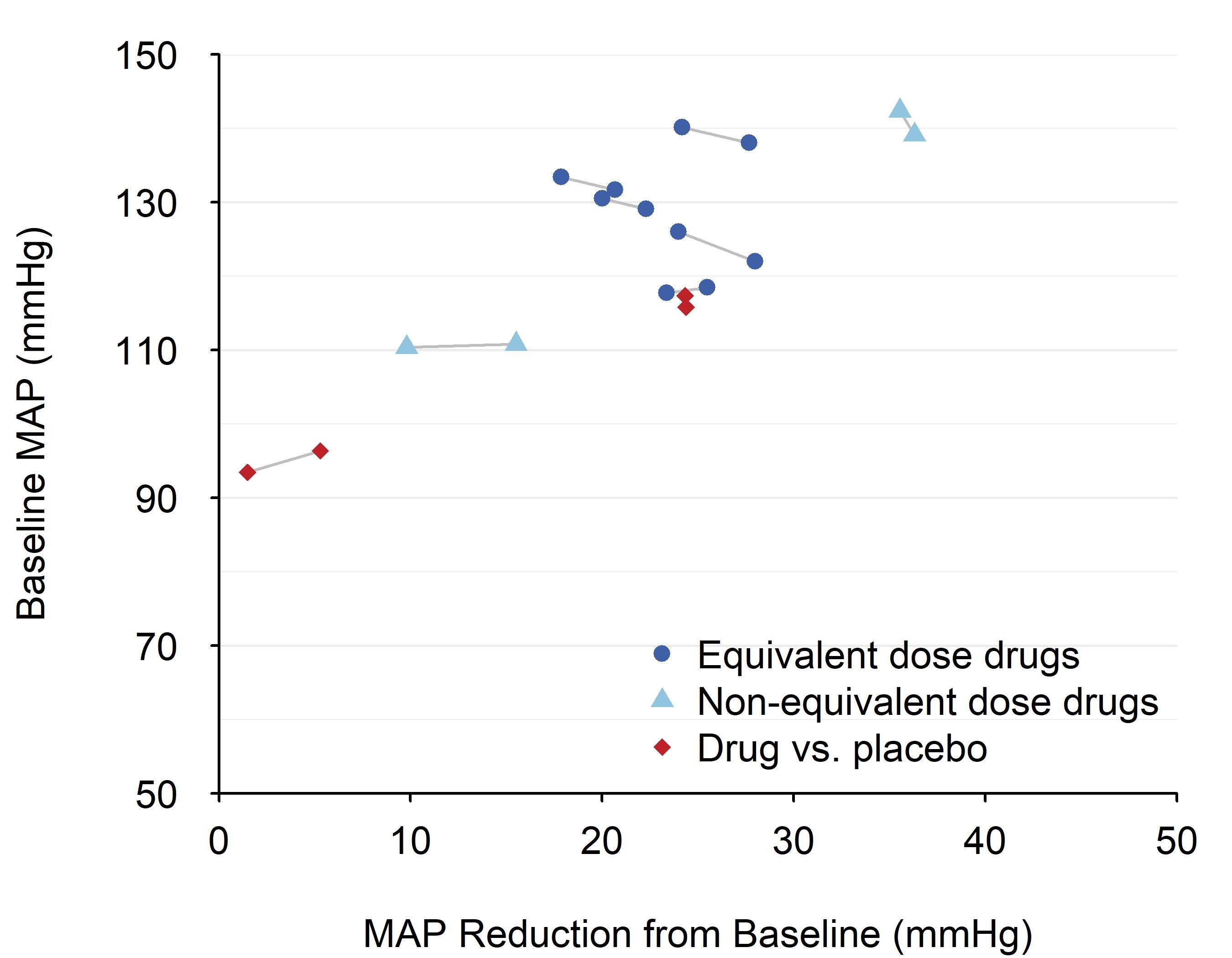
Results: A total of 2272 unique articles were identified; 2252 were excluded during screening and 9 during full-text review. Included were 11 trials with a total of 2118 pregnant females living in Africa or Asia; sample size ranged from 70 to 894. Drugs studied included nifedipine, labetalol, hydralazine, or placebo. Nine compared either equivalent or non-equivalent dose strengths of two antihypertensive drugs; two compared drug to placebo. Difference in MAP between treatment groups was reported by or calculated for nine trials, ranging from 0.07 to 5.7 mmHg; there was no consistent pattern of greater BP reduction according to trial design (equivalent or non-equivalent dose strength or drug vs placebo; Figure). Neither was there a consistent pattern for between group systolic or diastolic BP difference. Oral nifedipine and labetalol led to fewer non-serious side effects compared with hydralazine or methyldopa. No differences were observed in serious adverse event rates.

Conclusion: A systematic review found only 11 trials of pharmacologic BP lowering in pregnant women with HTN living in LMICs, highlighting need for more high-quality trials in this population. No consistent difference in BP-lowering efficacy between drugs was observed. Our results suggest tolerability, ease of administration, cost, and availability are likely more important factors to guide selection of antihypertensive drug treatment of HTN in pregnant women living in LMICs.
  • Olatidoye, Olufemi  ( Columbia University , New York City , New York , United States )
  • Tasnim, Zarrin  ( Columbia University , New York City , New York , United States )
  • Usseglio, John  ( Columbia University , New York City , New York , United States )
  • Jurgens, Madison  ( Columbia University , New York City , New York , United States )
  • Bellows, Brandon  ( Columbia University , New York City , New York , United States )
  • Moran, Andrew  ( Columbia University , New York City , New York , United States )
  • Author Disclosures:
Meeting Info:

EPI-Lifestyle Scientific Sessions 2026

2026

Boston, Massachusetts

Session Info:

Poster Session 2

Wednesday, 03/18/2026 , 05:00PM - 07:00PM

Poster Session

More abstracts on this topic:
Abnormal Calcium Regulation Leads to Pathological Cardiac Hypertrophy During Pregnancy in the GSNOR-Deficient Mouse Model of Preeclampsia

Dulce Raul, Balkan Wayne, Hare Joshua, Kulandavelu Shathiyah

A Rare Combination: Postpartum SCAD With Fibromuscular Dysplasia

Hassan Rafla, Humayun Sara, Callejas Liam, Woosman Miranda, Nguyen-luu Tristan, Singh Anil

More abstracts from these authors:
You have to be authorized to contact abstract author. Please, Login
Not Available