Loneliness, Social Support and Cardiovascular Risk Among Midlife Adults: A Population-Based Study Using the 2023 Behavioral Risk Factor Surveillance System.
Abstract Body: Introduction Loneliness and low social support are potential risk factors for cardiovascular disease (CVD). Both are linked to stress-related neuroendocrine and inflammatory changes, but population-level evidence linking these exposures to CVD remains limited. This study investigates how loneliness and social support interact to contribute to cardiovascular risk among U.S. adults aged 45–64, a critical window for CVD prevention.
Methods We used 2023 Behavioral Risk Factor Surveillance System data from adults aged 45-64 to assess how the joint exposure of loneliness and social support were associated with CVD risk. Both variables were dichotomized and combined into four exposure groups. Elevated CVD risk was defined as ≥ 3 of six of AHA Life’s Essential 8 factors: smoking, physical activity, obesity, hypertension, hypercholesterolemia, and diabetes. Multiple imputation was used to address missing data, and survey weights were applied. Weighted prevalence ratios were quantified using adjusted Poisson regression models with a robust variance estimator and 95% confidence intervals were used to compare outcomes across exposure groups. Adjusted models controlled for age, sex, race and education.
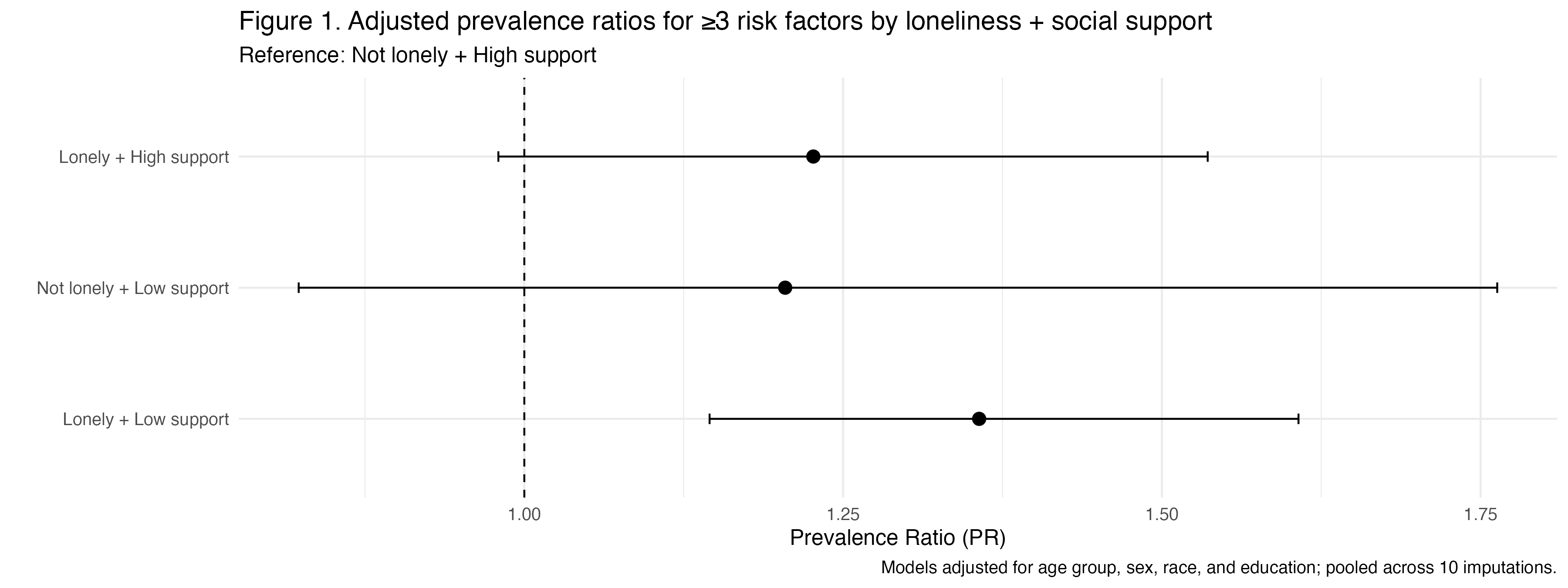
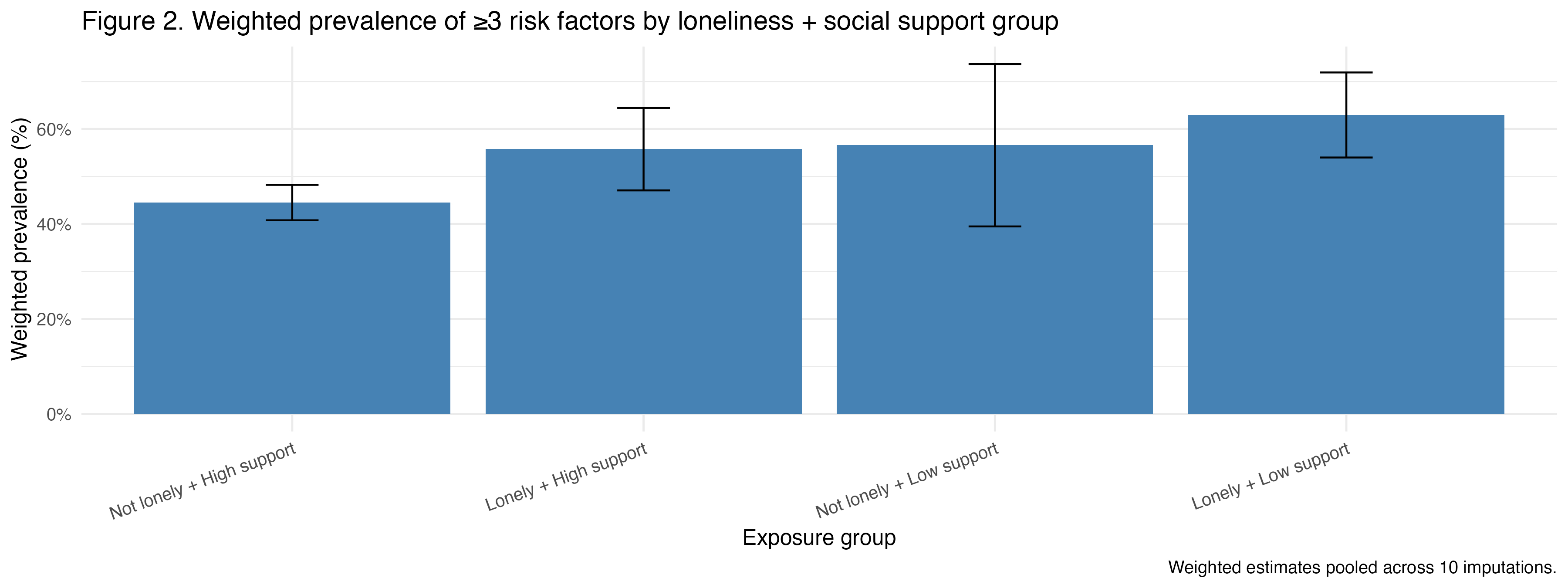
Results Overall, 67,541,291 individuals were included; 26% of whom reported loneliness and 17% reported low social support. Approximately, 10% of individuals reported high loneliness and low support. CVD risk factors were disproportionately prevalent among lonely and low social support groups. For example, diabetes prevalence was 16% among lonely + low support adults vs. 7% among those not lonely + high support. In adjusted models, the prevalence of elevated CVD risk among adults who were lonely and had low social support was 1.36 times (95% CI 1.15–1.61) the prevalence among those with high support who weren’t lonely. Individuals who were lonely but had high support also had a higher prevalence of elevated CVD risk (PR 1.23, 95% CI 0.98–1.54), while those who were not lonely but had low support exhibited modestly higher prevalence of heightened CVD risk (PR 1.14, 95% CI 0.96–1.32).
Conclusion Our findings add nationally representative evidence that loneliness and low social support, particularly in combination, are associated with elevated CVD risk in midlife. Addressing loneliness and strengthening social support through public health interventions that promote peer support and social cohesion are needed to mitigate suboptimal CVD outcomes and promote cardiovascular equity.
Tsagli, Dennis
(
Washington University in St Louis
, St Louis , Missouri , United States )
Twene, Estherla
(
Washington University in St Louis
, St Louis , Missouri , United States )
Rana Magar, Junu
(
Washington University in St Louis
, St Louis , Missouri , United States )
Gyapong, Nana Afia
(
London School of Hygiene and Tropical Medicine
, London , United Kingdom )
Alemayehu, Bethel
(
Washington University in St Louis
, St Louis , Missouri , United States )
Odai, Reuben
(
KU School of Medicine-Wichita
, Wichita , Kansas , United States )
Agyei, Manuel
(
Washington University in St Louis
, St Louis , Missouri , United States )
Filiatreau, Lindsey
(
Washington University in St Louis
, St Louis , Missouri , United States )