Higher Gestational Weight Gain Is Associated With A Lower Risk Of Incident Diabetes
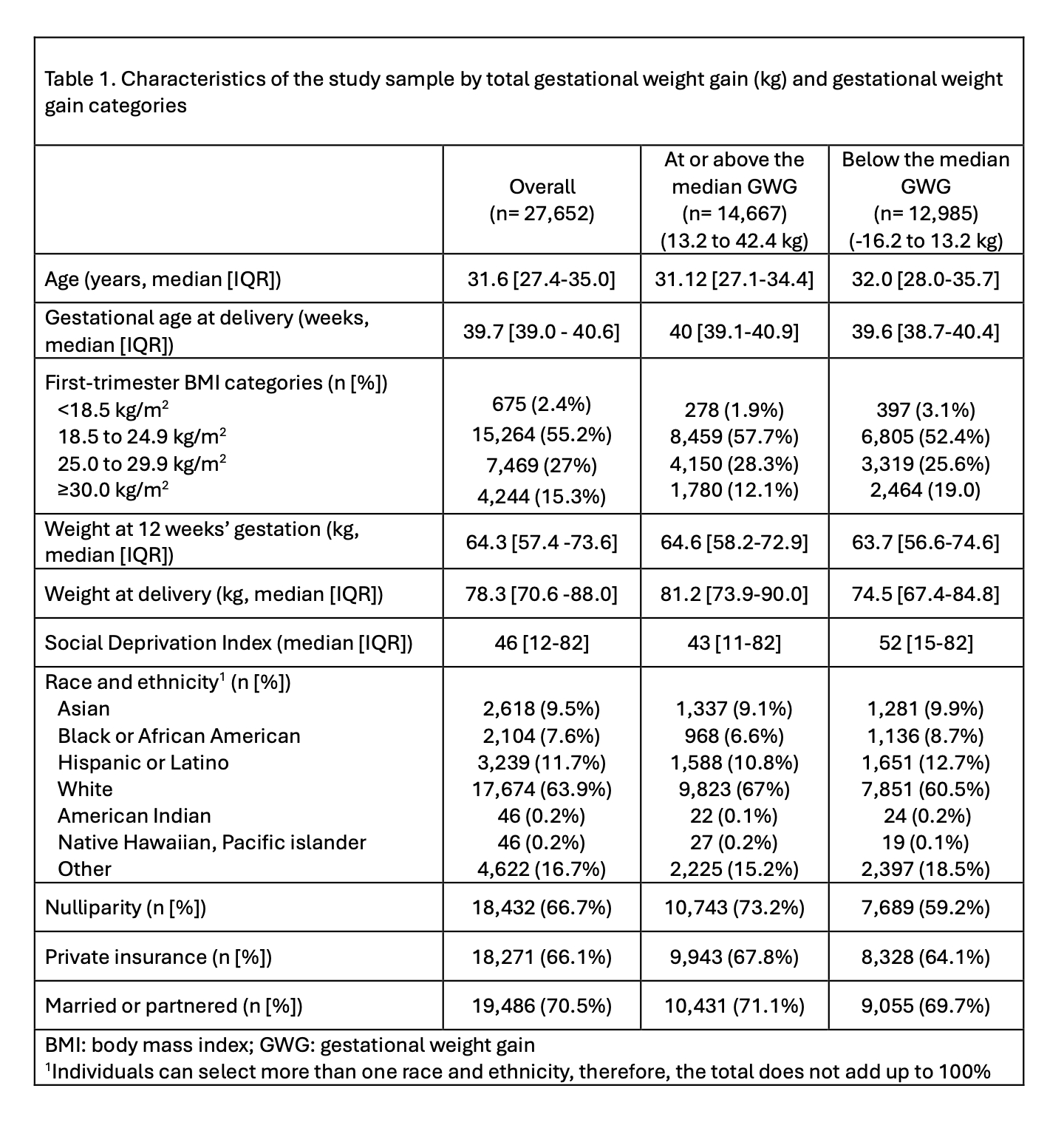
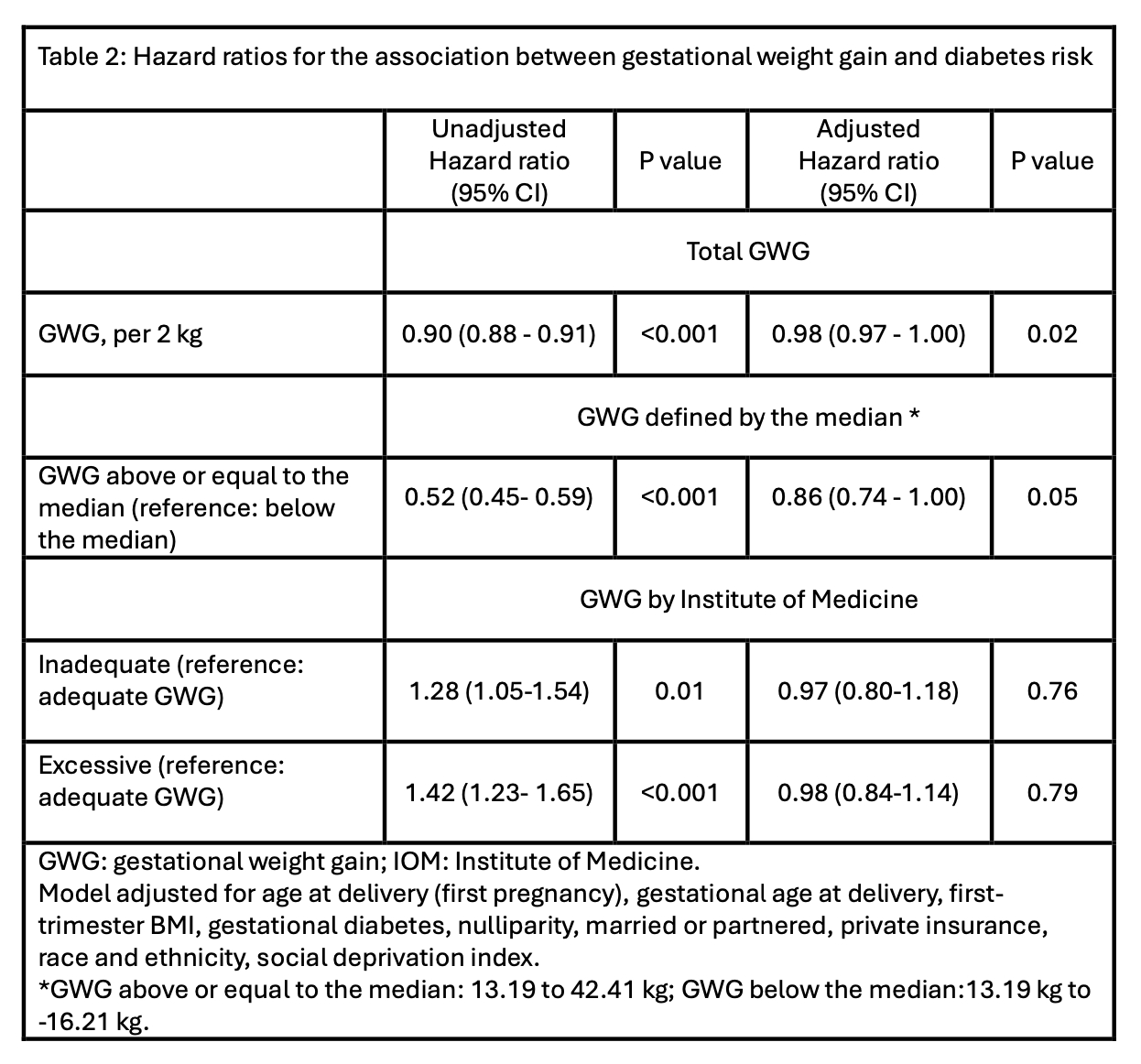
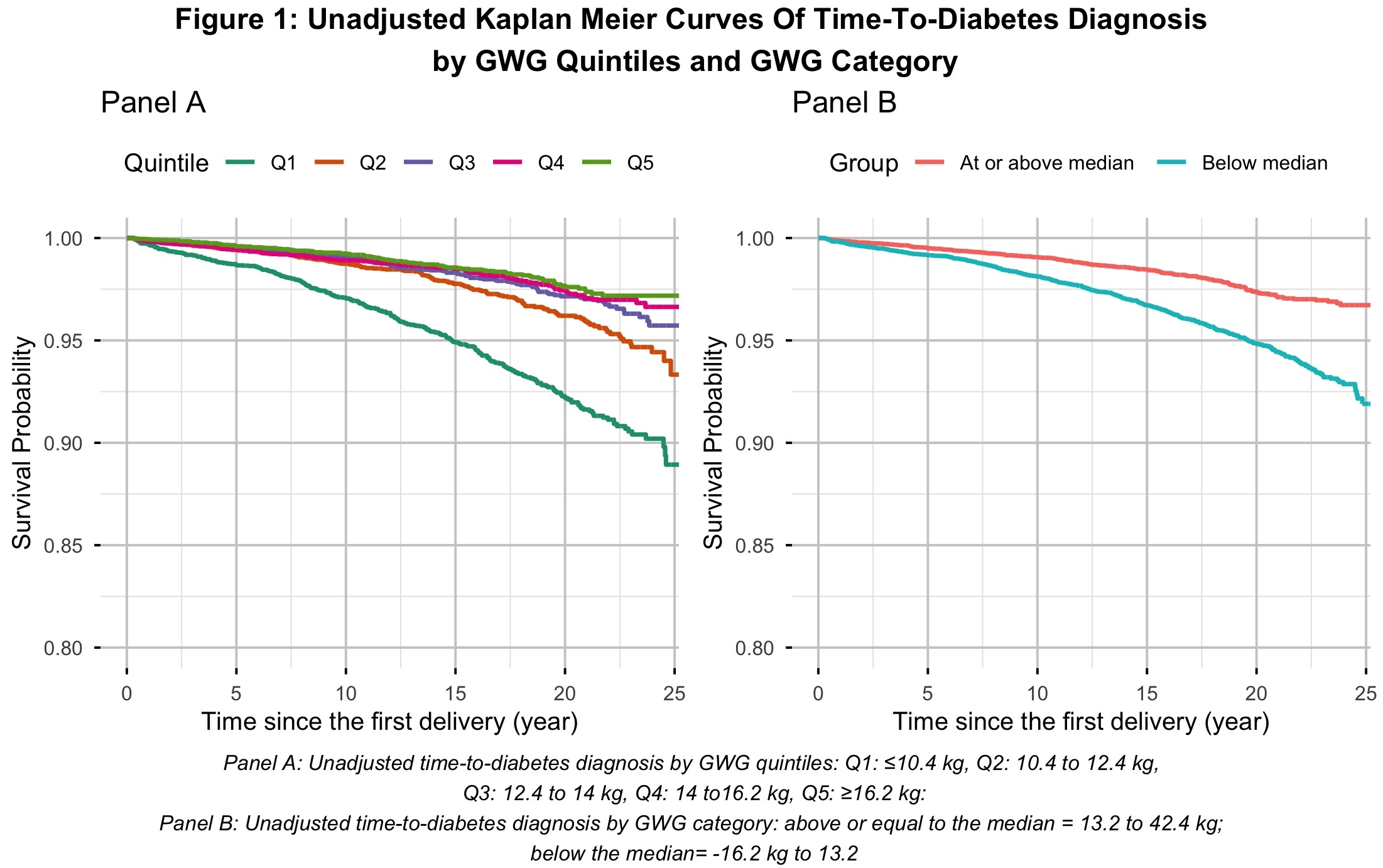
Abstract Body: Objective: To investigate the association between gestational weight gain (GWG) and risk of future diabetes (DM). Methods: This was a retrospective study in an electronic health record-based cohort of pregnancies at a single institution from 1998 to 2016. We included individuals aged ≥18 at the time of their 1st eligible singleton pregnancy and no prior DM diagnosis, with available follow-up data from non-obstetric clinical encounters. DM was defined using diagnostic codes for diabetes (≥ 2 encounters) or HbA1c ≥6.5%. The primary exposure was total GWG between 12 weeks’ gestation and delivery. Secondary exposures included GWG above vs. below the median and 2009 Institute of Medicine (IOM) recommended GWG categories. Follow-up started at delivery of the 1st eligible pregnancy and continued until DM diagnosis, last non-obstetric clinical encounter, date of delivery of an ineligible pregnancy, or 12/31/2024. In unadjusted analyses, we generated Kaplan-Meier curves, stratified by GWG quintile and by median GWG. In adjusted analyses, we fit Cox models with time-varying covariates: gestational age at delivery, BMI at 12 weeks’ gestation, gestational diabetes, nulliparity, marital status, insurance status, race/ethnicity, and zip-code based social deprivation index. Age at delivery of the 1st pregnancy was included as a non-time-varying covariate. Results: We included 37,595 pregnancies in 27,652 individuals (Table 1). The median (IQR) age at delivery was 31.6 years (27.4-35.0). The majority (57.6%) of participants had a BMI <25 kg/m2 at 12 weeks’ gestation. Over a median (IQR) of 11.5 (4.7-17.9) years, 3.2% of individuals (n= 882) developed DM (incidence rate = 2.7/1000 person-years, Figure 1). In the adjusted analyses, each 2 kg increase in total GWG was associated with a lower DM risk (Hazard ratio 0.97 [95% CI 0.942 to 0.997, p= 0.03). GWG ≥ the median (13.2 kg) was associated with lower DM risk (Hazard ratio 0.86 [95% CI 0.745 to 0.999], p= 0.049) vs. GWG below the median. There was no association observed between IOM recommended GWG category and DM risk (Table 2). Conclusions: Higher GWG is associated with a reduced risk of incident DM in the decade after delivery. Further investigation is needed to elucidate the potential mechanisms behind this association.
Chambers, Brianna
(
Massachusetts General Hospital
, Somerville , Massachusetts , United States )
Soria-contreras, Diana
(
Massachusetts General Hospital
, Somerville , Massachusetts , United States )
Pant, Deepti
(
Massachusetts General Hospital
, Somerville , Massachusetts , United States )
Hsu, Sarah
(
Massachusetts General Hospital
, Somerville , Massachusetts , United States )
Maya, Jacqueline
(
Massachusetts General Hospital
, Somerville , Massachusetts , United States )
Thaweethai, Tanayott
(
Massachusetts General Hospital
, Somerville , Massachusetts , United States )
Powe, Camille
(
Massachusetts General Hospital
, Somerville , Massachusetts , United States )
Jiang Chao, Dong Jianzeng, Cai Jun, Anderson Craig, Du Xin, Tang Yangyang, Han Rong, Song Yanna, Wang Chi, Lin Xiaolei, Yi Yang, Rodgers Anthony, Ma Changsheng