Variation in Risk Factor Control in Patients with Atrial Fibrillation by Race and Ethnicity: A Nationwide Study
Abstract Body: Introduction: Atrial fibrillation (AF) is a common arrhythmia associated with stroke, death, and complications that are more prevalent among AF patients from minoritized groups. Those with comorbid risk factors (RF), including diabetes, hyperlipidemia, hypertension, obesity, alcohol use, and tobacco use, are at higher risk of poor AF outcomes. Little is known of how well these RFs are controlled among AF patients and whether such control differs by race/ethnicity. We examined variation in RF control in AF patients managed in the Veterans Health Administration (VA).
Methods: We conducted a retrospective cohort study of VA patients with incident AF from 1/1/2014 to 12/31/2024. Our independent variables were race (American Indian/Alaska Native [AIAN], Asian, Black, multiracial, White) and Hispanic ethnicity. Our primary outcome was RF control, defined using validated AHA Life’s Essential 8 categorization (optimal, intermediate, and poor) for hemoglobin A1c and cholesterol levels, blood pressure, and body mass index (BMI). We also assessed presence of an alcohol or tobacco use diagnosis. A score of 100 represented optimal control for each RF, and we calculated cumulative mean scores (max=600) by race/ethnicity. We used logistic regression to model the likelihood of achieving an optimal score for each RF and general linear modeling to estimate mean differences in cumulative RF score between racial/ethnic groups, adjusting for demographic, clinical, and socioeconomic factors. We used multiple imputation to account for missing RFs.
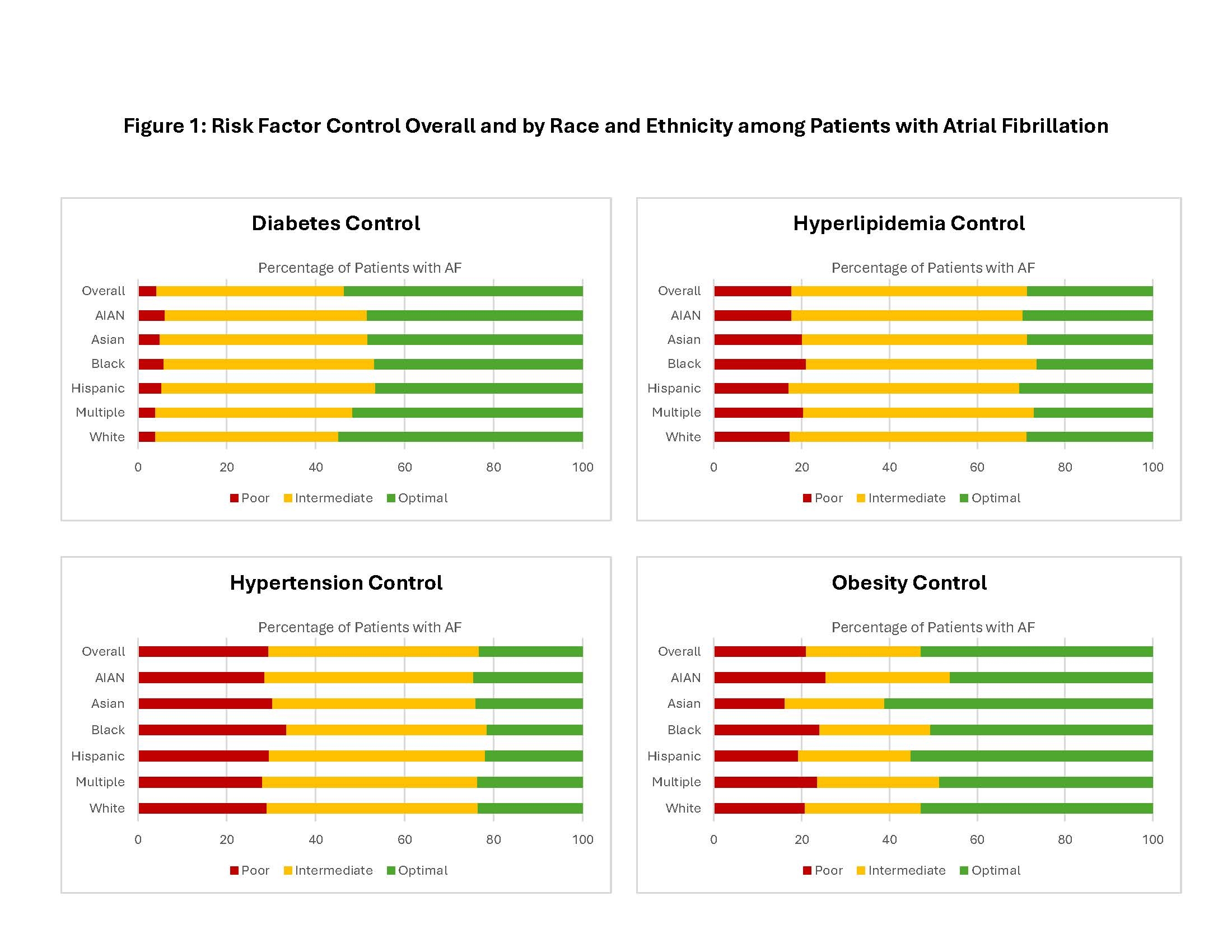
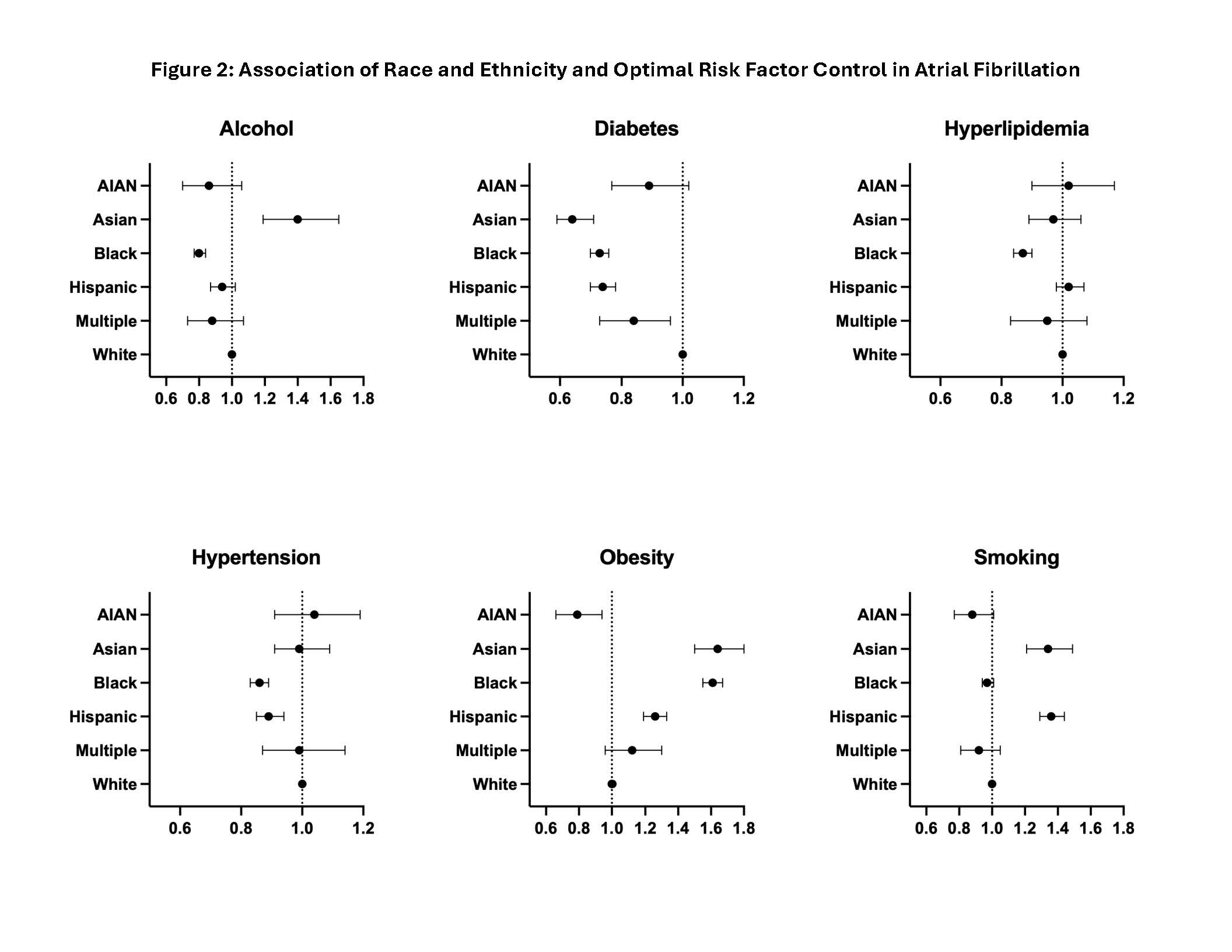
Results: Our cohort included 192,564 patients with AF (0.5% AIAN, 1.2% Asian, 9.3% Black, 3.9% Hispanic, 0.6% multiracial, 84.5% White; mean age 73.3 years). Figure 1 shows RF control by race/ethnicity. In adjusted models, Black patients were less likely to have optimal control for diabetes, hyperlipidemia, blood pressure, and alcohol use compared to White patients (Figure 2). Asian, Hispanic, and Black patients were more likely to have optimal BMI levels compared to White patients. Black patients had a significantly lower cumulative RF score (-3.92; 95% CI, -5.03, -2.83) compared to White patients.
Conclusion: In a large, nationwide cohort of AF patients, we found marked variation in key cardiometabolic RF control. Given disparities in AF complications, our understanding of the drivers of poor RF control in minoritized populations and the development of interventions to address them is critical to improving the health of AF patients.
Essien, Utibe
(
UCLA GIM HSR
, Los Angeles , California , United States )
Kim, Nadejda
(
VA Pittsburgh Healthcare System
, Pittsburgh , Pennsylvania , United States )
Tang, Jasmyn
(
UCLA David Geffen School of Medicine
, San Marino , California , United States )
Mor, Maria
(
VA Pittsburgh Healthcare System
, Pittsburgh , Pennsylvania , United States )
Anderson, Timothy
(
University of Pittsburgh
, Pittsburgh , Pennsylvania , United States )
Washington, Donna
(
Greater Los Angeles VA Healthcare System
, Los Angeles , California , United States )
Gellad, Walid
(
VA Pittsburgh Healthcare System
, Pittsburgh , Pennsylvania , United States )
Hausmann, Leslie
(
VA Pittsburgh Healthcare System
, Pittsburgh , Pennsylvania , United States )
Ali Muhammad Faizan, Khan Muhammad, Sharif Aleena, Hossain Mohammad, Ahmad Husnain, Eltawansy Sherif, Faizan Muhammad, Ahmed Ashraf, Abdul Malik Mohammad Hamza Bin, Pahwani Ritesh, Patel Rahul, Mehdi Hassan