Basic Cardiovascular Sciences 2026
/
Poster Session 2
/
Subclinical Cancer Therapy-related Cardiac Dysfunction (CTRCD) Detected with Cardiac Magnetic Resonance (CMR) Global Longitudinal Strain (GLS) is a Prognosticator of Long-term Major Adverse Cardiac Events (MACE) and Mortality.
American Heart Association
18
0
Final ID: Tue067
Subclinical Cancer Therapy-related Cardiac Dysfunction (CTRCD) Detected with Cardiac Magnetic Resonance (CMR) Global Longitudinal Strain (GLS) is a Prognosticator of Long-term Major Adverse Cardiac Events (MACE) and Mortality.
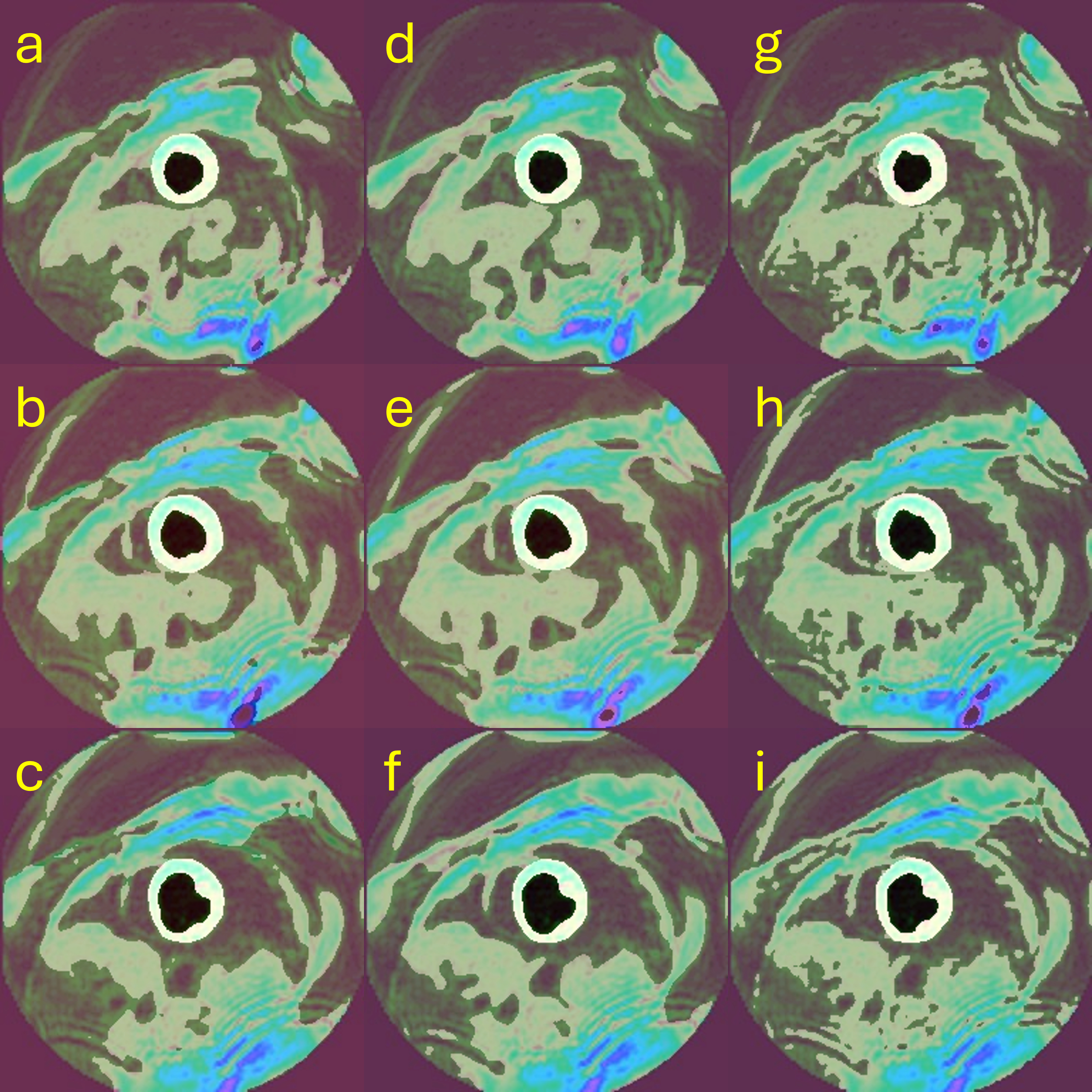
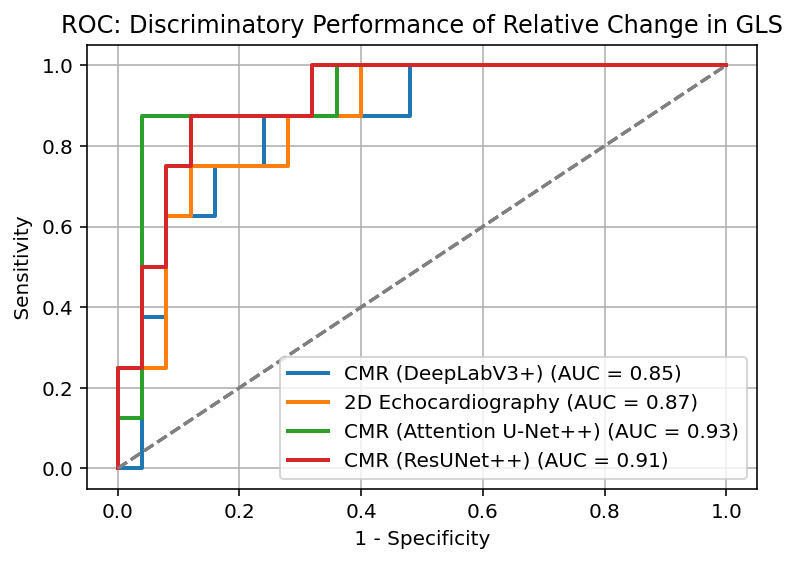
Abstract Body: This unique prospective-retrospective study investigated the long-term prognostic strength of subclinical cancer therapy-related cardiac dysfunction (CTRCD) detected by Cardiovascular Magnetic Resonance (CMR) Global Longitudinal Strain (GLS) in breast cancer patients undergoing potentially cardiotoxic chemotherapy. The main focus was predicting the eventual occurrence of major adverse cardiac events (MACE) such as overt heart failure (HF) leading to mortality, and irreversible left ventricular (LV) damage with subclinical CTRCD indicated by GLS changes during treatment. Displacement Encoding with Stimulated Echoes (DENSE) CMR imaging was conducted on the patient cohort (N=35) at baseline and 3- and 6-month follow-ups during chemotherapy. Three deep learning (DL) models (DeepLabV3+, Attention U-Net++, and ResUNet++) were used for benchmarking LV segmentation (Fig. 1) and GLS computation following k-fold cross-validations, then compared to 2D echocardiographic (2DE) results. Receiver operating characteristic (ROC) curves and odds ratios (OR) were used to summarize the discriminatory and prognostic performance of subclinical GLS and other parameters for predicting the occurrence of MACE and chronic conditions like LV cardiomyopathy and valvular disease over 24 months. The strongest prognosticator of combined incidences of mortality from MACE (4/35) and chronic HF (3/35) was GLS at the 3-month follow-up computed with the Attention U-Net++ DL model (OR = 1.9, CI = 1.2-3.3, p = 0.03, GLS = -15.8 ± 2.4%), followed by ResUNet++ (OR = 1.7, CI = 1.1-2.9, p = 0.01, GLS = -16.0 ± 2.5%), DeepLabV3+ (OR = 1.6, CI = 1.1-2.7, p = 0.01, GLS = -16.2 ± 2.2%), and 2DE (OR = 1.6, CI = 1.0-2.6, p = 0.04, GLS = -15.7 ± 2.4%). Similarly, the ROC discriminatory results showed the highest area under the curve (AUC) for the 3-month relative percentage change in GLS with Attention U-Net++ (AUC = 0.93, ΔGLS = 14.4 ± 8.3%), followed by ResUNet++ (AUC = 0.91, ΔGLS = 15.6 ± 7.8%), 2DE (AUC = 0.87, ΔGLS = 15.6 ± 9.4%), and DeepLabV3+ (AUC = 0.85, ΔGLS = 15.0 ± 8.1%) (Fig. 2). This DENSE imaging study has contributed to the growing evidence that subclinical CTRCD detected with CMR GLS during chemotherapy with cardiotoxic agents can predict the long-term occurrence of MACE and chronic HF in breast cancer patients. With further multicenter research to precisely assess the critical role of CMR GLS in cardio-oncology, the early diagnosis of asymptomatic CTRCD could improve patient survival.
Kar, Julia
(
University of South Alabama
, Mobile , Alabama , United States )
Cohen, Michael
(
University of South Alabama
, Mobile , Alabama , United States )
Mcquiston, Samuel
(
University of South ALabama
, Mobile , Alabama , United States )
Malozzi, Christopher
(
University of South Alabama
, Mobile , Alabama , United States )