Serotonergic Antidepressants Increase Temporal Variability of Platelet Inhibition After Peripheral Revascularization
Abstract Body: Background: Platelet inhibition after peripheral artery disease (PAD) revascularization is increasingly recognized to be dynamic, yet clinical assessment remains static. Serotonergic agents (selective serotonin reuptake inhibitors [SSRI], serotonin–norepinephrine reuptake inhibitors [SNRI], or trazodone) inhibit platelet serotonin uptake, potentially altering platelet activation and response to P2Y12 inhibition but the impact of serotonergic modulation on the temporal stability of platelet inhibition remains unclear. Hence, we assessed the hypothesis that serotonergic modulation alters platelet inhibition dynamics and may differentially affect the response to P2Y12 inhibition after revascularization.
Methods: We analyzed 317 patients undergoing lower extremity revascularization with serial thromboelastography platelet mapping (TEG-PM), yielding 888 paired observations (median 6 visits/patient). Visit-to-visit variability in ADP-mediated platelet inhibition was quantified using log-transformed absolute differences between consecutive measurements. Serotonergic exposure (SSRI, SNRI, or trazodone) was modeled as a time-varying covariate using linear mixed-effects models with patient-level random intercepts, adjusting for time between measurements and concurrent antithrombotic therapies, including P2Y12 inhibitor regimen (ticagrelor vs clopidogrel), aspirin, and anticoagulants.Transition analyses evaluated variability during changes in exposure status.
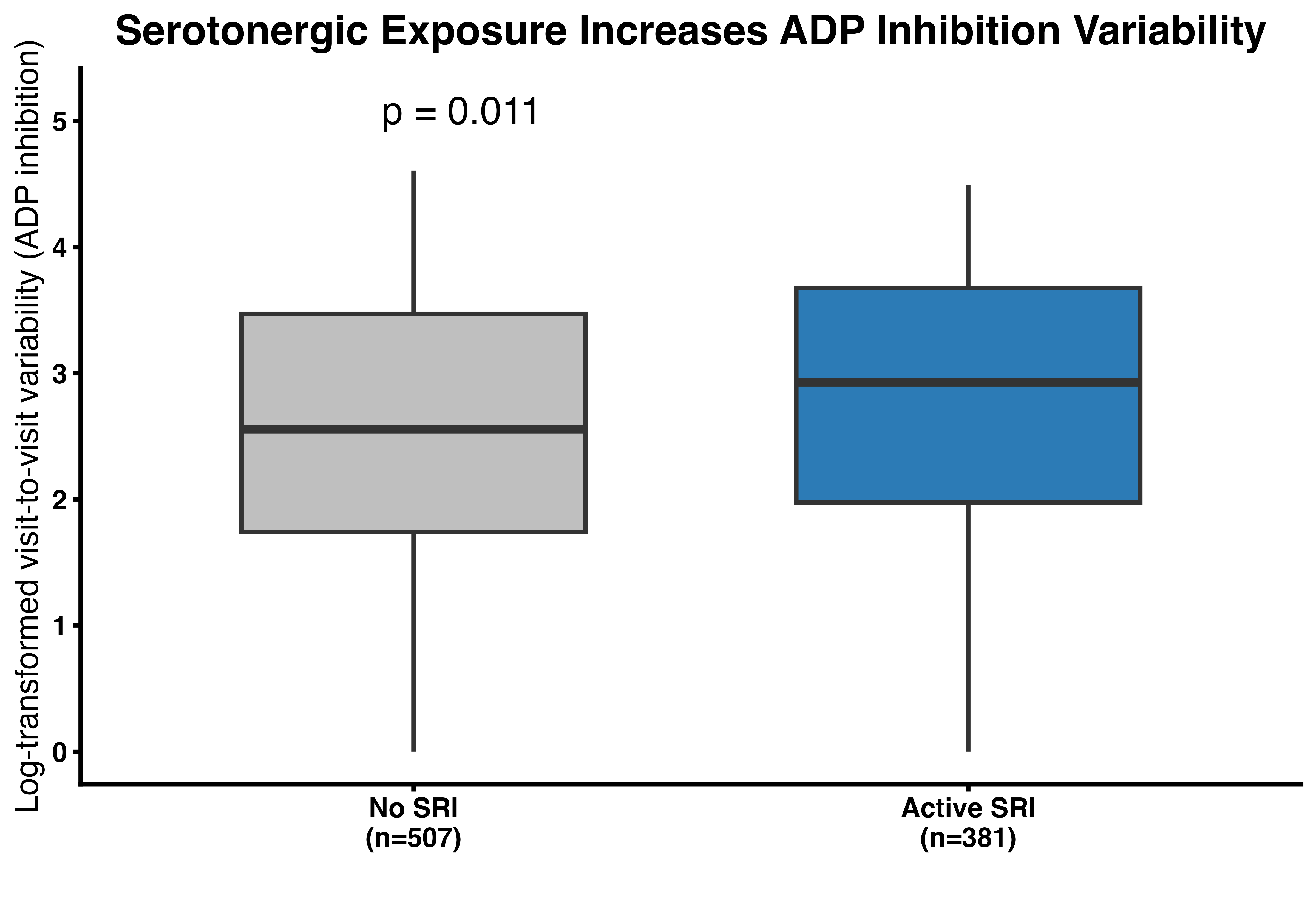
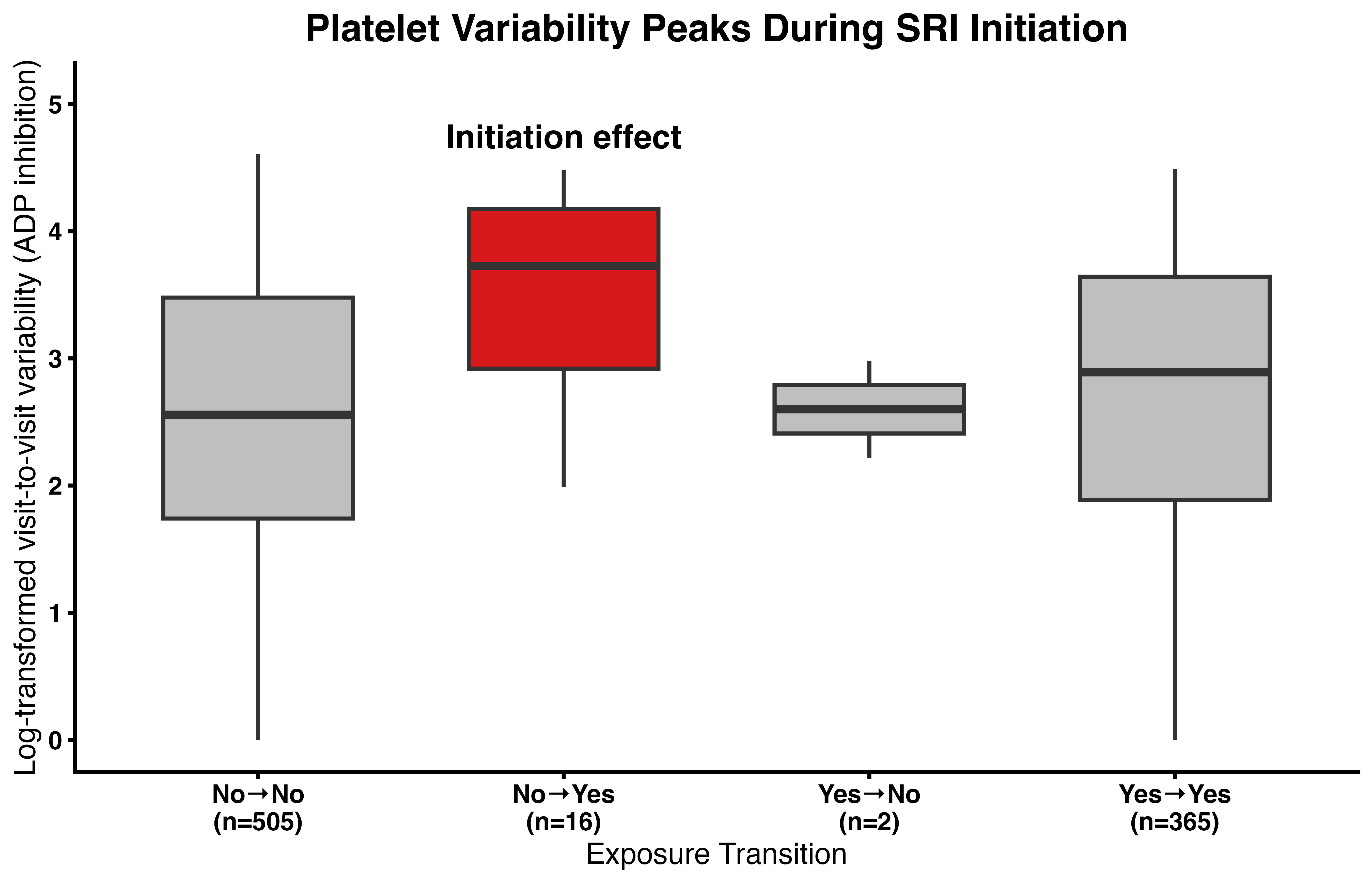
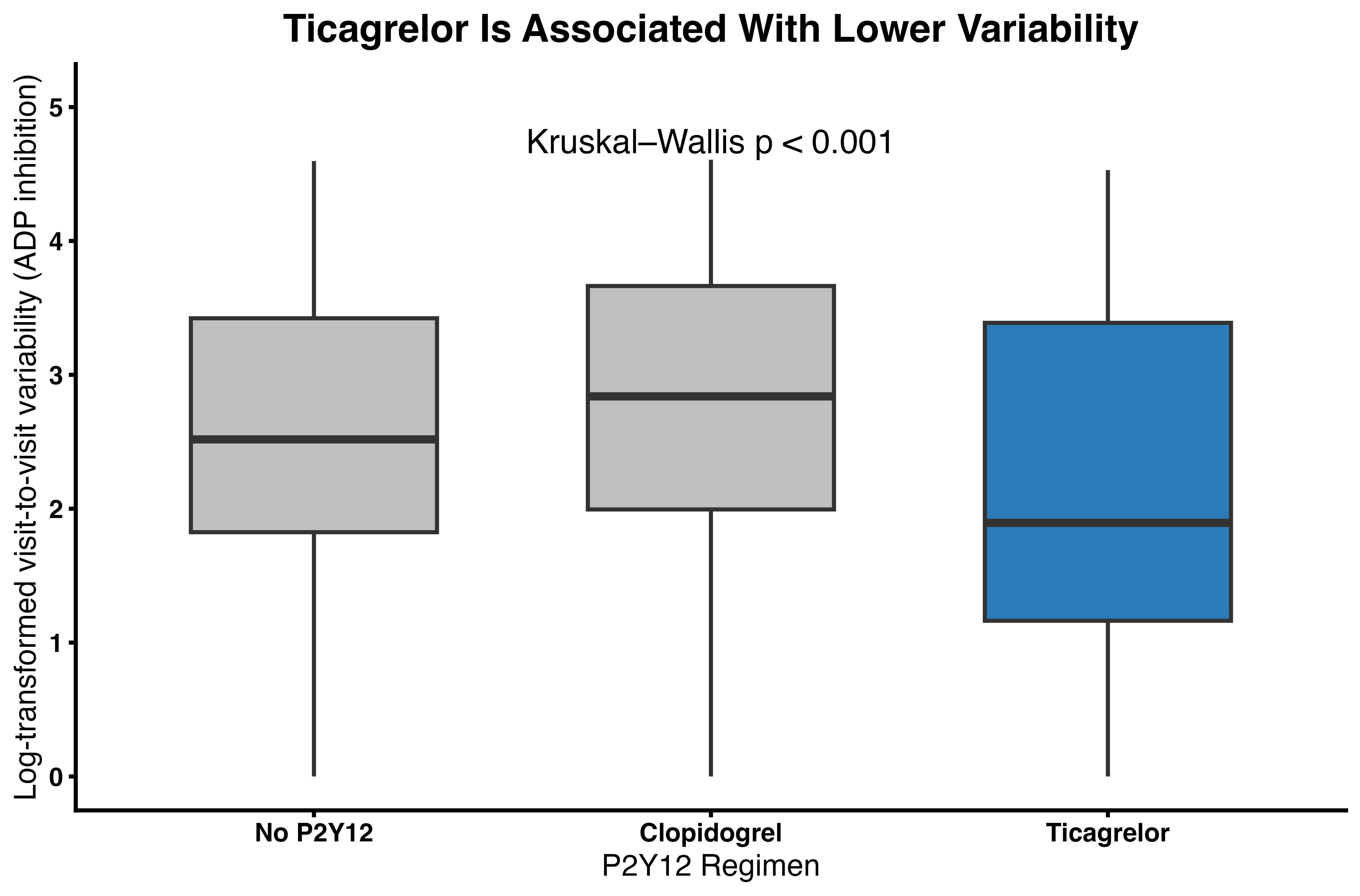
Results: Serotonergic exposure was present in 32% of observations and was associated with increased variability in platelet inhibition (β=0.22, ~25% relative increase; p=0.03). Variability peaked during initiation of serotonergic therapy (0→1 transition; β=0.71, p=0.01), representing the primary driver of longitudinal variability, whereas sustained exposure demonstrated attenuated effects. Ticagrelor use was independently associated with reduced variability, consistent with a stabilizing effect on platelet inhibition (β≈−0.60, p<0.001), while clopidogrel showed a trend toward increased variability (β≈0.22, p=0.09).
Conclusions: Serotonergic antidepressants are associated with an underrecognized, initiation-driven instability in platelet inhibition following PAD revascularization. These findings highlight the clinical relevance of dynamic platelet monitoring after revascularization and suggest that P2Y12 inhibitor selection may influence the stability of platelet inhibition in the setting of serotonergic exposure.
Bansal, Radha
(
Massachusetts General Hospital
, Boston , Massachusetts , United States )
Bellomo, Tiffany
(
Massachusetts General Hospital
, Boston , Massachusetts , United States )
Fouzdar, Shezan
(
Massachusetts General Hospital
, Boston , Massachusetts , United States )
Bhatt, Swechha
(
Massachusetts General Hospital
, Boston , Massachusetts , United States )
Rodriguez Alvarez, Adriana
(
Massachusetts General Hospital
, Boston , Massachusetts , United States )
Bagheri Sheshdeh, Aseman
(
Massachusetts General Hospital
, Boston , Massachusetts , United States )
Lokhande, Prajakta
(
Massachusetts General Hospital
, Boston , Massachusetts , United States )
Dua, Anahita
(
Massachusetts General Hospital
, Boston , Massachusetts , United States )