In situ focused microwave fixation provides an instantaneous snapshot of heart metabolome
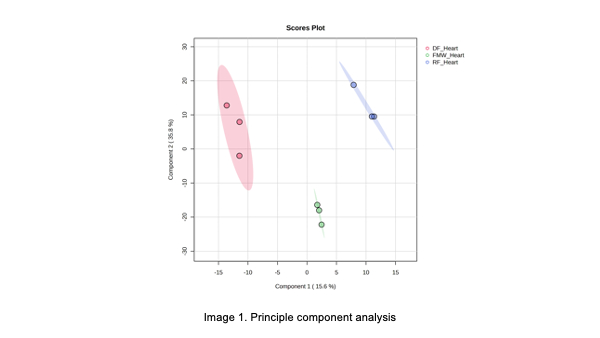
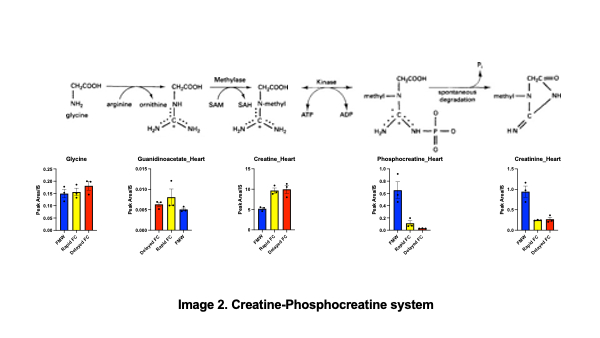
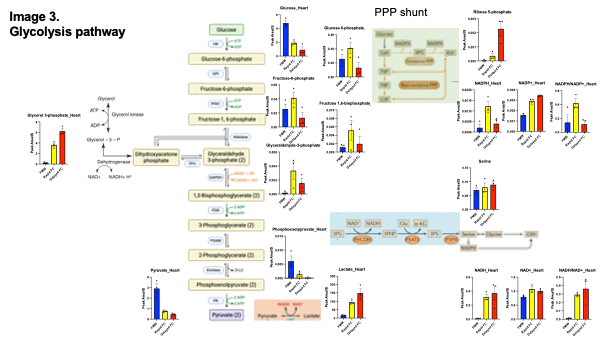
Abstract Body: Background: Cardiac metabolism is highly dynamic, and metabolite pool changes within seconds, making it challenging to obtain accurate metabolic snapshots. Rapid freeze-clamping (RFC) is a standard approach to suppress post-mortem degradation, but it still requires several seconds and is highly procedure-dependent, which may increase data variation and artifacts in fast-turnover metabolites. Methods: To minimize post-mortem changes, focused microwave (FMW) irradiation was applied to the heart. FMW inactivates enzymatic activity within the targeted tissue in less than one second through thermal exposure at 70-80°C. 8–10-week-old C57BL/6J mice were processed with FMW under multiple output and irradiation time settings (2/3/4/5 kW, 0.3/0.5/0.7/0.9 second; n=3 each) and its metabolites were compared with RFC group by LC-MS metabolomics. Metabolite preservation index (pyruvate/lactate, phosphocreatine/creatine, and ATP/ADP/AMP ratios) were calculated to determine the optimal FMW settings. After determining the optimal settings, to confirm that the enzyme was completely inactivated and metabolites were retained within the cardiac tissue, mice were left at room temperature for certain periods (1, 5, 20, 60 minutes) following FMW. Hearts were then harvested to compare metabolomics. Results: Across tested conditions, FMW maintained a metabolic profile closer to the in vivo state than RFC. FMW samples exhibited higher levels of high-energy phosphates (ATP, ADP, phosphocreatine), pyruvate, α-ketoglutarate and branched-chain keto-acids, while metabolites known to increase during ischemia (lactate, succinate, NADH, adenosine) were lower compared with RFC. The optimal setting based on preservation index was 5 kW for 0.9 seconds. Phosphocreatine, pyruvate, α-ketoglutarate and branched-chain keto-acids levels remained stable in cardiac tissue for up to 60 minutes post-mortem. Erythrocyte-specific RNA/protein/metabolites were higher in FMW heart than in RFC tissue, suggesting increased residual blood volume in FMW heart. Conclusions: Cardiac FMW fixation suppresses post-mortem metabolic degradation, enabling metabolomics that reflect in vivo conditions. However, increased residual blood may confound interpretation and should be taken into consideration. Applying cardiac FMW fixation to genetic and disease models may reveal pathophysiologically important metabolites that have previous been overlooked by conventional sampling methods.
Ichihara, Genki
(
University of Pennsylvania
, Philadelphia , Pennsylvania , United States )
Arany, Zoltan
(
University of Pennsylvania
, Philadelphia , Pennsylvania , United States )