Lipid Peroxidation Promotes Ventricular Arrhythmogenesis Through Disrupted Calcium Handling
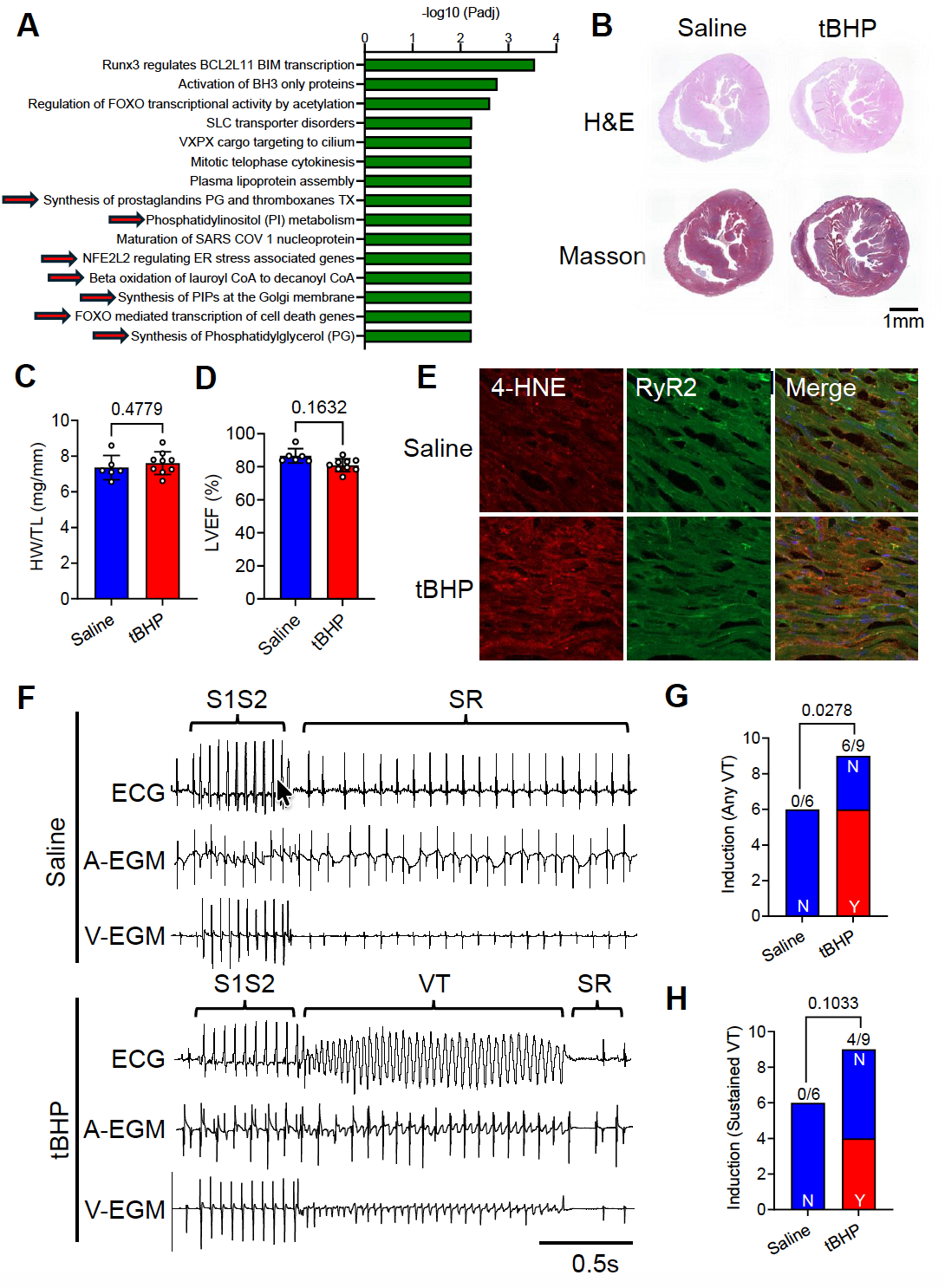
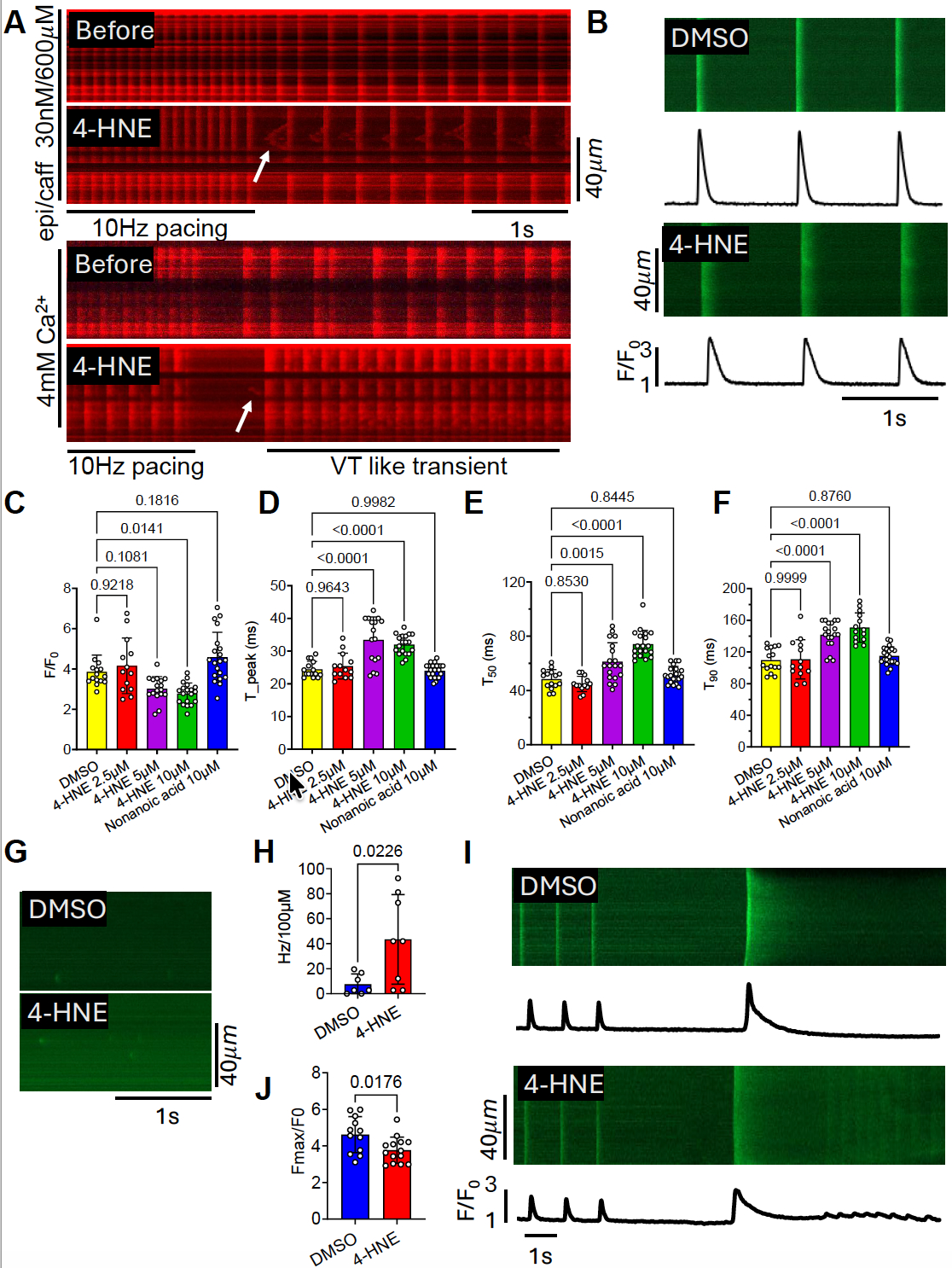
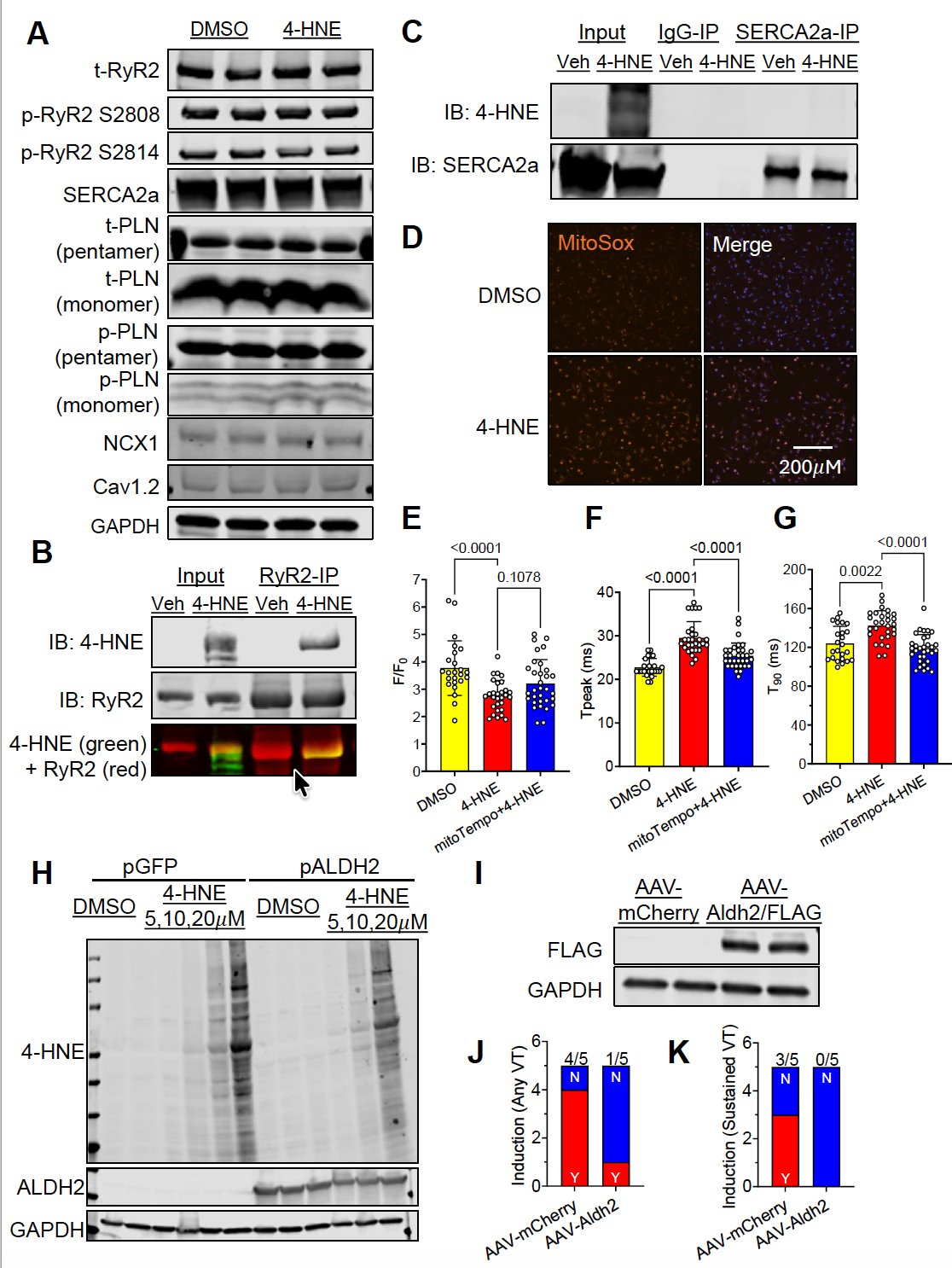
Abstract Body: Background: Ventricular arrhythmias (VAs) remain a major cause of mortality. Lipid peroxidation, found in multiple structural heart diseases complicated by VAs, generates reactive aldehydes such as 4-hydroxynonenal (4-HNE), yet its contribution to arrhythmogenesis remains incompletely defined. Objective: To determine whether lipid peroxidation promotes VA susceptibility through 4-HNE mediated disruption of cardiomyocyte Ca2+ handling. Methods and Results: To establish a causal relationship between cardiac lipid peroxidation and arrhythmia susceptibility, lipid peroxidation was modeled using inducible cardiomyocyte-specific glutathione peroxidase 4 (GPX4) knockout and tert-butyl hydroperoxide (tBHP, 45 mg/kg/d, 14d) intraperitoneal administration in C57BL/6N mice. Both models exhibited increased inducibility of ventricular tachycardia (VT) in programmed electrical stimulation and elevated 4-HNE protein adduction in the absence of overt structural remodeling or baseline ECG abnormalities. In Langendorf perfused hearts, 4-HNE increased the frequency of post-pacing Ca2+ waves and triggered bidirectional and polymorphic VT, potentiated by epinephrine/caffeine (30 nM/600 mM) perfusion or high Ca2+ concentration (4 mM). In isolated mouse ventricular myocytes, 4-HNE increased Ca2+ spark frequency, reduced Ca2+ transient amplitude, prolonged decay kinetics, and decreased sarcoplasmic reticulum (SR) Ca2+ content. Mechanistically, 4-HNE formed covalent adducts with ryanodine receptor 2 (RyR2), with mass spectrometry based post-translational modification study identifying multiple candidate adduction sites within functional domains (H238, K4646, K4182, K4044). Additionally, 4-HNE did not adduct SERCA2a in IP-Western blot analysis. However, 4-HNE induced SERCA2a dysfunction and impaired SR Ca2+ reuptake through mitochondrial reactive oxygen species (ROS) and reduced cytosolic ATP/ADP ratio. Mitochondrial superoxide scavenger MitoTEMPO rescued 4-HNE induce delays in kinetics. Importantly, detoxification of 4-HNE via cardiomyocyte-targeted aldehyde dehydrogenase 2 (ALDH2) overexpression attenuated VT susceptibility in vivo and restored Ca2+ transient measurements in vitro. Conclusions: Lipid peroxidation promotes VA through 4-HNE mediated Ca2+ mishandling, characterized by increased Ca2+ waves due to RyR2 hyperfunction and impaired reuptake due to SERCA2a dysfunction. Targeting 4-HNE detoxification represents a potential therapeutic strategy for arrhythmia prevention.
Jiang, Yunqiu
(
City of Hope
, Duarte , California , United States )
Deng, Jielin
(
City of Hope
, Duarte , California , United States )
Rhee, June-wha
(
City of Hope
, Duarte , California , United States )
Deng, Yingfeng
(
City of Hope
, Duarte , California , United States )
Wang, Zhao
(
Beckman Res Ins, City of Hope
, Duarte , California , United States )