Gene Expression Analysis Identifies Inflammatory and Oxidative Stress Pathways with Potential Therapeutic Implications in Abdominal Aortic Aneurysm
Abstract Body: Background: Abdominal aortic aneurysms (AAA) are life-threatening, marked by aortic ECM degradation, progressive dilation, and rupture. Despite their clinical significance, AAA’s molecular drivers remain unclear, and no pharmacological treatments exist. While inflammation and oxidative stress are implicated, genetic contributors need further study. This study analyzes differentially expressed genes (DEGs) and dysregulated pathways to identify key drivers of AAA pathogenesis.
Methods: The publicly available STARGEO database identified three datasets of aortic tissue samples from AAA patients (n=278) and healthy controls (n=46). A meta-analysis using random effects models extracted 21,537 genes. Of these, 2,327 met differential expression criteria (p<0.05, absolute log ratio >0.2) and were analyzed using Ingenuity Pathway Analysis (IPA).
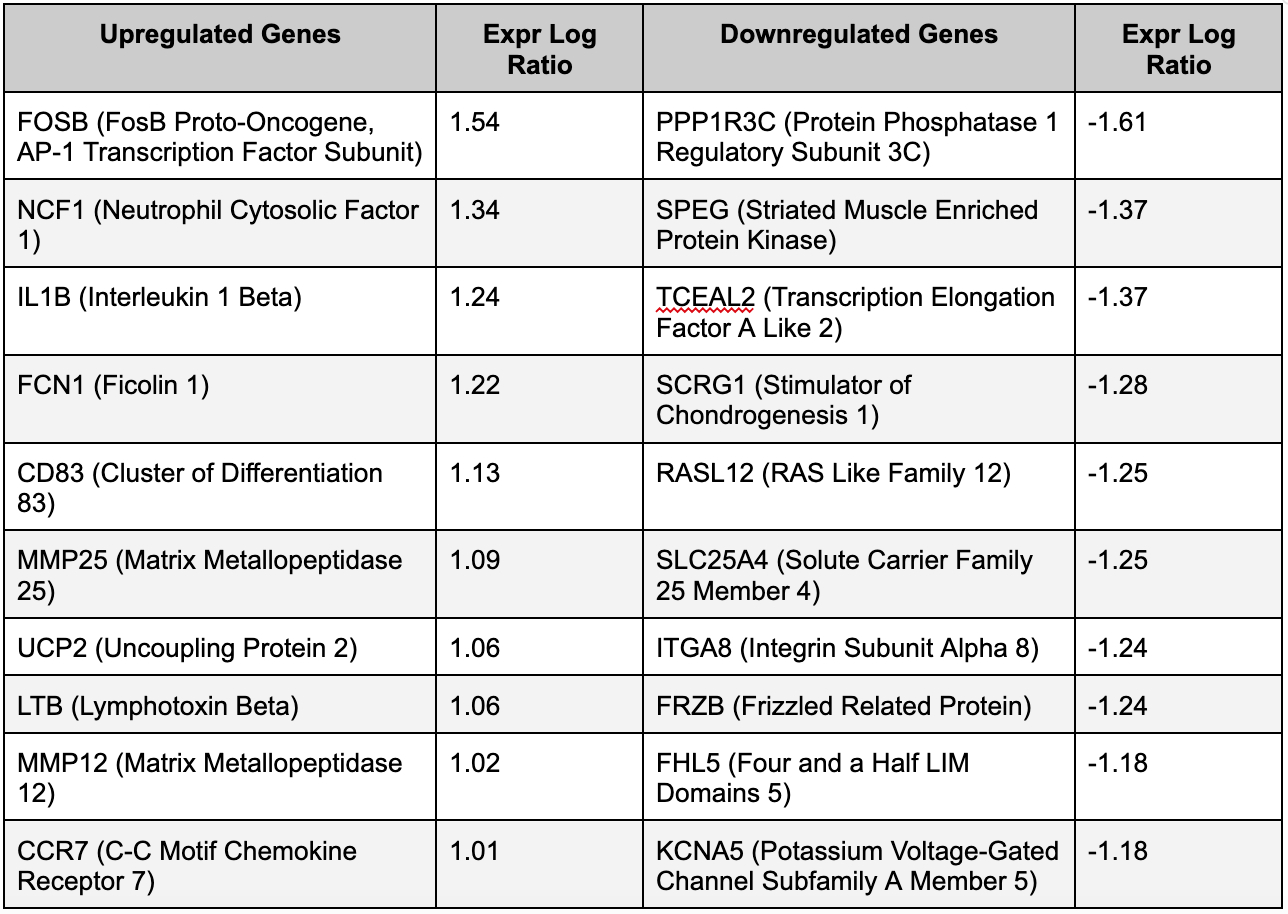
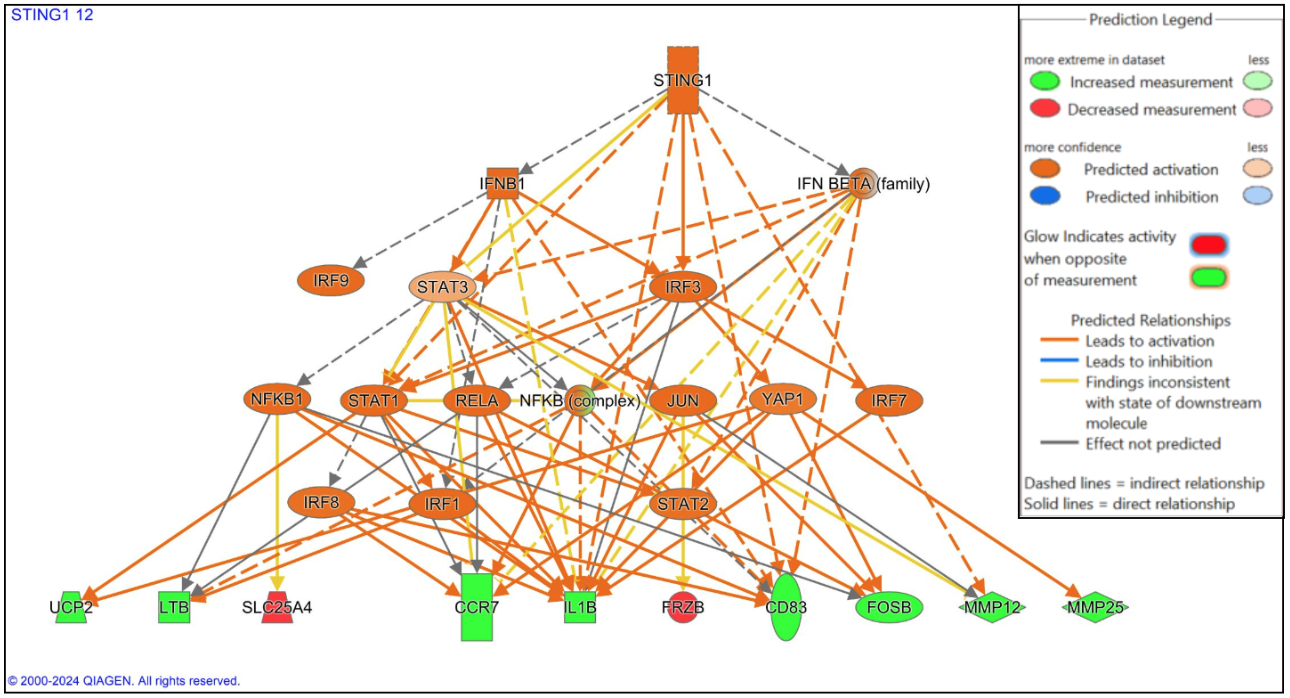
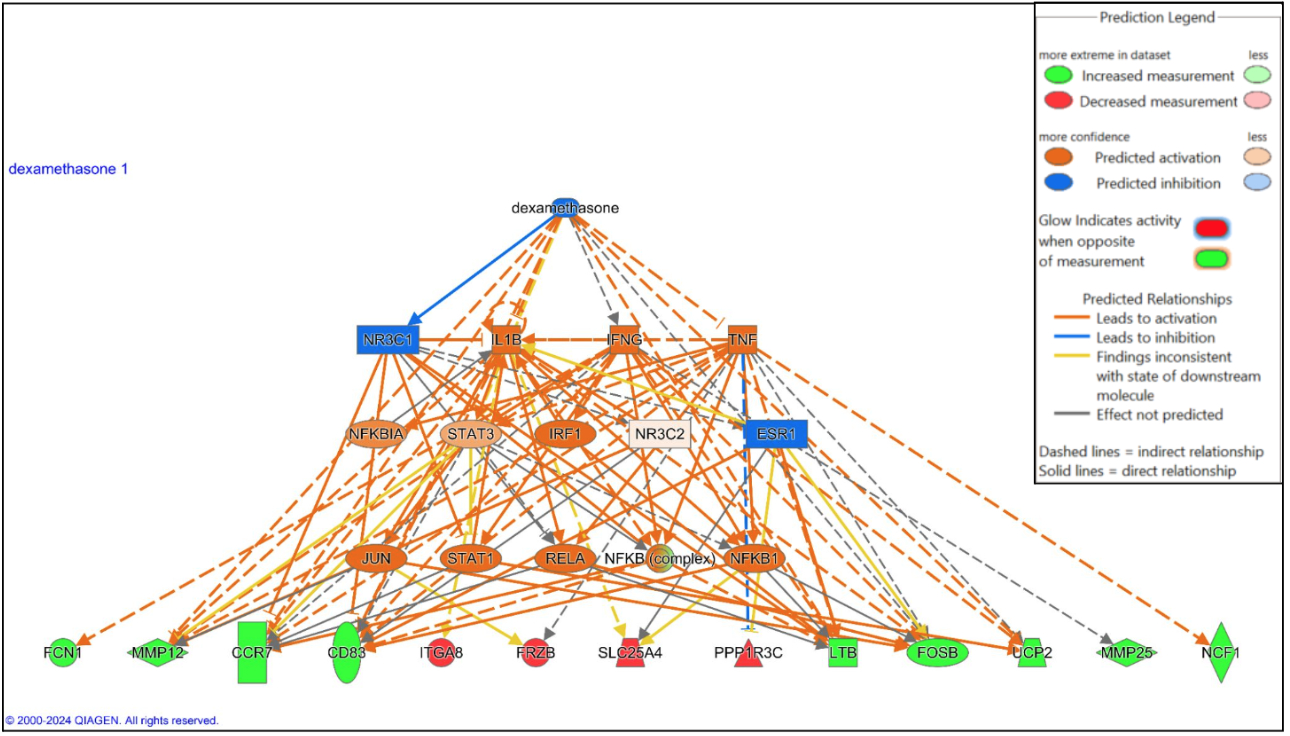
Results: Among 2,327 DEGs, 959 were upregulated and 1,368 downregulated (Table 1). FOSB (expr log ratio=1.54) is linked to MMP expression and inflammation, contributing to ECM degradation. NCF1 (expr log ratio=1.34), the p47phox subunit of NADPH oxidase, is associated with ROS production, ECM degradation, and VSMC apoptosis. IL1B (expr log ratio=1.24), a pro-inflammatory cytokine, may drive neutrophil recruitment and vascular remodeling. PPP1R3C, SPEG, and TCEAL2 were among the most downregulated genes. Key pathways included neutrophil degranulation (z=6.636), leukocyte extravasation (z=3.201), and Th2 immune response (z=4.323), linking immune activation to ECM degradation. Upstream regulators, including poly rI:rC-RNA (z=9.446), lipopolysaccharide (z=9.334), IFNG (z=8.222), TNF (z=7.970), and STING1 (z=7.509) (Figure 1), suggest chronic inflammation and innate immune activation. Dexamethasone, a potent anti-inflammatory corticosteroid, was strongly inhibited (z=-8.706) (Figure 2), indicating loss of anti-inflammatory control. This may contribute to unchecked IL1B, TNF, and IFNG signaling and increased oxidative stress via the NADPH oxidase-STING1 axis.
Conclusions: FOSB, NCF1, and IL1B may contribute to ECM degradation and AAA progression through inflammatory and oxidative stress pathways. Dexamethasone inhibition suggests impaired anti-inflammatory regulation, while NADPH oxidase-STING1 upregulation links oxidative stress to aneurysm pathogenesis. STING1 and IL1B are proposed therapeutic targets. These findings support targeted therapies to restore anti-inflammatory balance, reduce ECM degradation, and prevent AAA rupture.
Engel, Morgan
(
UCF College of Medicine
, Orlando , Florida , United States )
Voskamp, Sarah
(
UCF College of Medicine
, Orlando , Florida , United States )
Mcintosh, Mary
(
UCF College of Medicine
, Orlando , Florida , United States )
Park, Heather
(
Tanner Health System
, Carrollton , Georgia , United States )
Akins, Robert
(
Nemours Childrens Hospital
, Wilmington , Delaware , United States )
Nelson, Jennifer
(
Nemours Childrens Hospital
, Orlando , Florida , United States )
Author Disclosures:
Morgan Engel:DO NOT have relevant financial relationships
| Sarah Voskamp:DO NOT have relevant financial relationships
| Mary McIntosh:DO NOT have relevant financial relationships
| Heather Park:No Answer
| Robert Akins:DO NOT have relevant financial relationships
| Jennifer Nelson:DO NOT have relevant financial relationships