
Logo

American Heart Association

  65
  0


Final ID: Thu036

Generation of induced pluripotent stem cell lines from hypertrophic cardiomyopathy patients carrying MYBPC3 mutations

Abstract Body: Background:
Hypertrophic cardiomyopathy (HCM) is a commonly inherited heart disease characterized by thickened left ventricular walls, leading to contractile dysfunction and potentially fatal arrhythmias. For this reason, an improved understanding of its mechanisms is an important focus for cardiovascular medicine. In particular, the MYBPC3 gene has a definitive disease causation, accounting for 30 to 40% of HCM cases. To investigate this, our study characterized patient lines with MYBPC3 mutations, validating the potential of induced pluripotent stem cell-derived cardiomyocytes (iPSC-CMs) as an in vitro platform for disease modeling and drug testing to advance HCM treatment strategies.

Results:
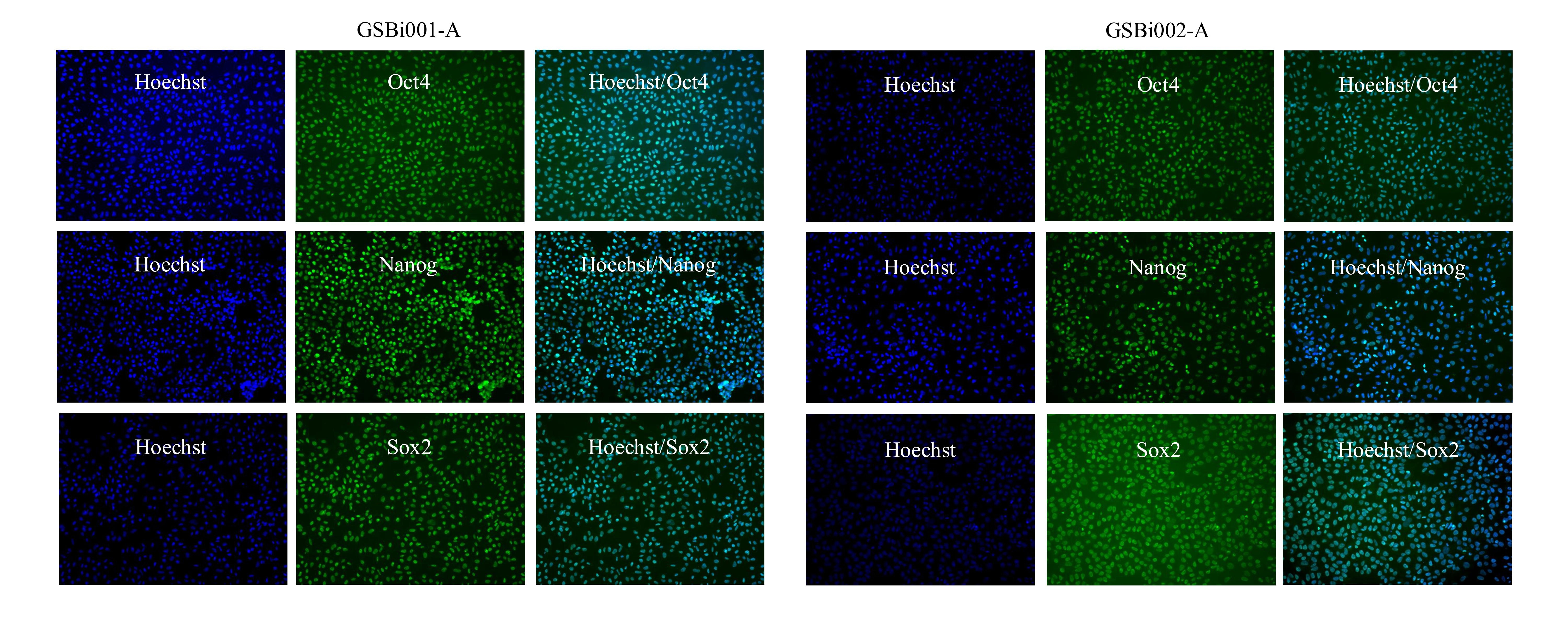
To study the MYBPC3 mutations, peripheral blood mononuclear cells (PBMCs) were isolated from two HCM patients carrying different MYBPC3 mutations and reprogrammed using Sendai viruses into two iPSC lines: GSBi001-A and GSBi002-A. From these lines, we completed reverse transcription-quantitative polymerase chain reactions (RT-qPCR) to confirm high expression levels of two pluripotency markers: NANOG and SOX2. Immunofluorescence staining showed the protein expression of three pluripotency markers: NANOG, OCT3/4, and SOX2 (Fig. 1). Karyotyping confirmed normal karyotypes. Trilineage differentiation showed differentiation into all three germ layers. Short tandem repeat analysis confirmed the origin of lines from their donors. Sanger sequencing showed the presence of MYBPC3-specific mutations. Mycoplasma detection indicated negative mycoplasma contamination in both lines. Thus, we successfully characterized two iPSC lines from two HCM patients with MYBPC3 mutations.

Conclusion:
Our model shows that patient-specific iPSC lines present a promising platform for modeling MYBPC3-associated HCM in vitro, with further applications in therapeutic development for heart disease. Future studies may seek to assess the pathophysiology of HCM.
  • Wu, Catherine  ( Stanford University , Stanford , California , United States )
  • Wu, Matthew  ( University of Alabama at Birmingham , Birmingham , Alabama , United States )
  • Zhao, Shane  ( Stanford University , Stanford , California , United States )
  • Woo, Y Joseph  ( Stanford University , Stanford , California , United States )
  • Sayed, Nazish  ( Stanford University , Stanford , California , United States )
  • Author Disclosures:
    Catherine Wu: DO NOT have relevant financial relationships | Matthew Wu: DO NOT have relevant financial relationships | Shane Zhao: DO NOT have relevant financial relationships | Y Joseph Woo: No Answer | Nazish Sayed: DO NOT have relevant financial relationships
Meeting Info:

Basic Cardiovascular Sciences 2025

2025

Baltimore, Maryland

Session Info:

Poster Session and Reception 2

Thursday, 07/24/2025 , 04:30PM - 07:00PM

Poster Session and Reception

More abstracts on this topic:
A TTN Frameshift Mutation Leads to Dysfunctional Sarcomere and Calcium Handling in iPSC-derived Atrial Cardiomyocytes

Baskaran Abhinaya, Griza Decebal, Chen Yining, Diaz Annette, Darbar Dawood, Arif Mahmud, Chen Hanna, Hill Michael, Barney Miles, Owais Asia, Sridhar Arvind, Desantiago Jaime, Shah Anish

A Focus for Improvement - Factors for Lab Adherence in a Pediatric Preventive Cardiology Program

Holsinger Hunter, Porterfield Ronna, Taylor Makenna, Dresbach Bethany, Seipel Brittany, Igwe Chukwuemeka, Alvarado Chance, Tran Andrew

More abstracts from these authors:
Biomechanical Impact of Crossing Neochords In Mitral Valve Repair Using Ex Vivo Mitral Valve Prolapse Models

Zhu Yuanjia, Huynh Chris, Wu Catherine, Park Matthew, Elde Stefan, Yajima Shin, Kim Joon Bum, Woo Y Joseph

Characterization of induced pluripotent stem cell lines from patients of African American ancestry

Wu Matthew, Wu Catherine, Zhao Shane, Zhang Jianyi, Sayed Nazish

You have to be authorized to contact abstract author. Please, Login
Not Available