
Logo

American Heart Association

  83
  1


Final ID: Wed034

A novel mechanism of pediatric DCM that recapitulates aspects of the human disease via Notch signaling: a pathway to new therapeutics?

Abstract Body: Introduction
Dilated cardiomyopathy (DCM) is one of the main causes of cardiac-related mortality in children. Current treatments for pediatric DCM patients include the medications that comprise guideline-directed medical therapy (GDMT) for adult patients. Pediatric DCM is a rare disease, making it very difficult to perform randomized placebo-controlled clinical trials (RCTs) in this population. The first RCT performed in children with heart failure studied the non-selective β-blocker, carvedilol. Importantly, although carvedilol has been shown to decrease morbidity and mortality in adults with DCM, the results of the trial were neutral in children, even though circulating catecholamine (Isoproterenol (ISO), which stimulates the β-adrenergic receptor, are increased in children with DCM. Additionally, the lack of an animal model and limited understanding of disease mechanisms has impaired the development of age-specific therapies.
Our lab previously reported that serum-circulating proteins from pediatric DCM patients can promote pathologic remodeling in primary cardiomyocytes, and showed that circulating secreted frizzled related protein 1 (sFRP1) is increased in pediatric DCM and causes cardiomyocyte stiffness. Based on these, we hypothesize that sFRP1, in the presence of increased catecholamines, promotes DCM in a neonatal rat model.
Methods
In vitro and In vivo approaches were used. Neonatal rat ventricular myocytes and neonatal rats were injected intraperitoneally with vehicle control, ISO +/- sFRP1. We evaluated cardiac function, performed bulk and single nuclei RNA-sequencing, metabolomics, and measured tissue stiffness by Atomic Force Microscopy.
Results
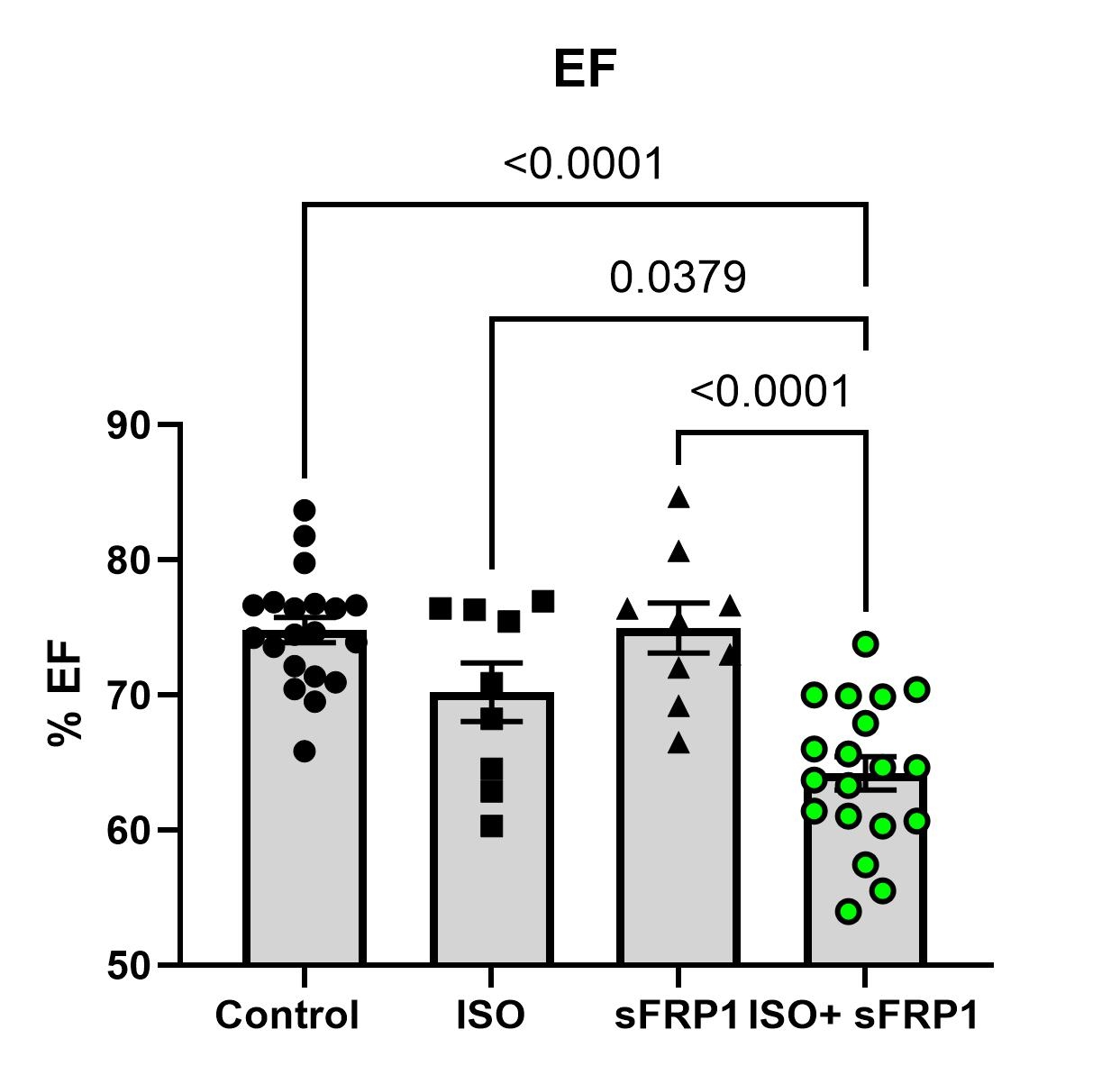
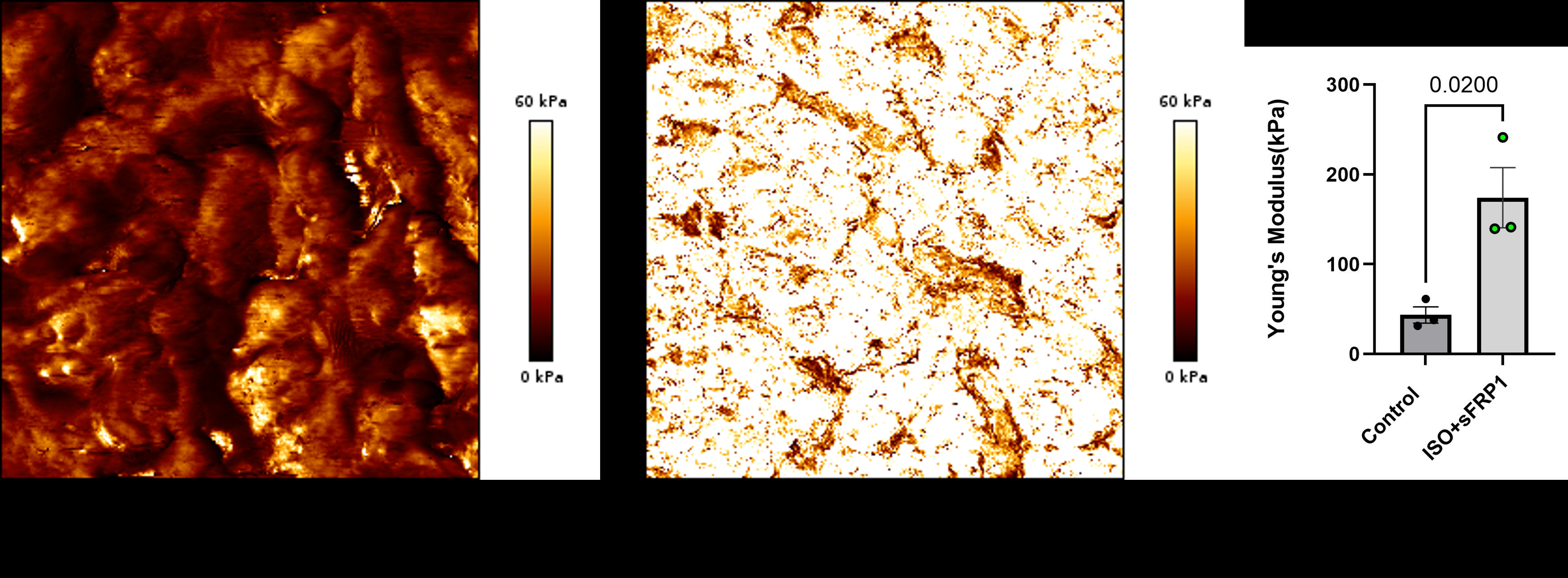
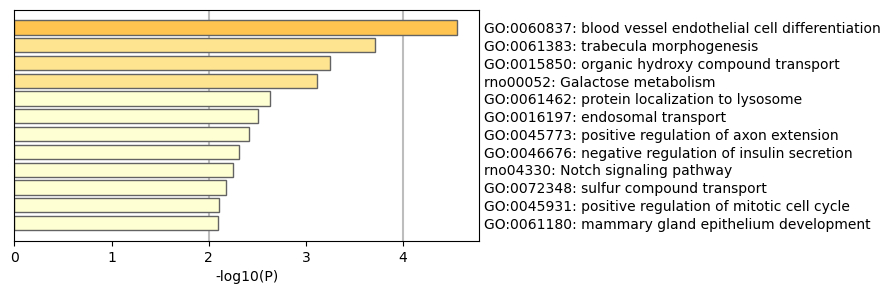
Our results show that sFRP1+ISO promotes DCM (Figure 1), which is associated with increased stiffness (Figure 2) but not fibrosis or hypertrophy. Importantly, we also observed increased stiffness in pediatric DCM hearts. Also data from our in vitro and in vivo experiments (including next generation sequencing) suggest ISO+sFRP1 activates Notch (Figure 3) and promote pathologic remodeling in a novel, inter-dependent manner similar to data from human pediatric DCM.
Conclusion
For the very first time and per this data we have created an animal model of pediatric DCM. These results also suggest a unique and translational age-specific mechanism of disease and provide a powerful opportunity to explore potential therapeutic targets in pediatric DCM.
  • Nyarko, Obed  ( University of Colorado Denver , Aurora , Colorado , United States )
  • Sucharov, Carmen  ( UNIVERSITY OF COLORADO Anschutz , Aurora , Colorado , United States )
  • Author Disclosures:
    Obed Nyarko: DO NOT have relevant financial relationships | Carmen Sucharov: No Answer
Meeting Info:

Basic Cardiovascular Sciences 2025

2025

Baltimore, Maryland

Session Info:

Poster Session and Reception 1

Wednesday, 07/23/2025 , 04:30PM - 07:00PM

Poster Session and Reception

More abstracts on this topic:
Acceptability and Gain of Knowledge of Community Educational Tools About Rheumatic Heart Disease Integrated With Screening In Low-Income Settings

Abrams Jessica, Nunes Maria, Diniz Marina, Fraga Lucas, Paula Luiza, Coelho Cecilia, Tacuri Chavez Luz Marina, Lemos Larissa, Correia Julliane, Ribeiro Antonio, Nascimento Bruno, Sable Craig, Spaziani Alison, Zuhlke Liesl, Cardoso Clareci, Vinhal Wanessa, Ribeiro Isabely, Oliveira Kaciane, Amaral Ingred Beatriz

A Multicenter Friedreich Ataxia Registry Identifies Posterior Wall Thickness as a Predictor of Major Adverse Cardiac Events

Lin Kimberly, Johnson Jonathan, Mccormack Shana, Lynch David, Tate Barbara, Feng Yixuan, Huang Jing, Mercer-rosa Laura, Dedio Anna, Mcsweeney Kara, Fournier Anne, Yoon Grace, Payne Ronald, Cripe Linda, Patel Aarti, Niaz Talha

You have to be authorized to contact abstract author. Please, Login
Not Available