Mitochondrial Maladaptation at the Crossroads of Heart Failure: A Tale of Two Phenotypes
Abstract Body: Background: The heart is highly energy-dependent, with mitochondria occupying nearly one-third of cardiac myocyte volume to sustain contraction. Heart failure with reduced ejection fraction (HFrEF) and preserved ejection fraction (HFpEF) are distinct phenotypes, yet both exhibit mitochondrial maladaptation. However, the precise nature of these metabolic disruptions remains unclear.
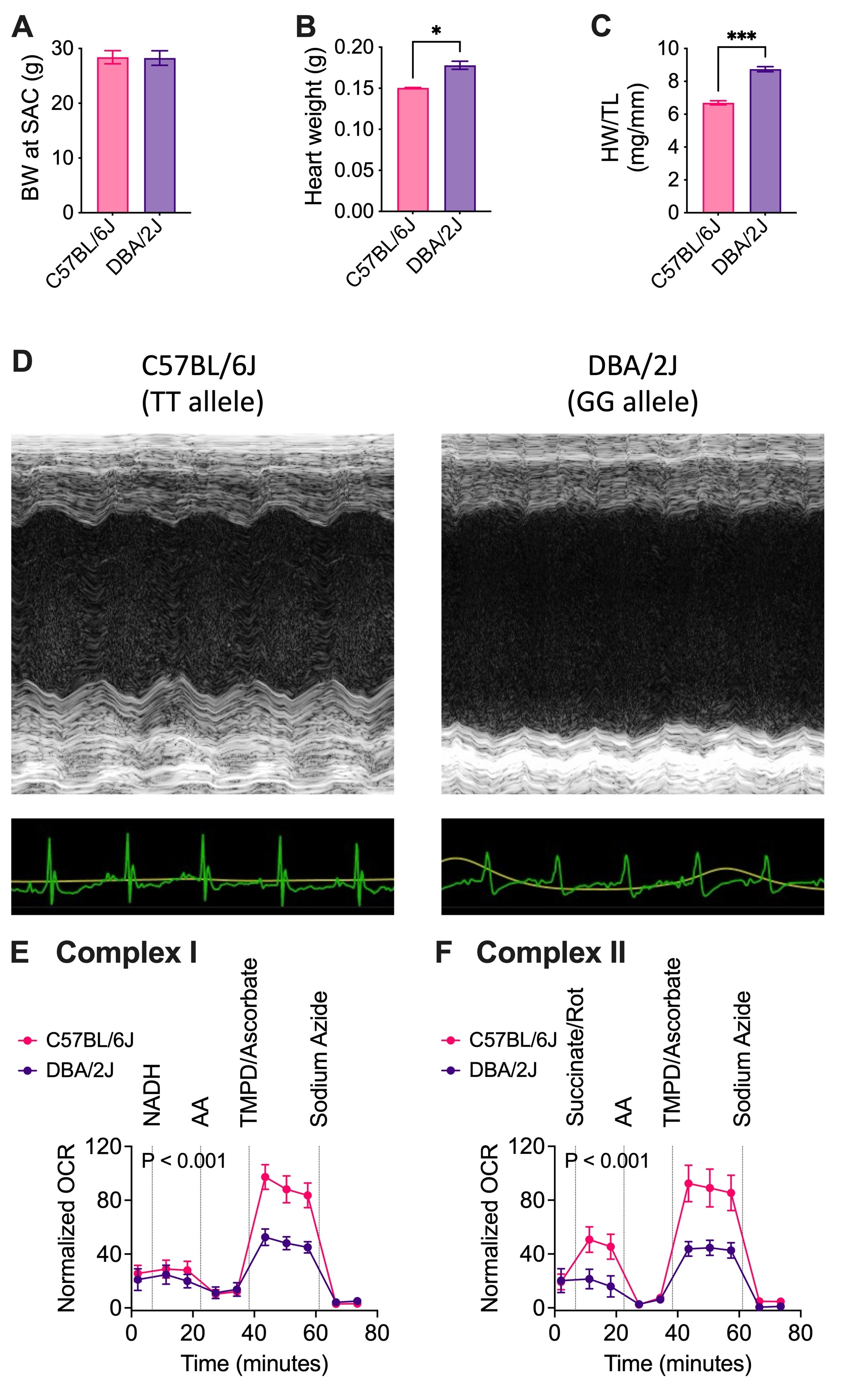
Approach: HFrEF – Genetic Determinants of Mitochondrial Dysfunction: Using the Hybrid Mouse Diversity Panel (HMDP) and Diversity Outbred strains, we identified a genetic locus on chromosome 17 containing LRPPRC, a key regulator of mitochondrial DNA (mtDNA)-encoded gene expression. Mice with the GG allele at this locus had lower LRPPRC protein levels, reduced mt-mRNA expression, and greater cardiac hypertrophy. To test causality, we used C57BL/6J and DBA/2J strains, which differ at this locus, and induced myocardial infarction via LAD ligation.
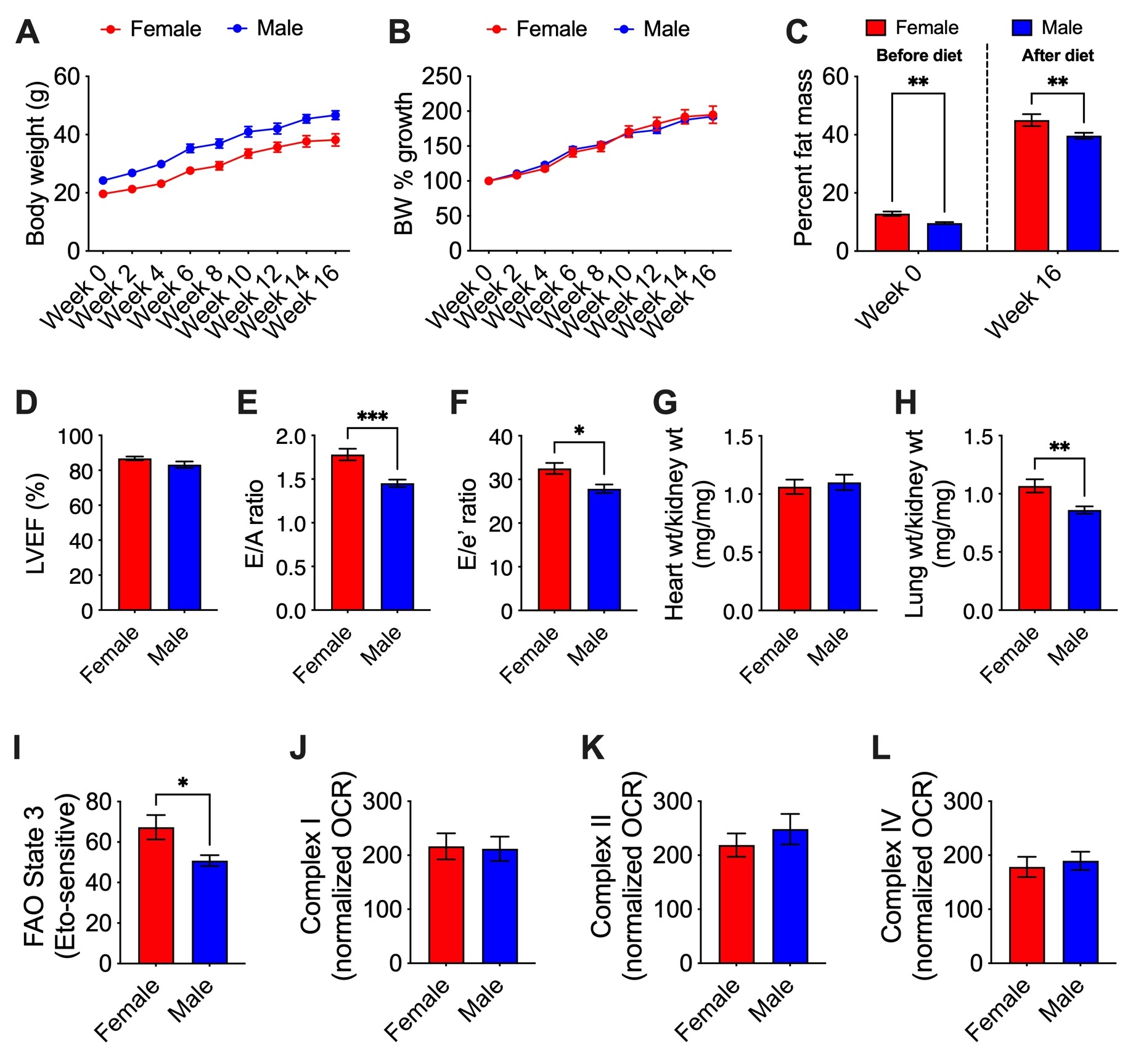
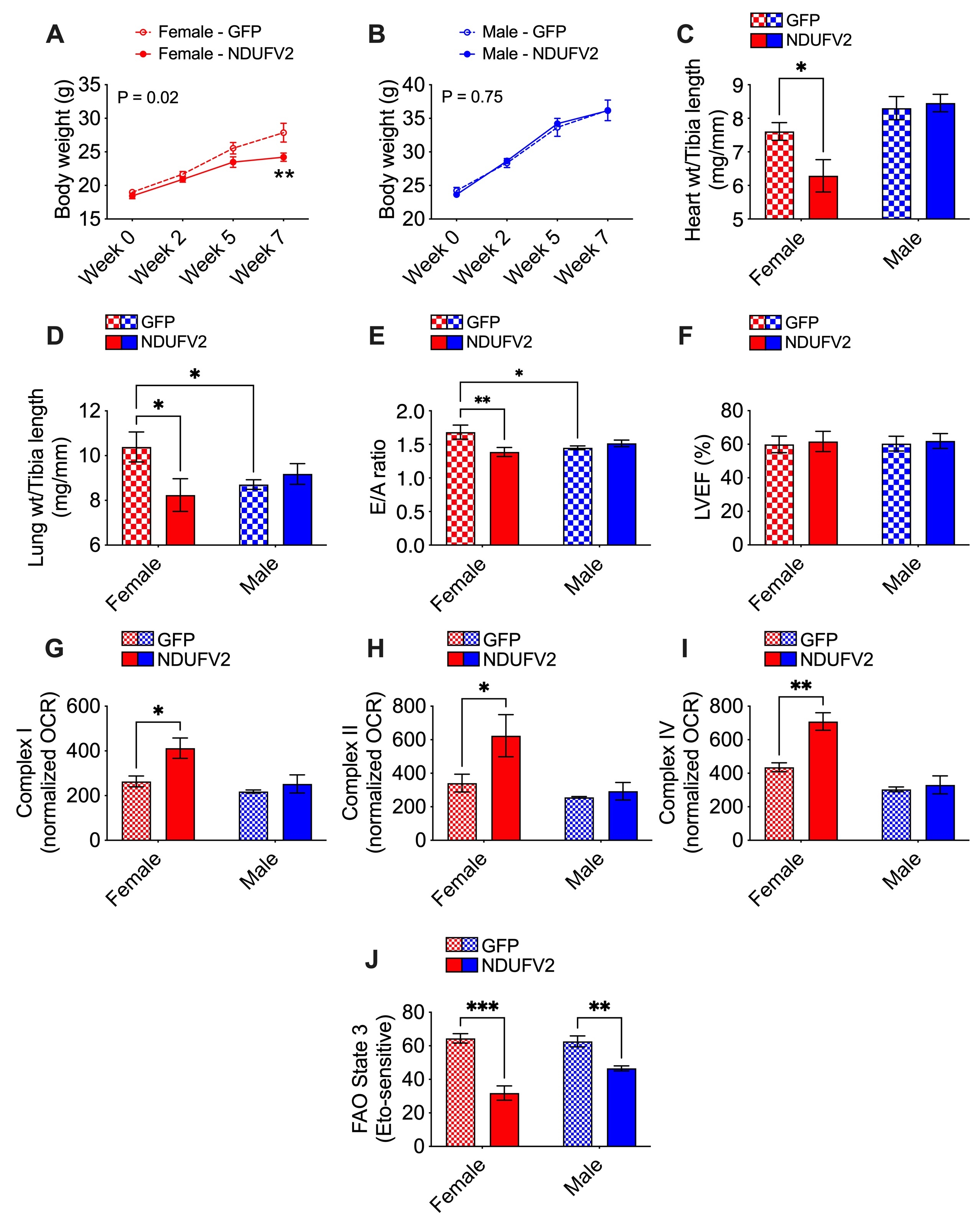
HFpEF – Sex-Specific Cardioprotection via Adipose NDUFV2: Our HMDP analyses revealed sex-biased HFpEF progression and a potential female-specific protective role of NDUFV2, an adipose gene regulating mitochondrial metabolism. Our prior work showed that NDUFV2 overexpression protects females from obesity-induced metabolic dysfunction. We first established a baseline HFpEF model using a high-fat diet (HFD) + L-NAME (eNOS inhibitor) in both sexes of C57BL/6J mice. We then assessed HFpEF progression in male and female mice with adipose-targeted NDUFV2 overexpression.
Methods: Cardiac function was monitored via echocardiography, followed by mitochondrial bioenergetics, gene expression and protein quantification.
Results: HFrEF: DBA/2J (GG allele) mice exhibited lower LRPPRC, leading to reduced mtDNA- and nuclear-encoded OXPHOS gene expression and protein levels, severe heart failure, and reduced mitochondrial respiration.
HFpEF: Females showed greater diastolic dysfunction and lung edema, with elevated fatty acid oxidation (FAO) but unchanged respiration capacities. In contrast, female NDUFV2-overexpressing mice had lower body mass, reduced heart/lung weights, and improved diastolic function, with no changes in males. Notably, FAO was significantly reduced in both sexes of NDUFV2 groups, while respiration capacities were elevated exclusively in female NDUFV2 mice.
Conclusion: HFrEF is driven by impaired respiratory capacity, whereas HFpEF exhibits increased FAO. Restoring mitochondrial balance may offer therapeutic strategies for both conditions.
Chella Krishnan, Karthickeyan
(
University of Cincinnati
, Cincinnati , Ohio , United States )
Frazier, James
(
University of Cincinnati
, Cincinnati , Ohio , United States )
He, Xingyu
(
University of Cincinnati
, Cincinnati , Ohio , United States )
Mattam, Ushodaya
(
University of Cincinnati
, Cincinnati , Ohio , United States )
Talari, Noble Kumar
(
University of Cincinnati
, Cincinnati , Ohio , United States )
Rao Sathyanarayana, Ashish
(
University of Cincinnati
, Cincinnati , Ohio , United States )
Wang, Yigang
(
University of Cincinnati
, Cincinnati , Ohio , United States )
Author Disclosures:
Karthickeyan Chella Krishnan:DO NOT have relevant financial relationships
| James Frazier:No Answer
| Xingyu He:No Answer
| Ushodaya Mattam:No Answer
| Noble Kumar Talari:No Answer
| Ashish Rao Sathyanarayana:No Answer
| Yigang Wang:No Answer