
Logo

American Heart Association

  73
  0


Final ID: Thu093

Comparative Single-Cell Atlas of the Vertebrate Cardiac Conduction System

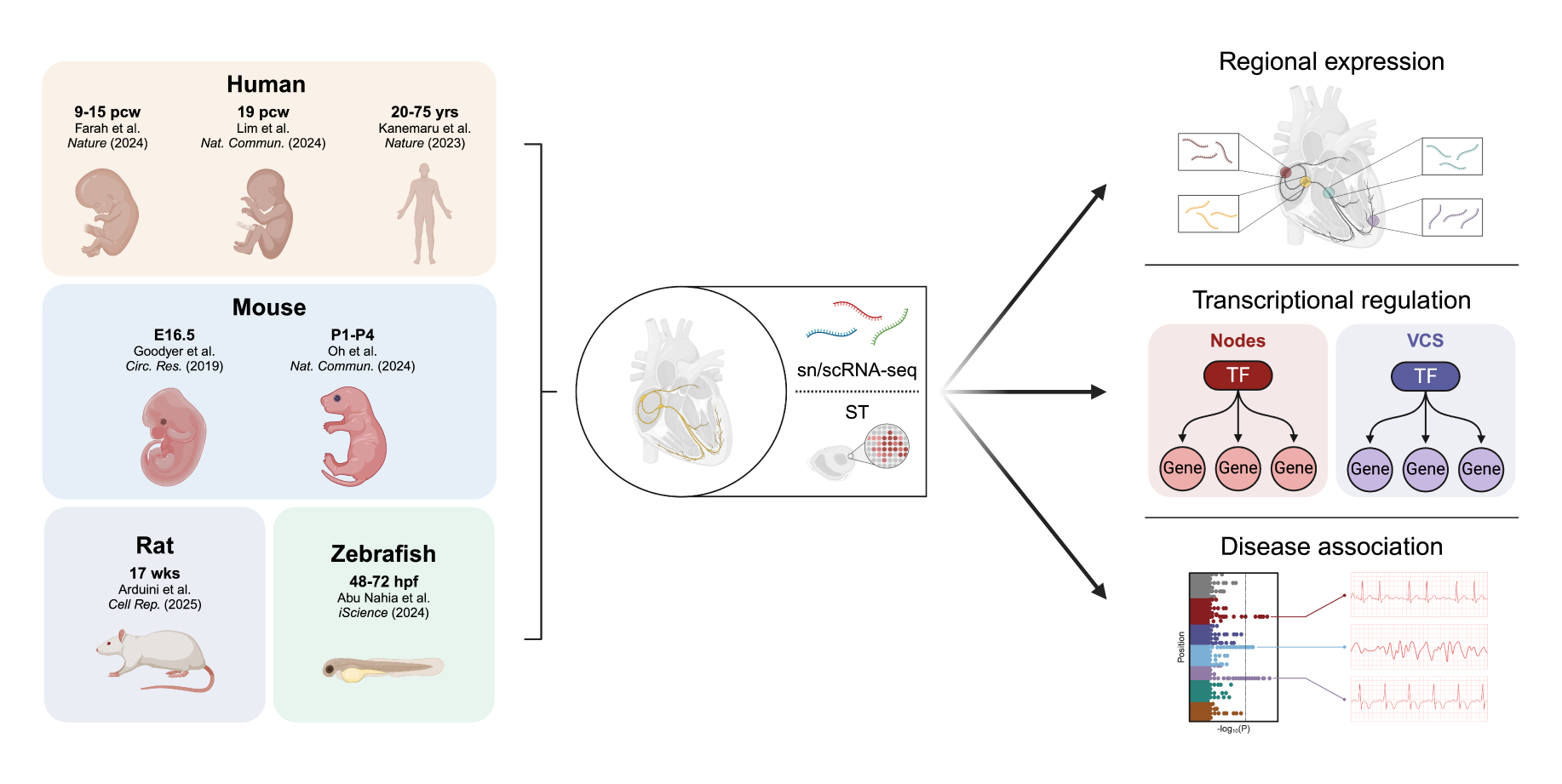
Abstract Body: The development and function of cardiac conduction system (CCS) components are governed by specialized and unique gene expression programs. Although this transcriptional heterogeneity has been studied in mice, how these molecular profiles compare to those in humans remains unclear. Additionally, transcriptional changes during CCS maturation are not well understood. Here, we examine the conservation and divergence of CCS gene programs across species and development.

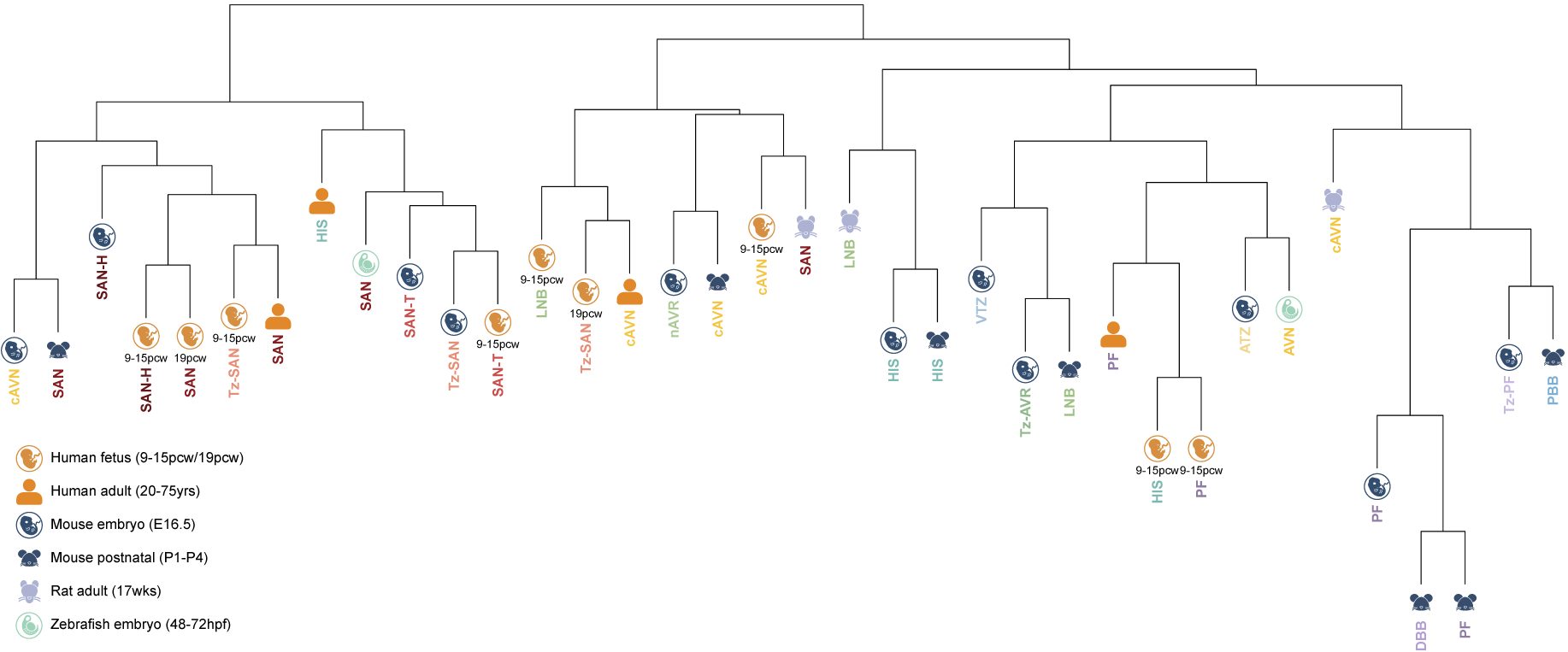
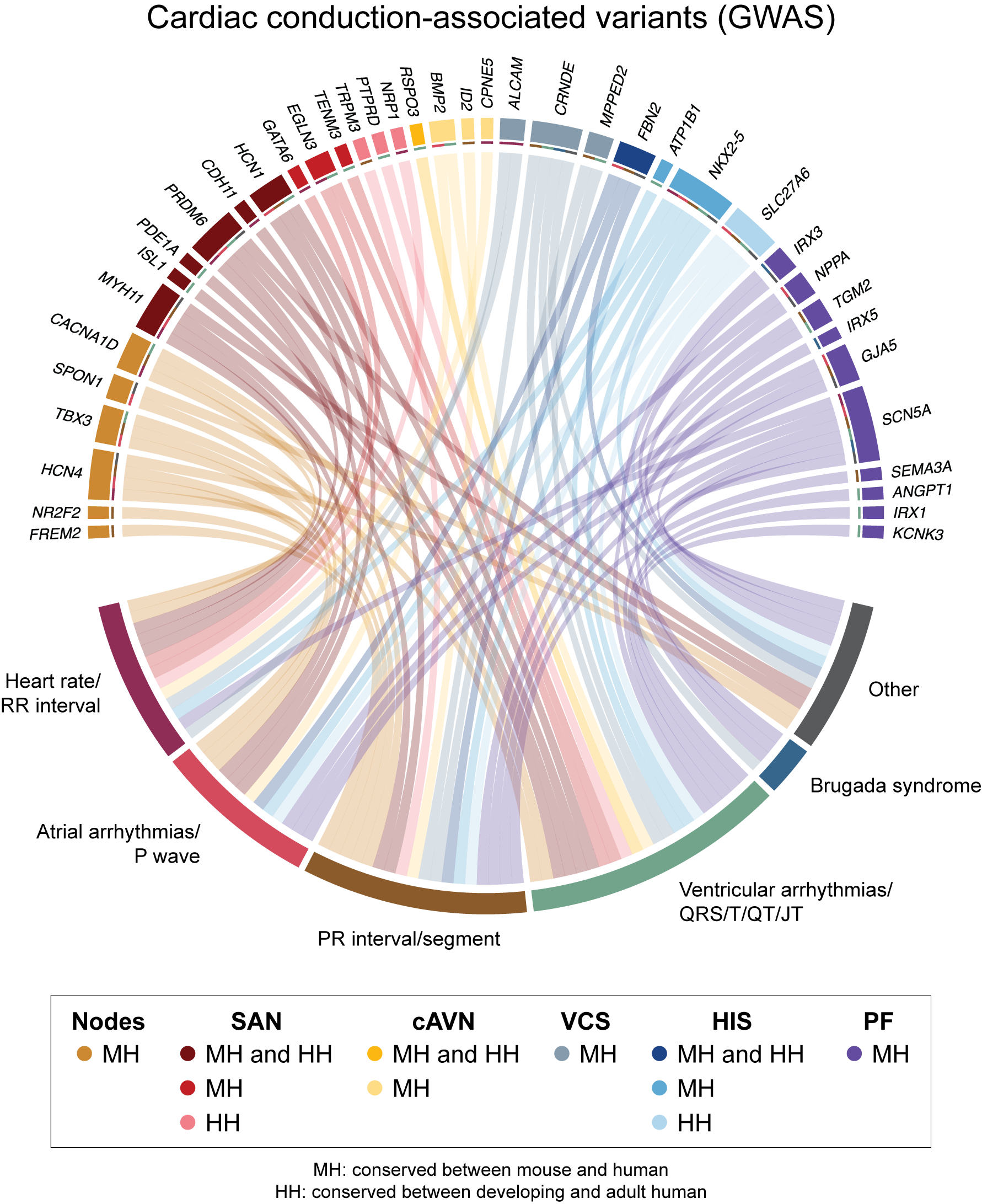
To achieve this, CCS cells were isolated and analyzed using published single-cell/nucleus RNA sequencing and spatial transcriptomic data from mouse (embryonic/postnatal) and human (fetal/adult) hearts. As expected, species-conserved markers of broad CCS zones included pacemaker ion channels in the nodal regions and fast-conducting ion channels in the ventricular conduction system, as well as many genes newly implicated in the CCS. Additionally, we found species-conserved markers specific to individual CCS components, such as GNAO1 and CDH11 in the sinoatrial node; RSPO3 and BMP2 in the atrioventricular node; FBN2 in the His bundle; and IRX1 and IRX2 in Purkinje fibers. Our analyses also identified species- and stage-specific markers, reflecting evolutionary divergence and developmental changes in the CCS. These included functional genes such as ion channels, as well as signaling molecules and transcription factors that may regulate CCS development and maturation. Further examination of rat and zebrafish sinoatrial and atrioventricular nodes revealed a core set of vertebrate-conserved markers, as well as those conserved within mammals or rodents only. We then reconstructed gene regulatory networks and identified conserved transcriptional mechanisms that establish CCS heterogeneity. Moreover, we examined associations of common and rare genetic variants of conserved CCS genes with conduction-related traits. This analysis identified significant associations of 55 conserved CCS genes with arrhythmias and electrophysiological measures, suggesting functional and translational relevance. To enhance data accessibility, we launched an interactive web application (ccsatlas.com) that visualizes CCS gene expression across species and development.

Our study provides a systematic comparative analysis of CCS transcriptional heterogeneity, identifying conserved gene programs relevant to human physiology and elucidating the molecular basis for species- and stage-dependent differences in CCS function.
  • Bakr, Marwan  ( University of Ottawa Heart Institute , Ottawa , Ontario , Canada )
  • Dababneh, Saif  ( University of British Columbia , Vancouver , British Columbia , Canada )
  • Tibbits, Glen  ( Simon Fraser University , Burnaby , British Columbia , Canada )
  • Oh, Yena  ( University of Ottawa Heart Institute , Ottawa , Ontario , Canada )
  • Kim, Kyoung-han  ( University of Ottawa Heart Institute , Ottawa , Ontario , Canada )
  • Author Disclosures:
    Marwan Bakr: DO NOT have relevant financial relationships | Saif Dababneh: DO NOT have relevant financial relationships | Glen Tibbits: No Answer | Yena Oh: No Answer | Kyoung-Han Kim: No Answer
Meeting Info:

Basic Cardiovascular Sciences 2025

2025

Baltimore, Maryland

Session Info:

Poster Session and Reception 2

Thursday, 07/24/2025 , 04:30PM - 07:00PM

Poster Session and Reception

More abstracts on this topic:
More abstracts from these authors:
Antagonistic and Cooperative Dynamics of Irx3 and Irx4 in Ventricular Compaction

Abid Rimshah, Puviindran Vijitha, Van Eede Matthijs, Henkelman Mark, Miquerol Lucile, Bruneau Benoit, Hui Chi-chung, Kim Kyoung-han, Oh Yena, Liu Wei Fan, Bakr Marwan, Yin Wen Chi, Zhou Yu-qing, Zhang Xiaoyun, Kim Riyoun, Mo Rong

You have to be authorized to contact abstract author. Please, Login
Not Available