
Integrating Pathway and Protein Network Analysis to Uncover Novel Insights into the Pathophysiology of Congenital Heart Disease
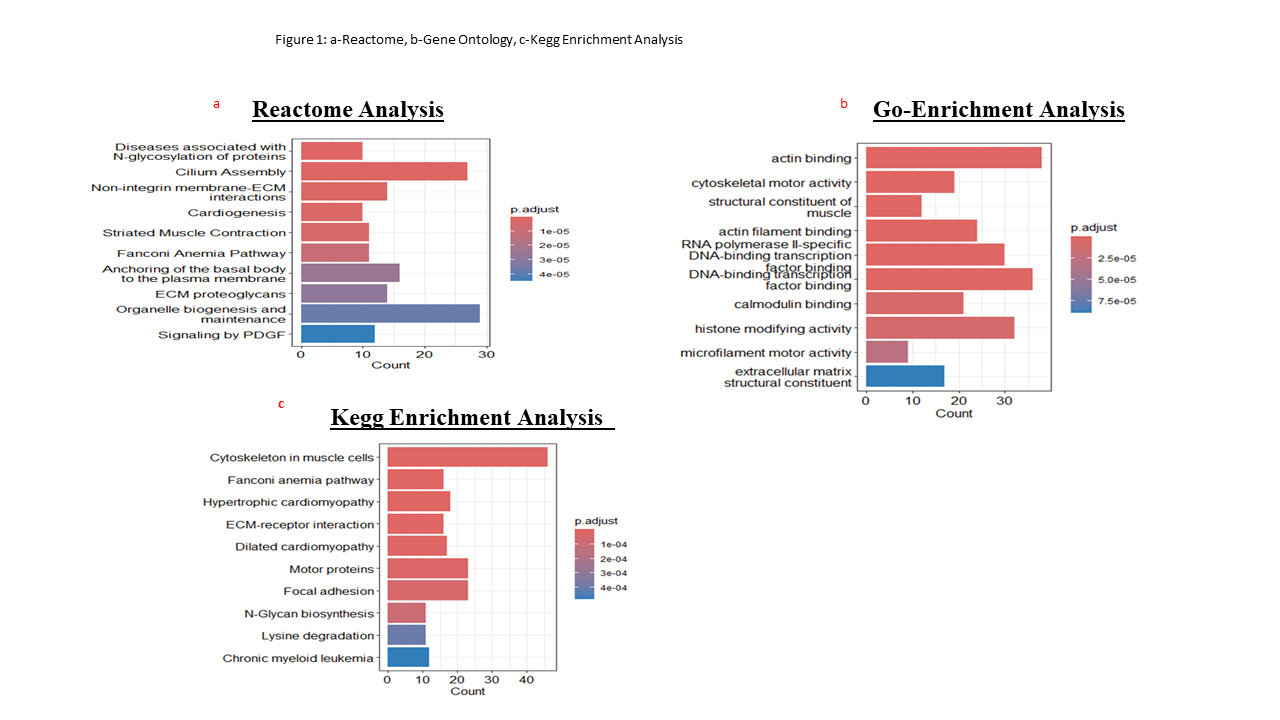
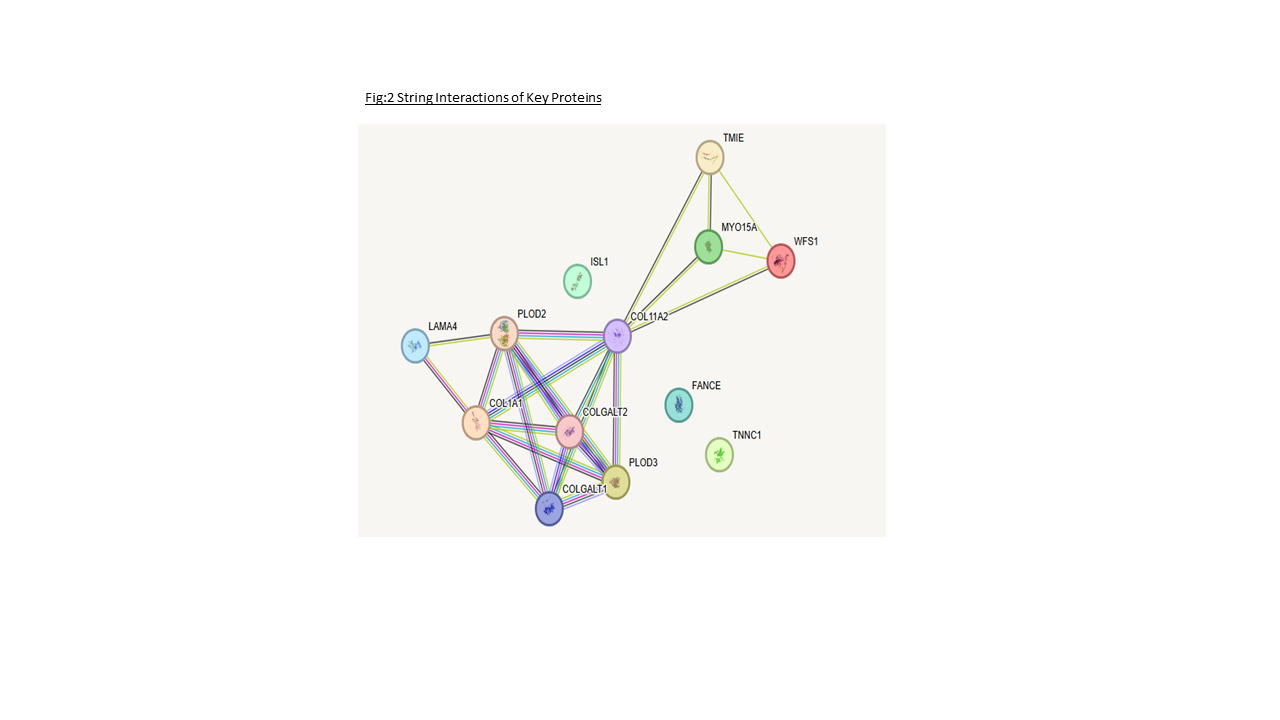
Abstract Body: Background: Congenital heart disease (CHD) exhibits significant genetic variability. Advancements in exome sequencing have identified several disease-associated genes, yet the precise roles of many genes are still not fully understood. We hypothesize that common molecular determinants underlie CHD, with different genes forming shared functional modules. Identifying these modules requires a comprehensive and integrative analysis approach, to get novel insights into disease mechanisms, and causal connections between biological processes and CHD pathogenesis. Methods: We used exome-sequencing data on 300 CHD patients to identify disease-associated genes linked to CHD phenotypes whose functional roles are not well characterized. Network based analysis was performed to investigate the functional relationships among these genes and to explore protein-protein interaction (PPI) networks. Functional enrichment analysis was conducted with Gene Ontology (GO), Kyoto Encyclopedia of Genes and Genomes (KEGG), and Reactome. All analysis was done in R using ClusterProfiler and STRING packages to integrate and identify common pathways and strongly connected functional modules within the PPI networks. Results: GO enrichment analysis identified significant enrichment in biological processes such as cytoskeletal motor activity ((GO: 0003774; p = 6.67E-11), actin filament binding; (GO: 0051015; p = 9.53E-10), and DNA-binding transcription factor interactions (GO: 0140297; p = 1.22E-08), which highlight key events in cardiac structure and gene regulation. KEGG pathway analysis validated the process of cytoskeletal regulation in muscle cells (hsa04820, p = 3.74E-22) to CHD. Reactome pathways such as cilium assembly (R-HAS 561733, p = 9.05E-10) and striated muscle contraction (R-HSA 390522; p = 1.70E-08) were highlighted. PPI network analysis identified ten hub proteins—MYO15A, VCL, TGFB1, PLOD3, COL1A1, WFS1, FANCE, LAMA4, ISL1, and TNNC1—which form strongly connected modules involved in cytoskeletal remodeling, extracellular matrix integrity, and transcriptional regulation. Notably, MYO15A appears to be a key protein which may be an underexplored genetic contributor to CHD. Conclusion: Integrative network-based approaches can uncover novel functional roles of underexplored disease genesinCHD. These findings offer new insights and provide a basis for future experimental validation and a potential to inform diagnostic and therapeutic strategies for this complex disease.
Botwe, Jermay
( Baylor College of Medicine
, Houston
, Texas
, United States
)
Adhikari, Kashika
( Baylor College of Medicine
, Houston
, Texas
, United States
)
Heinle, Jeffrey
( Baylor College of Medicine
, Houston
, Texas
, United States
)
Wadhwa, Lalita
( Baylor College of Medicine
, Houston
, Texas
, United States
)
Author Disclosures:
Jermay Botwe:No Answer
| Kashika Adhikari:No Answer
| Jeffrey Heinle:No Answer
| Lalita Wadhwa:DO NOT have relevant financial relationships