
Logo

American Heart Association

  61
  0


Final ID: Wed100

Multimodal AI/ML for discovering novel biomarkers and predicting disease using multi-omics profiles of patients with cardiovascular diseases

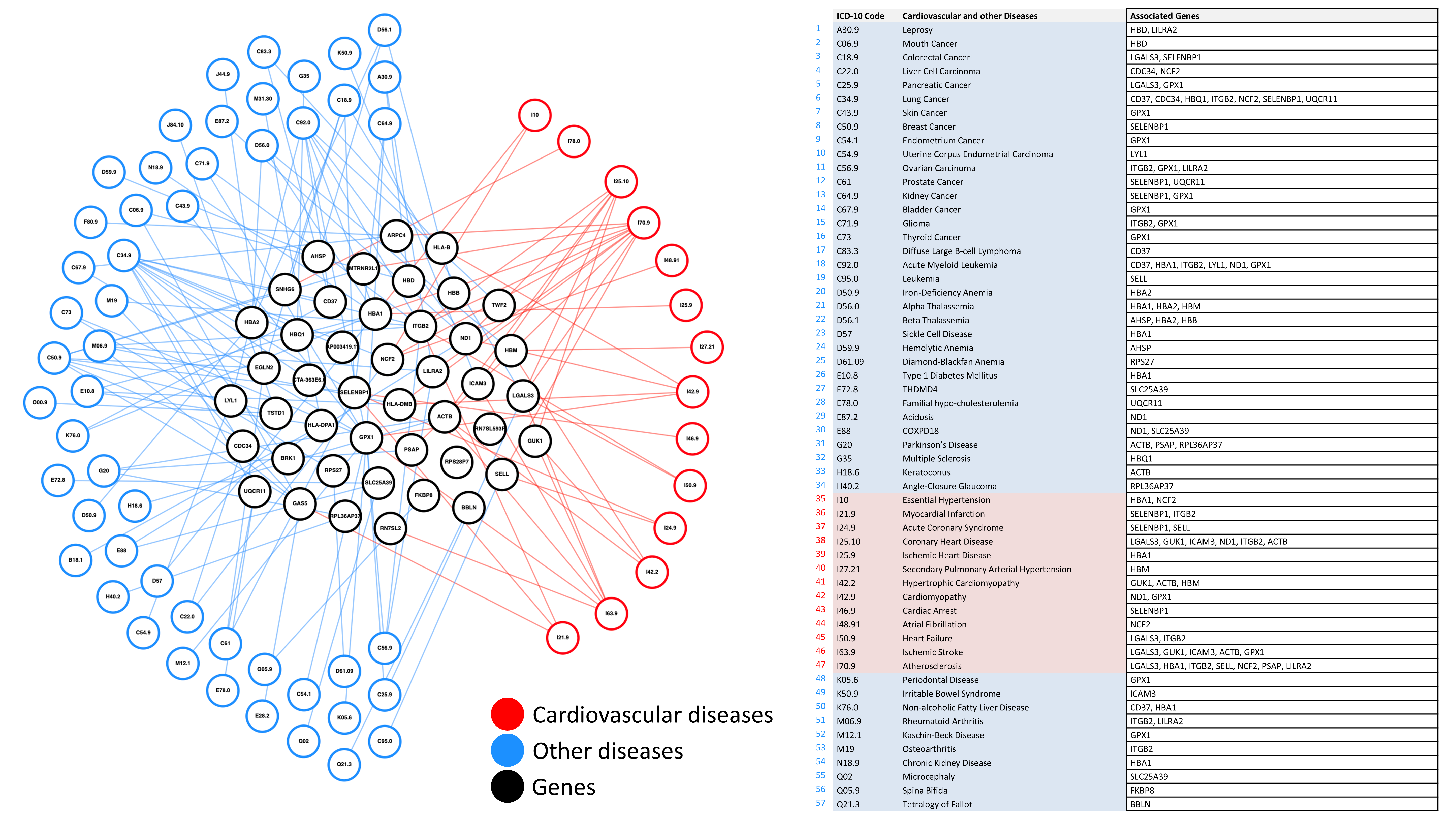
Abstract Body: Cardiovascular diseases (CVDs) are complex, multifactorial conditions that require personalized assessment and treatment. Advancements in multi-omics technologies, most importantly whole-genome sequencing (WGS) and RNA sequencing (RNA-seq) have provided translational researchers with a comprehensive view of the human genome and transcriptome. The efficient synthesis and analysis of multimodal data that characterizes genetic variants alongside expression patterns linked to emerging phenotypes, can reveal novel biomarkers and enable the segmentation of patient populations based on personalized risk factors. In this study, we present a cutting-edge and groundbreaking methodology rooted in the integration of traditional bioinformatics, classical statistics, and multimodal artificial intelligence (AI) and machine learning (ML) techniques. Our approach has the potential to uncover the intricate mechanisms underlying CVD, enabling patient-specific risk and response profiling. We sourced transcriptomic expression data and single nucleotide polymorphisms (SNPs) from both CVD patients and healthy controls. By integrating these multi-omics datasets with clinical and demographic information, we generated patient-specific profiles. Utilizing our robust feature selection approach, we identified a signature of transcriptomic features and SNPs that are effective predictors of CVD. Differential expression analysis, combined with minimum redundancy maximum relevance feature selection, highlighted biomarkers that explain the disease phenotype. This approach prioritizes both biological relevance and efficiency in ML. We employed Combination Annotation Dependent Depletion (CADD) scores and allele frequencies to identify variants with pathogenic characteristics in CVD patients. Classification models trained on this signature demonstrated high-accuracy predictions for CVD. The best performing of these models was an XGBoost classifier optimized via Bayesian hyperparameter tuning, which was able to correctly classify all patients in our test dataset. Using SHapley Additive exPlanations, we created risk assessments for patients, offering further contextualization of these predictions in a clinical setting. A comprehensive literature review revealed that a substantial portion of the diagnostic biomarkers identified have previously been associated with CVD. Summarized results are presented in the figure attached.

  • Degroat, William  ( RUTGERS INSTITUTE FOR HEALTH , New Brunswick , New Jersey , United States )
  • Narayanan, Rishabh  ( RUTGERS INSTITUTE FOR HEALTH , New Brunswick , New Jersey , United States )
  • Peker, Elizabeth  ( RUTGERS INSTITUTE FOR HEALTH , New Brunswick , New Jersey , United States )
  • Zeeshan, Saman  ( UMKC School of Medicine , Kansas City , Missouri , United States )
  • Liang, Bruce  ( UConn Health , Farmington , Connecticut , United States )
  • Ahmed, Zeeshan  ( RUTGERS INSTITUTE FOR HEALTH , New Brunswick , New Jersey , United States )
  • Author Disclosures:
    William DeGroat: DO NOT have relevant financial relationships | Rishabh Narayanan: No Answer | Elizabeth Peker: No Answer | Saman Zeeshan: DO NOT have relevant financial relationships | Bruce Liang: No Answer | Zeeshan Ahmed: DO NOT have relevant financial relationships
Meeting Info:

Basic Cardiovascular Sciences 2025

2025

Baltimore, Maryland

Session Info:

Poster Session and Reception 1

Wednesday, 07/23/2025 , 04:30PM - 07:00PM

Poster Session and Reception

More abstracts on this topic:
Abdominal Circumference and Coronary Calcium Score in a Healthy Nonobese Brazilian Cohort: ELSA-Brasil Cohort Analysis

Correa Fabiano Ronaldo, Bittencourt Marcio, Bosco Mendes Thiago, Romero-nunez Carlos, Generoso Giuliano, Staniak Henrique, Foppa Murilo, Santos Raul, Lotufo Paulo, Bensenor Isabela

A machine learning model for individualized risk prediction of ischemic heart disease in people with hypertension in Thailand

Sakboonyarat Boonsub, Poovieng Jaturon, Rangsin Ram

More abstracts from these authors:
Evidence of sustained monocytosis during chronic stroke recovery

Verma Rajkumar, Dimauro Sharon, Gamiotea Turro Daylin, Yadav Sanjeev, Mittal Sanjay, Zhou Beiyan, Liang Bruce

Discovering novel biomarkers and predicting cardiovascular disease using AI/ML techniques for precision medicine

Ahmed Zeeshan

You have to be authorized to contact abstract author. Please, Login
Not Available