Multimodality Imaging–Based Phenotyping and Risk Stratification in Apical Hypertrophic Cardiomyopathy: Prognostic Implications of Right Ventricular Involvement
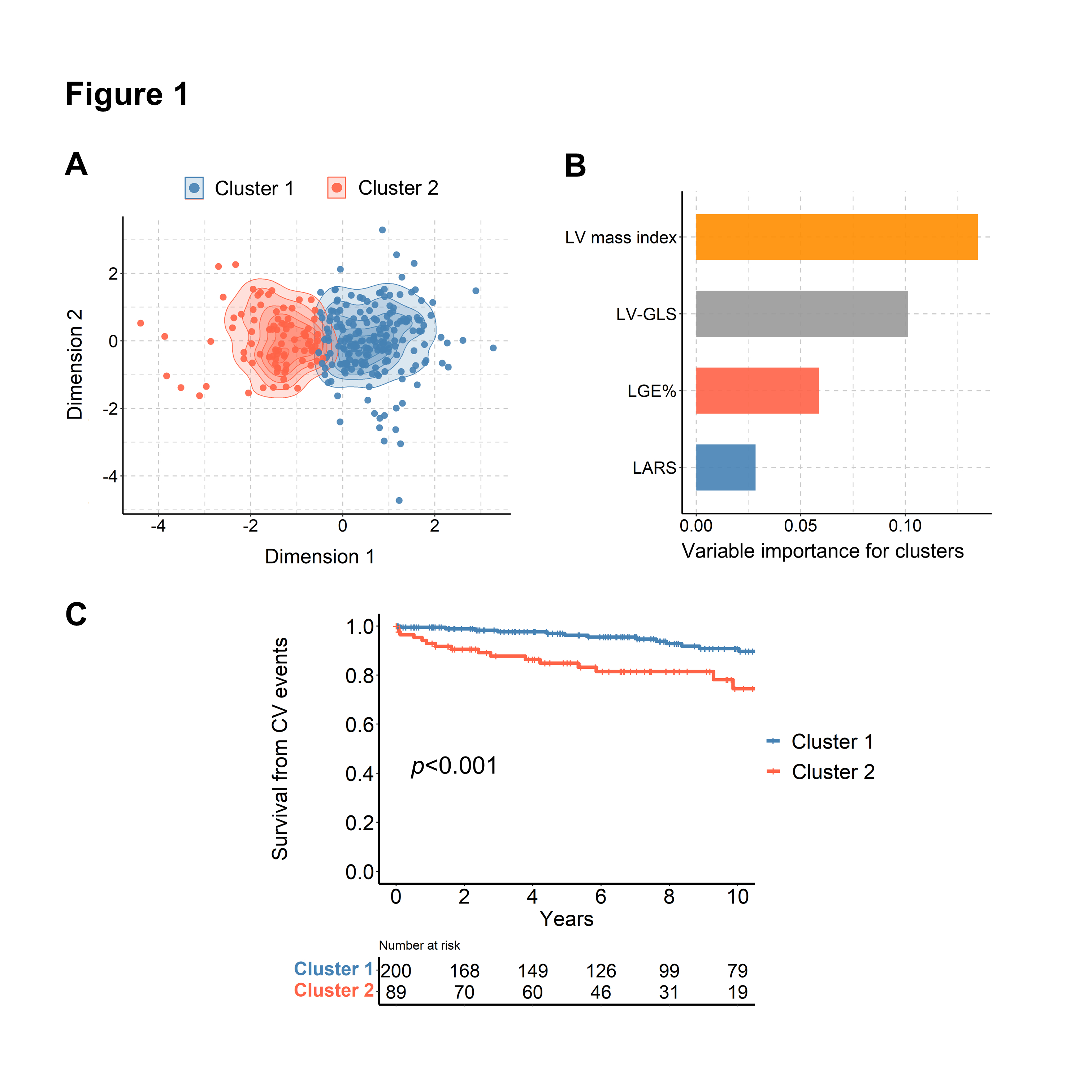
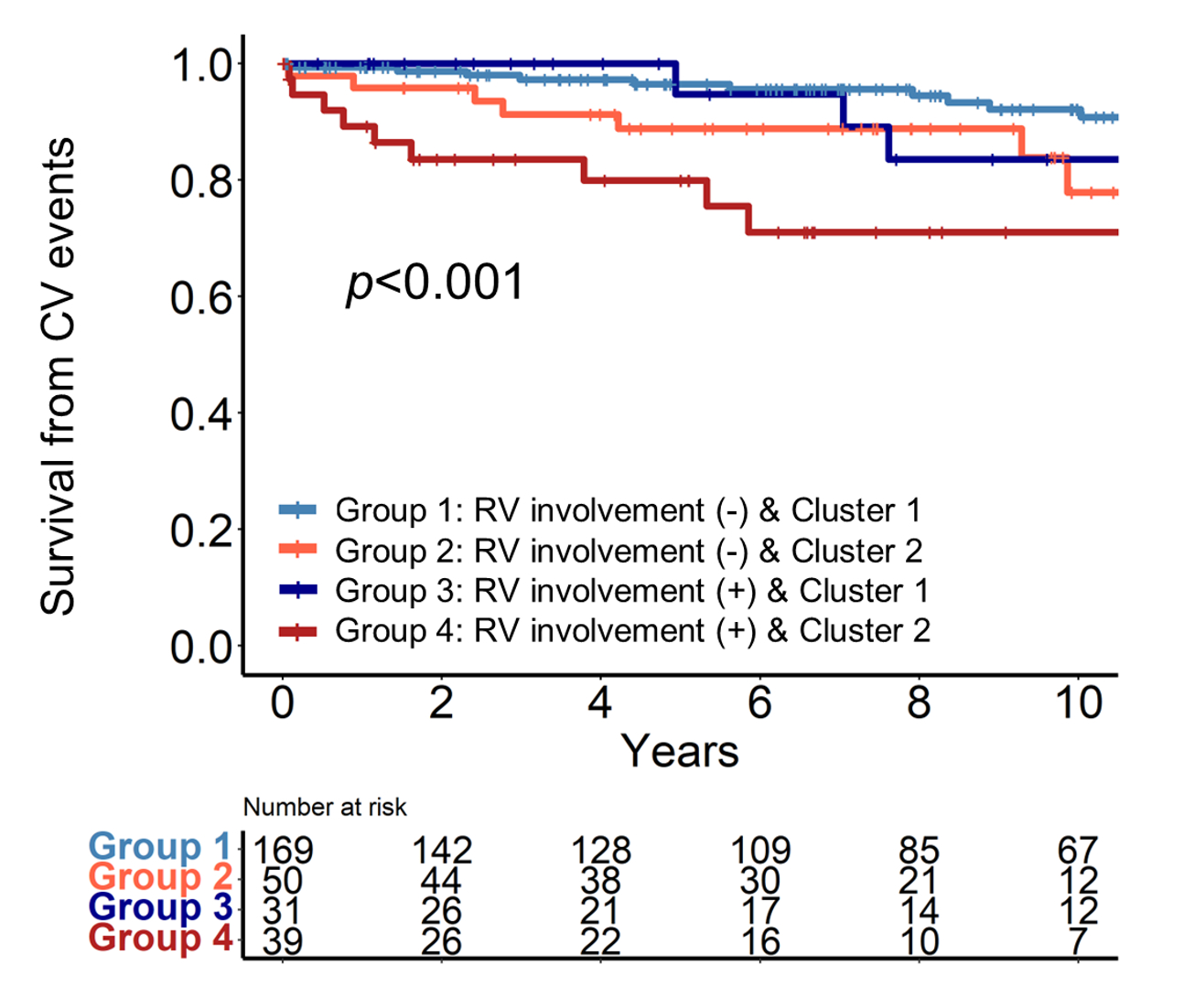
Abstract Body (Do not enter title and authors here): Background Apical hypertrophic cardiomyopathy (HCM) exhibits substantial heterogeneity in morphology and function. Purpose To identify clinically meaningful phenotypic clusters using imaging biomarkers and to evaluate the prognostic significance of right ventricular (RV) involvement in relation to these clusters. Materials and Methods This retrospective study included 289 patients with apical HCM who underwent cardiovascular magnetic resonance (CMR) and echocardiographic strain imaging. RV involvement was defined as RV wall thickness ≥5 mm on CMR. Phenotypic clustering was performed based on four imaging biomarkers: left ventricular (LV) global longitudinal strain (LV-GLS), left atrial reservoir strain (LARS), LV mass index, and late gadolinium enhancement (LGE%). The primary outcome was a composite of cardiovascular (CV) events, including CV death, heart failure hospitalization, and ischemic stroke. Results Two distinct clusters were identified. Cluster 2 (n=89) was associated with a higher HCM Risk-SCD score, greater prevalence of atrial fibrillation, more impaired LV-GLS and LARS, higher LGE%, and greater LV mass index compared to Cluster 1 (n=200). RV involvement was more common in Cluster 2 (43.8% vs. 15.5%, p<0.001). Over a median follow-up of 7.7 years, 34 patients (11.8%) experienced adverse CV events. Cluster 2 had a higher event rate and was associated with increased risk in adjusted Cox analysis (HR 2.13, 95% CI 0.97–4.66, p=0.059), as was RV involvement. When stratified by both cluster and RV involvement, patients in RV involvement and Cluster 2 exhibited the most impaired functional and structural imaging profiles and the highest risk of CV events (adjusted HR 3.18, 95% CI 1.12–9.00, p=0.029). Conclusions Multimodality imaging–based clustering identified high-risk phenotypes in apical HCM. RV involvement, more frequent in the high-risk cluster, was associated with increased CV risk. Combined stratification by imaging phenotype and RV morphology improved risk prediction, supporting the role of CMR and strain imaging in individualized risk assessment.
Kwak, Soon Gu
(
Seoul National University Hospital
, Seoul , Korea (the Republic of) )
Kim, Jihoon
(
Samsung Medical Center
, Seoul , Korea (the Republic of) )
Kim, Hyung-kwan
(
SEOUL NATIONAL UNIVERSITY HOSPITAL
, Seoul , Korea (the Republic of) )
Lee, Sang-chol
(
Samsung Medical Center
, Seoul , Korea (the Republic of) )
Author Disclosures:
SOON GU KWAK:DO NOT have relevant financial relationships
| Jihoon Kim:DO NOT have relevant financial relationships
| Hyung-Kwan Kim:No Answer
| Sang-Chol Lee:No Answer