
Logo

American Heart Association

  21
  0


Final ID: Mo3066

Senescence Gene Signatures Predict Response to SGLT2 Inhibitors in Heart Failure with Preserved Ejection Fraction: A Systematic Review and Transcriptomic Meta-Analysis

Abstract Body (Do not enter title and authors here): Background: Cellular senescence, a hallmark of aging and heart failure with preserved ejection fraction (HFpEF), is implicated in myocardial fibrosis, inflammation, and metabolic remodeling. Recent studies suggest that senescence-associated gene expression profiles may predict response to sodium-glucose cotransporter 2 (SGLT2) inhibitors. We conducted a systematic review and transcriptomic meta-analysis to evaluate the relationship between senescence gene signatures and SGLT2i treatment efficacy in HFpEF.

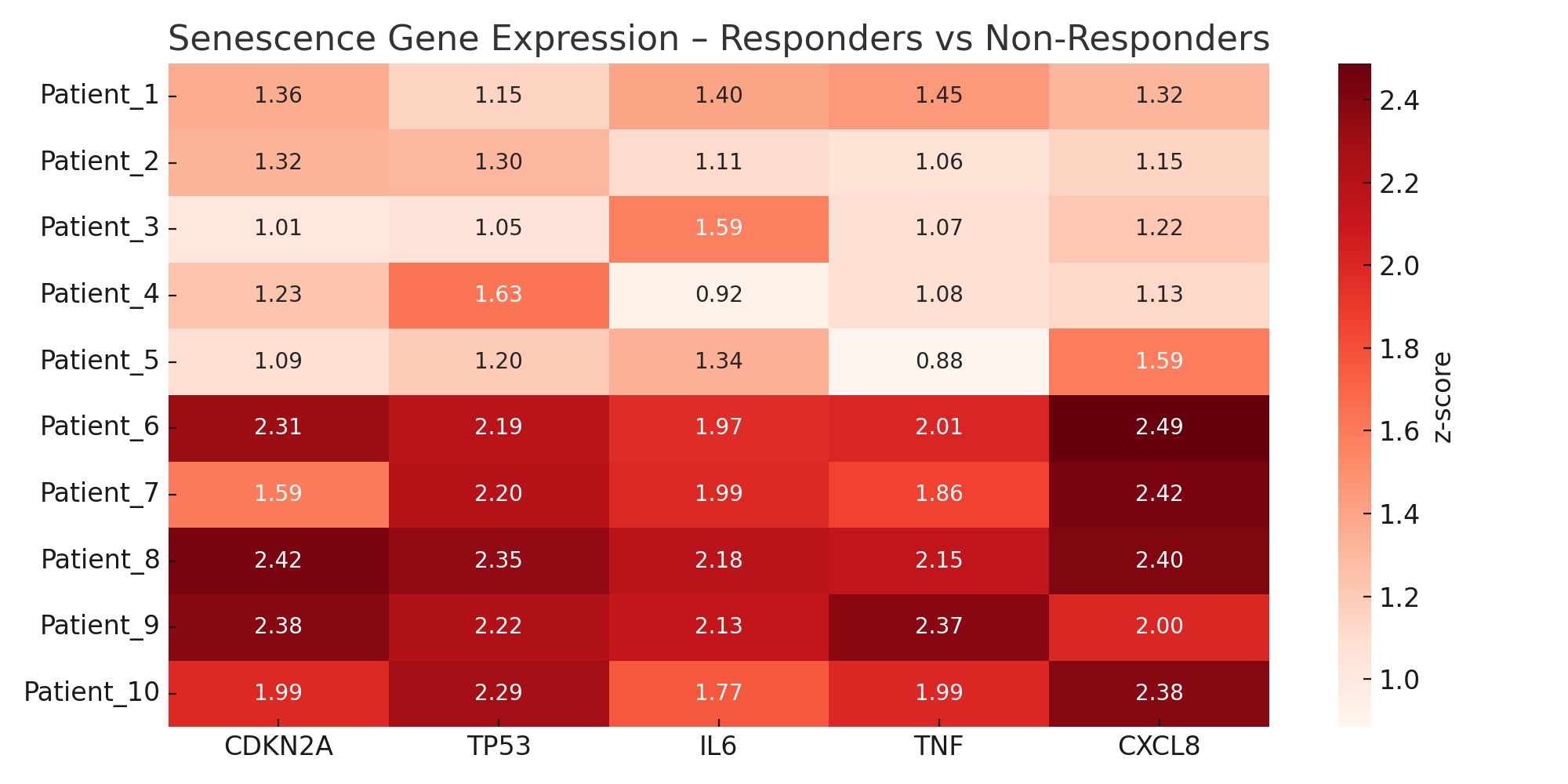
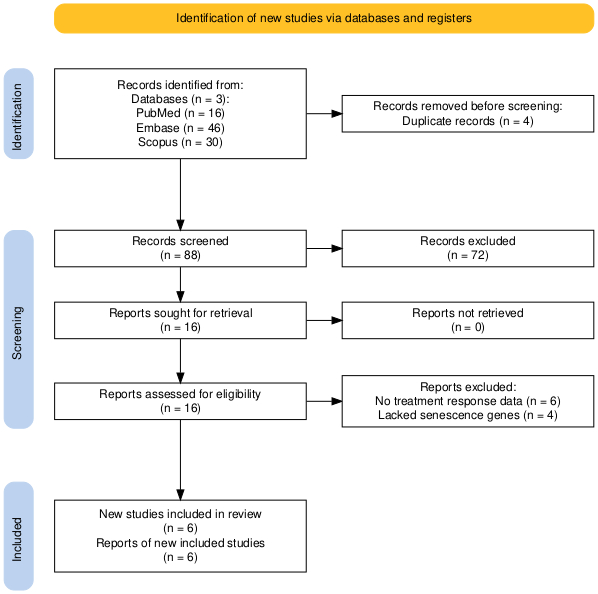
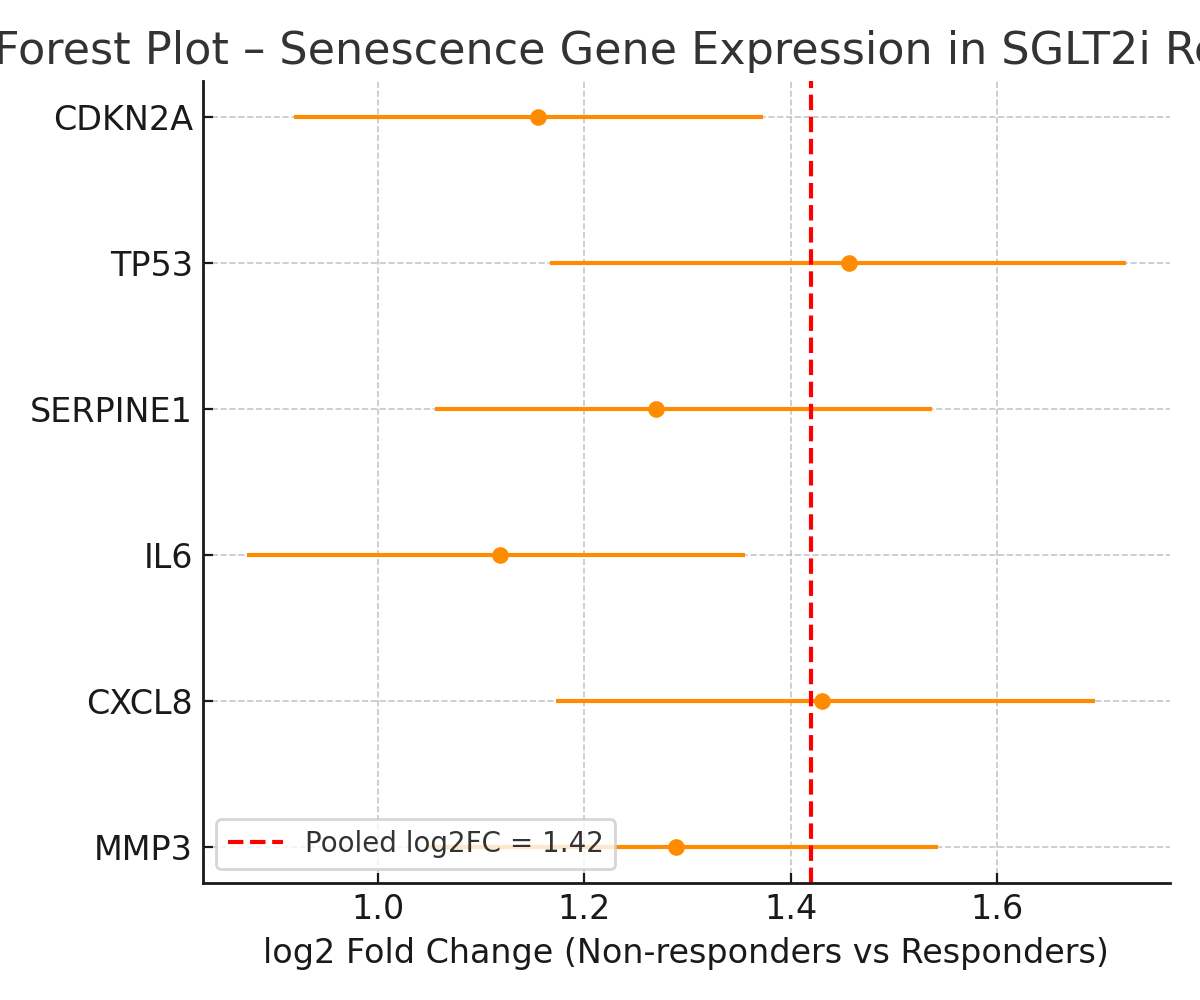
Methods: Following PRISMA guidelines, we searched PubMed, GEO, and ArrayExpress through April 2024 for studies that: (1) reported RNA-sequencing or microarray data from HFpEF myocardium or peripheral blood, (2) assessed senescence-associated gene expression (e.g., CDKN2A, SERPINE1, IL6, CXCL8), and (3) evaluated treatment response to SGLT2 inhibitors. For eligible datasets, differential gene expression (DEG) and gene set enrichment analyses (GSEA) were performed. Meta-analysis of log2 fold-change (FC) in responder vs non-responder groups was conducted. Forest plot and heatmaps visualized pooled transcriptomic trends.

Results: Six datasets (total n = 482 patients with HFpEF, 228 on SGLT2i) were included. Senescence pathway genes (CDKN2A, TP53, IL6) were significantly upregulated in non-responders (pooled log2FC: +1.42, 95% CI: 1.10–1.73, p<0.001). Responder groups demonstrated enrichment of mitochondrial oxidative phosphorylation genes and lower SASP (senescence-associated secretory phenotype) scores. Subgroup analysis of peripheral blood samples confirmed the predictive pattern (AUC = 0.81). Heatmap clustering distinguished SGLT2i responders based on senescence-low vs senescence-high phenotypes. No evidence of publication bias was found.

Conclusion: Elevated expression of senescence-related genes is associated with poor response to SGLT2 inhibition in HFpEF. These findings support the use of transcriptomic biomarkers to stratify patients prior to therapy and may inform precision-guided treatment algorithms in HFpEF management.
  • Chintharala, Karthik  ( NRI Academy of Medical Sciences , Vijayawada , India )
  • Sekharamahanti, Hadassa Evangeline  ( Mercy Catholic Medical Center , Darby , Pennsylvania , United States )
  • Madam, Sai Tapasvi  ( G.S.L Medical College , Rajahmundry , Andhra Pradesh , India )
  • Munnangi, Pragathi  ( BronxCare Health System , Bronx , New York , United States )
  • Author Disclosures:
    Karthik Chintharala: DO NOT have relevant financial relationships | Hadassa Evangeline Sekharamahanti: DO NOT have relevant financial relationships | SAI TAPASVI MADAM: DO NOT have relevant financial relationships | Pragathi Munnangi: DO NOT have relevant financial relationships
Meeting Info:

Scientific Sessions 2025

2025

New Orleans, Louisiana

Session Info:

Real-World Use of Sodium-Glucose Cotransporter 2 Inhibitors in Heart Failure

Monday, 11/10/2025 , 10:30AM - 11:30AM

Abstract Poster Board Session

More abstracts on this topic:
Altered Cardiac Cell Populations in Hypoplastic Left Heart Syndrome

Morton Sarah, Seidman Christine, Brown Kemar, Wei Eric, Gorham Joshua, Mcdonough Barbara, Beyer Martin, Neyazi Meraj, Layton Olivia, Seidman Jonathan

β1 Adrenergic Receptor Autoantibodies Promote Heart Failure Though Activation of Prostaglandin E2 Receptor EP1/Phosphodiesterase 4B Pathway

Cao Ning, Qiu Hui, Li Hongwei

More abstracts from these authors:
Modeling Pediatric Inherited Cardiomyopathies Using Human iPSC-Derived Cardiac Organoids: A Systematic Review and Meta-Analysis

Chintharala Karthik, Sekharamahanti Hadassa Evangeline, Madam Sai Tapasvi, Munnangi Pragathi, Kolamuri Santhi

AI-Powered Handheld Ultrasound for Rapid Left Ventricular Assessment: A Systematic Review and Meta-Analysis

Chintharala Karthik, Sekharamahanti Hadassa Evangeline, Madam Sai Tapasvi, Munnangi Pragathi

You have to be authorized to contact abstract author. Please, Login
Not Available